Where to Start with Susan Cain: A Reading Guide
Where to start with Susan Cain — how to approach Quiet, her essential argument for the power and value of introversion. A complete reading guide.
By Lena Fischer
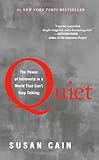
Susan Cain (born 1968) is an American author and speaker who practised corporate law before writing Quiet: The Power of Introverts in a World That Can’t Stop Talking (2012). The book became a major bestseller and sparked a cultural conversation about introversion that is still ongoing; her TED Talk on the subject is one of the most-watched of all time, with over 40 million views. She co-founded a company, Quiet Revolution, dedicated to applying the book’s insights to workplaces and schools.
Where to Start: Quiet (2012)
The essential Cain — and the most important psychology book for anyone who has ever felt marginalised by extrovert culture. Quiet begins with a cultural history that is the book’s most original contribution: the observation that American culture underwent a fundamental shift in the early twentieth century from what Cain calls a Culture of Character — which valued inner virtue, depth, moral seriousness, and reflection — to a Culture of Personality — which values charm, energy, sociability, and visibility. The rise of self-help literature, advertising, Hollywood, and corporate culture accelerated this shift. The result is the Extrovert Ideal: an implicit cultural standard that treats assertiveness, gregariousness, and expressive confidence as markers of worth and competence.
The Extrovert Ideal shapes institutions in ways that are, Cain argues, systematically counterproductive. Open-plan offices produce lower-quality work from the large portion of employees who work best alone. Group brainstorming consistently produces fewer and worse ideas than equivalent numbers of individuals working independently. Schools that have abandoned the single desk in favour of constant group activities disadvantage the third to half of students who learn better in quieter conditions. The institutions are optimised for a personality type that is not universally distributed.
One of the book’s most useful clarifications is the distinction between introversion and shyness. Shyness is fear of social judgment — a form of anxiety. Introversion is a preference for less stimulating environments, grounded in what the research suggests is a lower threshold for optimal physiological arousal. Many introverts are perfectly comfortable socially and are perceived as engaging and confident; they simply need time alone to recover from social stimulation in a way that extroverts do not. Conflating the two mislabels a significant proportion of the population in a way that compounds rather than addresses the actual situation.
The practical sections are genuinely useful: for introverts designing their careers to include appropriate solitude and recovery time; for managers who want to create conditions where introverts can contribute at their actual level rather than their extroverted performance level; and for parents and educators recognising and cultivating introvert children’s particular strengths rather than treating them as deficiencies.
Why Quiet Is the Ideal First Book
For a reader new to Susan Cain, Quiet is the ideal first book because it is her breakthrough work and the fullest expression of her influential argument, the celebration of introverts and the power of quiet in a culture that often overvalues extroversion. Quiet makes the case that introverts, those who are reflective, reserved, and energized by solitude rather than social stimulation, possess real and undervalued strengths, and that a culture biased toward extroversion overlooks the contributions and the needs of the quiet. As an entry point, it offers the fullest expression of Cain’s argument and its appeal, the affirming celebration of introversion, the research-based insight, and the reorientation of a culture that overvalues the loud and the bold. It welcomes the newcomer with its affirming message, its research-based argument, and its insight, offering many readers a validating recognition of their own quiet temperament. It is her best-known book and the one that best represents her work, so that the new reader encounters Cain’s central argument from the first. For the newcomer, then, Quiet is the natural and ideal starting point.
What to Expect as a New Reader
As a new reader, you can expect Quiet to be an affirming, research-based, and influential celebration of introverts and the power of quiet. You can expect Cain’s central argument, that introverts, those who are reflective, reserved, and energized by solitude, possess real and undervalued strengths, and that a culture biased toward extroversion overlooks their contributions and needs. You can expect research-based insight, for Cain grounds her argument in psychology and research into temperament, while making it accessible and engaging. You can expect an affirming and validating message, for many introverted readers find in the book a recognition and affirmation of their own temperament and a reframing of qualities they had been taught to see as weaknesses. You can expect practical insight, for the book offers guidance for introverts navigating an extroverted world and for valuing quiet strengths. You can expect a cultural argument as well, a reorientation toward valuing the quiet, the reflective, and the reserved. Expect, in short, an affirming, research-based celebration of introverts and the power of quiet, a validating and illuminating introduction to Cain’s work.
Going Deeper After Your First Book
Once Quiet has introduced you to Cain’s celebration of introversion, the reader who wishes to go deeper can explore her other work, which extends her thoughtful, research-based approach to further dimensions of emotional life and temperament. Her subsequent work turns to the bittersweet, the place of longing, melancholy, and sorrow in a full emotional life, applying her characteristic combination of research, reflection, and affirmation to a different but related aspect of human experience. Reading this after Quiet deepens your engagement with Cain’s distinctive approach, the research-based, affirming exploration of temperament and emotional life that values the quiet, the reflective, and the deep. Her characteristic qualities run through her work, and the reader who has valued Quiet will find the same thoughtful approach in her other writing. Building your reading journey through Cain’s work is a matter of following her exploration of temperament and emotional life from the celebration of introversion into her further work. The reader who begins with Quiet and continues through her work will find a thoughtful and affirming guide to temperament, emotional life, and the value of the quiet and the deep.
Reading Susan Cain
Quiet is Cain’s essential work. It stands alone and requires no prior reading.
For the full Susan Cain bibliography, reviews, and biography, visit the Susan Cain author page on Editors Reads.
Affiliate disclosure: Links to Amazon on this page are affiliate links. We earn a small commission at no extra cost to you.
Frequently Asked Questions
Where should I start with Susan Cain?
Quiet: The Power of Introverts in a World That Can't Stop Talking (2012) is Cain's essential book — a rigorously researched and deeply personal argument that modern culture systematically undervalues the one-third to one-half of the population that is introverted. One of the most influential psychology books of the decade; her TED Talk is one of the most-watched of all time. Clarifying and empowering for anyone who has ever felt out of step with extrovert culture.
What is Quiet about?
Quiet argues that the modern world — its open-plan offices, its collaborative classrooms, its social expectations — was designed by and for extroverts, and that introverts have been systematically marginalised by what Cain calls the Extrovert Ideal. She traces this cultural history from the early twentieth century, clarifies the distinction between introversion and shyness, surveys the research on introvert strengths, and provides practical guidance for introverts navigating extrovert-designed environments.
What is the difference between introversion and shyness?
Cain makes this distinction central to the book: introversion is a preference for less stimulating environments, driven by a lower threshold for optimal arousal. Shyness is fear of social judgment. Many introverts are socially confident; they simply need solitude to recharge in a way that extroverts do not. An introvert who has been told they are shy is being mislabelled in a way that misdiagnoses the actual situation and compounds the problem.
What should I read after Quiet?
After Quiet, Mihaly Csikszentmihalyi's Flow covers the conditions of optimal experience that tend to suit introverts — deep, solitary engagement with challenging work. Cal Newport's Deep Work extends the introvert advantage into a practical framework for knowledge workers. Daniel Goleman's Emotional Intelligence covers the social dimensions of personality and effectiveness with comparable research depth.