Where to Start with David Epstein: A Reading Guide
Where to start with David Epstein — how to approach Range, his essential book on the case for generalists over specialists. A complete reading guide.
By Lena Fischer
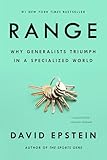
David Epstein is an American investigative journalist and author whose The Sports Gene (2013) covered the science of athletic performance and genetics, and whose Range: Why Generalists Triumph in a Specialized World (2019) became one of the most widely discussed popular science books of recent years — a direct challenge to the 10,000-hours framework popularised by Malcolm Gladwell’s interpretation of Anders Ericsson’s deliberate practice research.
Where to Start: Range (2019)
The essential Epstein — and one of the most useful counternarratives in popular psychology. Range begins with a comparison that sets up its argument elegantly: Tiger Woods, who started playing golf at an age when most children can barely hold a club, and Roger Federer, who sampled multiple sports through his teens before settling on tennis relatively late. The prevailing wisdom says Tiger is the model — early specialisation, deliberate practice, the 10,000-hours framework. Epstein’s argument is that Federer is equally instructive and more applicable to most human endeavours.
The key distinction Epstein draws is between kind and wicked learning environments. Kind environments (chess, classical music, golf) have clear feedback loops, rules that don’t change, and patterns that repeat. In these environments, deliberate practice in a narrow domain produces expertise reliably. Ericsson’s research on chess masters and concert violinists was conducted in precisely these conditions.
Wicked environments — which characterise most of medicine, science, business, policy, and creative work — have delayed or ambiguous feedback, constantly changing rules and contexts, and situations that superficially resemble past cases but differ in important ways. In these environments, the research shows a different pattern: the most successful scientists have broader interests than their peers; the most innovative companies are led by people who have worked in multiple industries; breakthroughs most often come from someone applying a framework from one domain to a problem in another.
The implications for education and career are direct: the cultural pressure toward early specialisation may be counterproductive for most people in most fields. Sampling broadly, switching directions, and developing what Epstein calls “outside view” — the ability to see a problem as a member of a class of problems rather than as unique — are advantages that narrow early specialisation forecloses.
Epstein is careful not to overclaim: early specialisation is clearly appropriate in kind-environment domains. His argument is not anti-practice but anti-universalism — against applying the lessons of one type of learning environment to all environments indiscriminately.
Why Range Is the Ideal First Book
For a reader new to David Epstein, Range is the ideal first book because it is his most influential work and the fullest expression of his distinctive argument, the case for breadth, versatility, and the generalist in a world that often celebrates narrow specialization. Range argues, against the conventional wisdom that early specialization is the path to success, that in many fields it is the generalists, those with broad experience, varied interests, and the ability to draw connections across domains, who ultimately excel. As an entry point, it offers the fullest expression of Epstein’s argument and his method, the combination of engaging storytelling with research drawn from many fields to make a compelling and counterintuitive case. It welcomes the newcomer with its provocative argument, its engaging examples, and its encouraging message for the curious and the versatile, challenging the cult of early specialization. It is his best-known book and the one that best represents his approach, so that the new reader encounters Epstein’s central argument from the first. For the newcomer, then, Range is the natural and ideal starting point.
What to Expect as a New Reader
As a new reader, you can expect Range to be an engaging and provocative work, making the case for breadth, versatility, and the generalist against the conventional celebration of narrow specialization. You can expect Epstein’s central argument, that in many fields it is the generalists, those with broad experience, varied interests, and the ability to draw connections across domains, who ultimately excel, contrary to the conventional wisdom that early specialization is the path to success. You can expect engaging storytelling, for Epstein illustrates his argument with vivid examples and stories drawn from many fields, from sports to science to the arts. You can expect research-based insight, for Epstein grounds his counterintuitive argument in evidence and research. You can expect an encouraging message for the curious, the versatile, and the late bloomer, challenging the pressure to specialize early and narrowly. Expect, in short, an engaging and provocative case for breadth, versatility, and the generalist, a counterintuitive and encouraging introduction to Epstein’s argument.
Going Deeper After Your First Book
Once Range has introduced you to Epstein’s argument for breadth, the reader who wishes to go deeper can explore his other work, which applies the same combination of engaging storytelling and research to related questions of talent, performance, and human potential. His other book examines the roles of nature and practice in athletic performance and talent, investigating the science behind exceptional ability in the same accessible, story-driven, research-grounded style. Reading this after Range deepens your engagement with Epstein’s distinctive approach, the combination of engaging storytelling with research to make compelling, often counterintuitive arguments about talent, performance, and success. His characteristic method runs through his work, and the reader who has enjoyed Range will find the same engaging insight in his other writing. Building your reading journey through Epstein’s work is a matter of following his investigations of talent, performance, and human potential across his books. The reader who begins with Range and continues through his work will find a consistently engaging and insightful investigator of the questions of talent, success, and human potential.
Reading David Epstein
Begin with Range — it is his most celebrated and broadly applicable work. The Sports Gene (2013) is his earlier book on athletic genetics and performance. Both standalone.
For the full David Epstein bibliography, reviews, and biography, visit the David Epstein author page on Editors Reads.
Affiliate disclosure: Links to Amazon on this page are affiliate links. We earn a small commission at no extra cost to you.
Frequently Asked Questions
Where should I start with David Epstein?
Range (2019) is Epstein's most celebrated and widely read book — a well-researched argument that in a complex, unpredictable world, generalists who develop broad knowledge and delay specialisation often outperform narrow specialists. A counterweight to the 10,000-hours mythology; the distinction between 'kind' and 'wicked' learning environments is one of the most useful concepts in recent popular psychology.
What is Range about?
Range argues that the dominant cultural narrative — early specialisation, deliberate practice in a narrow domain, and the 10,000 hours framework — is valid only in 'kind' learning environments (chess, classical music) where feedback is clear and rapid, rules are fixed, and patterns repeat. In 'wicked' learning environments — most of medicine, science, business, and creative fields — where rules are unclear, feedback is delayed, and situations don't repeat, generalists who have sampled widely, switched domains, and developed transferable reasoning consistently outperform narrow early specialists.
Is Range arguing against deliberate practice?
Range is arguing against the universal application of Anders Ericsson's deliberate practice framework — not against practice itself. Ericsson's research was conducted primarily in kind learning environments (chess, violin, golf) where clear feedback and repeating patterns make deliberate practice powerful. Epstein's argument is that these environments are not the norm, and that the research on elite performance in complex fields like science, innovation, and leadership shows a different pattern: sampling breadth, late specialisation, and the ability to make connections across domains.
What should I read after Range?
After Range, Anders Ericsson's Peak provides the research on deliberate practice that Epstein is partly arguing against — reading both together clarifies the actual debate. Carol Dweck's Mindset and Angela Duckworth's Grit address adjacent territory on learning and persistence. For the career implications of generalism versus specialisation, Wharton professor Adam Grant's Originals covers creative thinking and the value of breadth from a different angle.