Best Books About Happiness and Meaning: Essential Reading on the Good Life
The best books about happiness and meaning — from Man's Search for Meaning and The Happiness Hypothesis to The Power of Now and The Courage to Be Disliked.
By Lena Fischer
The question of what makes a good life — what constitutes genuine happiness and lasting meaning — is the oldest question in philosophy and the subject of the most practically useful body of psychological research produced in the past fifty years. The best books about happiness and meaning are those that take the question seriously without simplifying it: that acknowledge the difference between pleasure and flourishing, between the satisfaction of immediate desires and the conditions of a life that is genuinely worth living.
The books listed here range from classical to contemporary, from psychological research to philosophical argument to practical guidance. They share a commitment to the difficult truth that happiness is not something that happens to us but something we create through the choices we make about how to live.
The Essential List
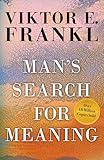
Man’s Search for Meaning — Viktor Frankl (1946)
The most important book about meaning ever written. Frankl, a psychiatrist and Holocaust survivor, observed in the concentration camps that the prisoners who maintained a sense of purpose — a reason to survive — were more likely to survive than those who had lost hope. He developed logotherapy — the therapeutic approach premised on the belief that the primary human drive is the search for meaning — from these observations. The first half of the book is Frankl’s account of his camp experiences; the second is the theoretical framework he derived from them. Essential reading.
The Happiness Hypothesis — Jonathan Haidt (2006)
The best single synthesis of psychological research on what actually makes human beings happy. Haidt draws on ancient wisdom — Stoicism, Buddhism, Confucianism — and modern psychological research to identify the conditions of genuine flourishing: meaningful work, strong relationships, engagement with something larger than the self. His central finding — that neither wealth nor achievement produces lasting happiness, and that our intuitions about what will make us happy are systematically wrong — is backed by decades of empirical research and presented with warmth and clarity.
The Obstacle Is the Way — Ryan Holiday (2014)
Holiday’s account of Stoic philosophy applied to modern challenges — the argument that the obstacles we encounter are not impediments to progress but the material through which progress is made. Drawing on Marcus Aurelius, Epictetus, and Seneca, and on examples from history (Marcus Aurelius, Theodore Roosevelt, Ulysses Grant), Holiday presents Stoicism as a practical philosophy of resilience rather than a theoretical system. The most accessible introduction to Stoic philosophy for a modern audience.
The Courage to Be Disliked — Ichiro Kishimi and Fumitake Koga (2013)
The most surprising and provocative of the books listed here. Presented as a dialogue between a philosopher and a young man who challenges him, the book presents the psychology of Alfred Adler — who broke with Freud to argue that human problems are problems of interpersonal relationships rather than of trauma or unconscious drives. Adler’s central claim (that freedom is the courage to accept that you cannot control others’ perceptions of you, and that unhappiness is a choice made for specific reasons) is presented as a series of challenging propositions. A genuinely different way of thinking about happiness and freedom.
The Power of Now — Eckhart Tolle (1997)
The most widely read contemporary spiritual guide to happiness. Tolle’s argument — that most human suffering arises from identification with the ‘thinking mind’ and its tendency to obsess over the past and the future, and that genuine peace is available only in the present moment — draws on Zen Buddhism, Advaita Vedanta, and Tolle’s own experience of sudden enlightenment. The book is not academic philosophy but a practical guide to a different relationship with consciousness. The bestselling spiritual book of the past three decades.
The Four Agreements — Don Miguel Ruiz (1997)
Ruiz’s guide to a Toltec philosophical framework — four agreements with oneself (be impeccable with your word; don’t take anything personally; don’t make assumptions; always do your best) that, if practised consistently, would transform the quality of life. The book is simple, short, and clear; its practical framework is more useful than its Toltec framing suggests. The most accessible philosophical guide to changing one’s relationship with one’s own mind.
A New Earth — Eckhart Tolle (2005)
Tolle’s second major work, more comprehensive than The Power of Now — an account of the ‘ego’ (the identification with thought and self-concept) and its role in producing human suffering, individually and collectively. The book extends the framework of the earlier work and applies it to social and political questions: how the ego’s need for superiority and separation produces conflict at every level from the personal to the international. The most ambitious of Tolle’s works.
The Happiness Advantage — Shawn Achor (2010)
Achor’s argument — based on positive psychology research — is that happiness is not the result of success but its precursor: that positive emotional states produce the cognitive flexibility, creativity, and resilience that enable professional and personal success. The book synthesises positive psychology research into seven practical principles and is aimed at the professional reader. The most immediately applicable of the books listed here to workplace and career contexts.
Why These Books
The research on happiness converges on several findings that contradict conventional wisdom: that money buys very little happiness above subsistence level; that adaptation — the human tendency to return to a baseline level of happiness regardless of circumstances — limits the lasting effect of positive events; and that relationships, purpose, and engagement consistently produce more lasting flourishing than achievement or acquisition. The books listed here, from different traditions and with different methods, all arrive at similar conclusions — that the good life is not what most people are pursuing, and that the conditions of genuine flourishing are more available, and more demanding, than we typically assume.
Frequently Asked Questions
What is the best book about happiness to start with?
Man's Search for Meaning (1946) by Viktor Frankl is the essential starting point — Frankl's account of surviving the Nazi concentration camps and his development of logotherapy, the therapeutic approach built on the premise that the primary human drive is not pleasure but the search for meaning. The Happiness Hypothesis (2006) by Jonathan Haidt is the best psychological starting point — a synthesis of ancient wisdom and modern psychology that identifies the conditions under which human beings genuinely flourish.
What is Man's Search for Meaning about?
Man's Search for Meaning (1946) by Viktor Frankl is a psychologist's account of his experiences in the Nazi concentration camps — Auschwitz, Dachau, and others — and his observation that those who survived were not necessarily the physically strongest but often those who maintained a sense of purpose: a wife to return to, a book to finish, a meaning to find in their suffering. Frankl developed logotherapy — the therapeutic approach premised on the belief that the primary human motivational force is the search for meaning — from his camp experiences. The most important book about meaning and human resilience available.
What is The Happiness Hypothesis about?
The Happiness Hypothesis (2006) by Jonathan Haidt synthesises ancient wisdom (Stoicism, Buddhism, Confucianism) and modern psychological research to identify what actually makes human beings happy — which turns out to differ significantly from what people believe will make them happy. Haidt's central finding (that happiness comes from the right relationships between the individual and their work, their community, and their transcendent purposes, and that neither wealth nor achievement produces lasting happiness) is grounded in the research literature but written with warmth and accessibility. The best single synthesis of psychological research on well-being.
What is The Courage to Be Disliked about?
The Courage to Be Disliked (2013) by Ichiro Kishimi and Fumitake Koga presents the philosophy of Alfred Adler — the early twentieth-century psychologist who broke with Freud — through a dialogue between a philosopher and a troubled young man. Adler's central claim (that all psychological problems are problems of interpersonal relationships, and that freedom consists in the courage to accept that you cannot control how others see you) is presented as a series of provocations that the philosopher must defend against the young man's objections. The most accessible introduction to Adlerian psychology.