Best Nature Writing Books: Essential Reading About the Natural World
The best nature writing books — from Pilgrim at Tinker Creek and The Snow Leopard to My Family and Other Animals. Essential nature writing, memoir, and natural history.
By Natalie Osei

Nature writing at its best does two things simultaneously: it pays exact attention to what is actually there (the specific animal, the specific plant, the specific landscape), and it discovers in that attention something larger — philosophical, theological, ecological. The books below are the essential reading across the full range of the genre: lyrical nature meditation (Dillard, Matthiessen), comic natural history memoir (Durrell), adventure and nature (Krakauer, Bryson), and the ecological novel that argues for the moral standing of the non-human world (Powers).
The Literary Masterworks
Pilgrim at Tinker Creek — Annie Dillard (1974)
The most ambitious American nature writing of the twentieth century — Dillard’s year at Tinker Creek, attending to what is there with a philosophical intensity that transforms observation into meditation. Her prose moves between precise natural description and wide-ranging reflection; the natural world is her text, and she reads it with the attention of a theologian reading scripture. The most demanding and the most rewarding book in this list. Won the Pulitzer Prize.
The Snow Leopard — Peter Matthiessen (1978)
The most spiritually serious nature writing in American literature — a trek to the Himalayan plateau of northwest Nepal, in grief for a dead wife, interweaving Buddhist teaching with physical hardship and the possibility (not the certainty) of seeing a snow leopard. Matthiessen’s prose is controlled and luminous; the book is simultaneously a travel memoir, a grief memoir, and a meditation on what it means to seek something that may not reveal itself. Won the National Book Award.
Comic Natural History
My Family and Other Animals — Gerald Durrell (1956)
The most beloved animal memoir in English — Durrell’s childhood on Corfu in the 1930s, the eccentric family (including his brother Lawrence, already writing serious fiction), and the creatures he collected and studied. Durrell’s natural history is precise; his comedy is warm and specific; the book is simultaneously about animals and about a particular form of English eccentricity and a particular Mediterranean summer. The most accessible book in this list and the best starting point for readers new to nature writing.
Adventure and Nature
Into Thin Air — Jon Krakauer (1997)
Krakauer’s account of the 1996 Everest disaster — the season’s climbing expeditions, the weather window that closed too late, the deaths that followed. Krakauer combines the physical reality of extreme altitude (the detailed account of what happens to the body and mind above 26,000 feet) with a journalist’s reconstruction of what went wrong. The most gripping book in this list and the most precise about the specific experience of being at altitude.
A Walk in the Woods — Bill Bryson (1998)
Bryson’s attempt on the Appalachian Trail — comic, informative, and genuinely affectionate about both the trail and the American wilderness it passes through. Bryson’s natural history (the ecology of the Appalachian forests, the threats to them, the history of the trail) is woven into the comedy of two middle-aged men discovering that hiking is harder than they thought.
The Ecological Novel
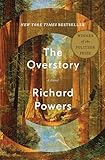
The Overstory — Richard Powers (2018)
The most important literary treatment of nature in recent American fiction — nine Americans whose lives are shaped by trees, in a novel that is simultaneously a work of natural history (the science of plant communication is accurately rendered), a work of ecological argument (trees have moral standing; their destruction is a moral catastrophe), and a Pulitzer Prize-winning work of literature. The most demanding book in this list and the most essential for anyone who wants to think seriously about the relationship between human and non-human life.
The Discipline of Attention
At its foundation, nature writing is a discipline of attention — the practice of looking at the non-human world more closely, more patiently, and more knowledgeably than ordinary life permits. The great nature writers are, before they are anything else, great noticers: people who have trained themselves to see what most of us walk past, to register the particular behaviour of a bird, the slow grammar of a season, the structure of a landscape that the casual eye reduces to mere scenery. This quality of attention is the genre’s first gift to the reader, because it is contagious. To read a master of the form is to have one’s own perception recalibrated, to step outside afterward and find the world suddenly more legible and more alive — the trees no longer a green blur but individuals, the sky no longer a backdrop but a system of weather and light. The writing models a way of being in the world that runs directly counter to the distracted, hurried, screen-mediated attention of contemporary life, and that counter-modelling is part of its quiet importance. Nature writing insists that the world rewards looking, that patience is itself a form of knowledge, and that the close observation of a single hillside or estuary can open onto depths a hurried glance would never suspect. This is why the genre so often produces a sense of restoration in its readers: not merely because nature is soothing, but because the act of sustained attention the writing demands is itself a kind of rest, a reprieve from the fragmented attention of modern existence and a reminder of how much the world contains for anyone willing to slow down and actually see it.
Place, Memory, and the Self
Nature writing is rarely only about nature. The finest examples of the genre discover, in the close observation of a particular place, a way of writing about memory, grief, identity, and the inner life — so that the external landscape becomes a means of mapping the internal one. The naturalist’s attention to a mountain, a coastline, or a patch of woodland repeatedly turns out to be inseparable from the naturalist’s attention to themselves: the place becomes the occasion for reflection, the mirror in which a life is examined. This is why so much of the best nature writing is also, secretly, autobiography. A walk becomes a meditation on loss; the study of a species becomes an inquiry into belonging; the changing of a season becomes a way of thinking about mortality and time. The landscape holds memory — the writer’s own and that of all who lived there before — and to write about it carefully is to write about the human relationship to place, which is among the deepest and least examined of human attachments. The genre understands that we are not separate from the environments we inhabit but partly constituted by them, that a particular hillside or river can be as formative to a self as any human relationship. This fusion of outer and inner, of the observed world and the observing mind, is what raises nature writing above mere description into literature. The reader comes for the landscape and stays for the self that the landscape reveals, finding in the writer’s communion with a place a model for their own, and a reminder that to know where we are is part of knowing who we are.
From Wonder to Witness
The tradition of nature writing has undergone a profound shift over the past century, and reading across it reveals an arc from celebration toward elegy — from wonder at the natural world to witness of its unravelling. The earlier masters could write in a register of more or less untroubled delight, recording the beauty and intricacy of the living world as a permanent given, a wealth that would always be there to return to. The contemporary nature writer cannot. They write in the knowledge of decline — of vanishing species, retreating ice, silenced birdsong, and landscapes altered beyond recovery — and so even their celebrations are shadowed by loss, their attention sharpened by the awareness that what they are recording may not endure. This gives modern nature writing a new and poignant function: it has become a form of witness, a record of what is being lost, and an implicit argument for its preservation. To describe a creature or a place with sufficient love and precision is, now, also to mourn it in advance and to make the case for saving it, because no one fights to protect what they have never been taught to see. The genre’s evolution thus tracks humanity’s changing relationship to the rest of life — from a sense of inexhaustible abundance to a dawning recognition of fragility and responsibility. The best contemporary nature writing holds both notes at once: undiminished wonder at the world’s beauty and unflinching grief at its endangerment. That doubled vision, celebrating and mourning in the same breath, is the distinctive emotional signature of nature writing in our time, and it is what gives the genre an urgency it never had before.
Reading Order
Start accessible: My Family and Other Animals → A Walk in the Woods → Into Thin Air.
Literary tradition: Pilgrim at Tinker Creek → The Snow Leopard → The Overstory.
Complete: My Family and Other Animals → Pilgrim at Tinker Creek → The Snow Leopard → A Walk in the Woods → Into Thin Air → The Overstory.
Frequently Asked Questions
What is the best nature writing book to start with?
Pilgrim at Tinker Creek (1974) by Annie Dillard is the essential starting point for literary nature writing — a year spent in the Roanoke Valley of Virginia, paying sustained attention to the natural world and drawing from it philosophical and theological meditations. Dillard won the Pulitzer Prize for this book; her prose is the most ambitious in the genre. My Family and Other Animals (1956) by Gerald Durrell is the most accessible starting point — a childhood memoir of Corfu in the 1930s, funny and warm and full of precise natural history, written for anyone who loves animals.
What is Pilgrim at Tinker Creek about?
Pilgrim at Tinker Creek (1974) by Annie Dillard follows a year the author spent living near Tinker Creek in Virginia's Roanoke Valley, paying sustained attention to what she saw: the violence and beauty of predation, the extravagance of reproduction, the specific textures of water and stone and light. Dillard's method is to take what she sees absolutely seriously — to treat the natural world as a theological text, a philosophical argument, a source of sustained wonder — and her prose alternates between precise natural description and wide-ranging meditation. Won the Pulitzer Prize.
What is My Family and Other Animals about?
My Family and Other Animals (1956) by Gerald Durrell is Durrell's memoir of his childhood on Corfu in the 1930s — the eccentric Durrell family (including his older brother Lawrence, who was already writing the Alexandria Quartet) and the animals Gerald collected (scorpions, geckos, owls, magpies, tortoises) and the naturalists who became his mentors. The book is simultaneously very funny about the Durrells and genuinely precise about natural history; Durrell (who became a professional zoologist and conservationist) observes the animals of Corfu with the same affectionate precision he brings to his family.
What is The Snow Leopard about?
The Snow Leopard (1978) by Peter Matthiessen is widely considered the greatest American nature writing of the twentieth century — a journey to the Himalayan plateau of northwest Nepal, ostensibly to study the Himalayan blue sheep but really a spiritual pilgrimage following the death of Matthiessen's wife. Matthiessen, a practicing Zen Buddhist, interweaves the physical journey (the altitude, the cold, the passes, the villages) with Buddhist teaching and grief. The snow leopard — almost certainly in the region, almost certainly never to be seen — is the book's central metaphor: the goal that justifies the journey, whether or not it is found. Won the National Book Award.