Best Books About Climate Change: Essential Reading List
The best books about climate change — from The Sixth Extinction and The Overstory to How to Avoid a Climate Disaster. Fiction, non-fiction, and the essential science on the defining issue of our time.
By Natalie Osei
Climate change is the most comprehensively documented challenge in human history — the physics have been understood since the nineteenth century, the consequences have been predicted with increasing precision for decades, and the scientific consensus is essentially total. What remains disputed is not the reality of the problem but the appropriate response: what to do, who should bear the costs, and how quickly.
The books below are the most useful available for understanding the problem, the science, the politics, and the possible futures. They include rigorous science, literary fiction that renders the emotional reality of ecological loss, and practical guides to what can be done.
The Science and the Reality
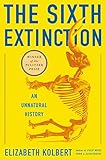
The Sixth Extinction — Elizabeth Kolbert (2014)
The best starting point for understanding what climate change and human activity are doing to the planet’s biodiversity. Kolbert — a New Yorker staff writer — travels to research stations and endangered habitats around the world to document species in the process of disappearing: the Panamanian golden frog, the Sumatran rhinoceros, the great auk (already gone), the coral reefs of Australia. She places these extinctions in the context of the five mass extinctions in Earth’s geological history, and the emerging scientific consensus that we are now causing a sixth.
The book is accessible, precise, and measured in tone — which makes it more disturbing rather than less. It won the Pulitzer Prize for General Non-Fiction in 2015.
How to Avoid a Climate Disaster — Bill Gates (2021)
The most practically oriented major climate book. Gates identifies the five areas responsible for greenhouse gas emissions (electricity, manufacturing, agriculture, transportation, heating and cooling) and for each examines what current technologies can reduce emissions, what technologies do not yet exist at scale, and what the policy and economic barriers are. The book is explicitly optimistic in the sense that Gates believes the problem is solvable with existing and near-existing technology — a position more contested than he acknowledges, but a useful counterweight to paralysis.
Not a deep scientific account — Gates is not a climate scientist — but the most useful single-volume guide to what a solution-oriented approach to the problem involves.
Literary Fiction About the Natural World
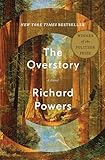
The Overstory — Richard Powers (2018)
The most ambitious literary novel about the natural world in decades. Nine characters whose lives intersect through their relationships with specific trees — a chestnut that has survived a blight, a scientist who studies plant communication, a couple who spend years in a redwood protest — are followed through a narrative that eventually converges on direct action to protect the remaining old-growth forests of the Pacific Northwest.
Powers’s argument is structural as much as thematic: he uses the novel’s form — multiple timelines, nine characters, the compression of decades — to embody the different temporal scales on which trees and humans operate. The result is a book that makes you see forests differently, which may be the highest achievement available to literary fiction about ecology.
Won the Pulitzer Prize for Fiction.
The Gap Between Knowing and Acting
The defining peculiarity of climate change as a subject — and the reason a reading list about it must include more than science — is that it is the most thoroughly understood crisis in human history and yet the one on which humanity has most conspicuously failed to act. The physics has been settled for decades; the scientific consensus is overwhelming; the consequences have been predicted with increasing precision year after year. Knowledge, in other words, has never been the bottleneck. This is why the most useful climate books range far beyond the science into psychology, politics, economics, and fiction, because the real problem is not a deficit of information but a deficit of action, and understanding that gap requires understanding human nature and human institutions as much as atmospheric chemistry. The books on this list approach the crisis from these multiple angles precisely because no single discipline can explain why a species that knows exactly what it is doing to its only home continues to do it. Kolbert documents the unfolding catastrophe with measured precision; Gates examines the technological and economic mechanics of a possible solution; Powers and the climate novelists attempt to bridge the gap between abstract knowledge and felt reality. The diversity of the list reflects a hard-won recognition that the climate crisis is not fundamentally a scientific problem awaiting a scientific solution, but a human problem — of perception, motivation, politics, and will — and that meeting it requires the full range of human understanding, from the data of the climatologist to the imaginative power of the novelist.
Science, Solutions, and Story
The most effective way to build a genuine understanding of climate change, and the logic behind this list’s selections, is to read across three complementary modes: the science that establishes the reality, the solutions-focused analysis that maps the response, and the fiction that makes the stakes emotionally real. Each addresses a different dimension of the challenge and corrects the limitations of the others. The scientific accounts, exemplified by Kolbert’s The Sixth Extinction, supply the indispensable foundation — the clear-eyed documentation of what is actually happening to the planet’s living systems, conveyed with enough rigor to command belief and enough accessibility to reach the non-specialist. The solutions literature, exemplified by Gates’s practical guide, addresses the equally vital question of what can be done, breaking the overwhelming problem into the specific sectors and technologies where emissions originate and might be reduced, and offering an antidote to the paralysis that pure catastrophe can induce. And the fiction, exemplified by Powers’s The Overstory, does what neither science nor policy can: it makes the crisis felt rather than merely known, rendering the abstract reality of ecological loss as vivid emotional and imaginative experience, and reshaping how readers perceive their relationship to the natural world. A reader who engages only the science understands the problem intellectually but may remain unmoved and unsure what to do; one who reads only the fiction feels the loss but lacks the factual grounding; one who reads only the solutions risks a false optimism untethered from the gravity of the situation. The combination — knowledge, response, and felt reality together — produces the fullest and most actionable understanding.
Between Despair and Denial
Perhaps the most valuable thing a reader can take from engaging seriously with climate literature is a sustainable psychological stance toward the crisis — a way of holding its enormity that avoids both the paralysis of despair and the comfort of denial. These are the two failure modes that the subject reliably produces. Denial, whether outright rejection of the science or the subtler “implicatory denial” by which people accept the facts intellectually while declining to let them affect their lives, offers an escape from an unbearable reality but forecloses any response. Despair, the conviction that the situation is hopeless and nothing can be done, is in some ways the more seductive trap for those who have genuinely absorbed the science, and it is equally paralyzing, since people who believe action is futile will not act. The best climate books navigate between these poles, and reading across the list cultivates the same balance in the reader. The science demands that we abandon denial and face the reality squarely; the solutions literature insists that despair is unwarranted, that meaningful action remains possible, that the difference between worse and catastrophic outcomes is still ours to determine; and the fiction sustains the emotional engagement and connection to the living world that makes continued effort feel worthwhile. The resulting stance — clear-eyed about the gravity of the crisis yet committed to the possibility and necessity of action, neither falsely reassured nor hopelessly resigned — is the only psychologically sustainable and practically useful relationship to the defining challenge of the age. Helping readers reach it may be the most important thing this literature does.
Reading by Purpose
To understand the science: The Sixth Extinction → Losing Earth by Nathaniel Rich (a detailed account of the political failure of the 1980s, when the problem was understood and action was possible).
To understand the solutions: How to Avoid a Climate Disaster → Drawdown (edited by Paul Hawken) — a comprehensive inventory of 100 solutions ranked by impact.
For literary fiction: The Overstory → Flight Behaviour by Barbara Kingsolver — a novel about monarch butterflies displaced by climate change, filtered through the experience of a woman in rural Tennessee.
For political understanding: The New Climate Economy by Nicholas Stern → Ministry for the Future by Kim Stanley Robinson (speculative fiction about climate governance in the 2020s-2030s).
Frequently Asked Questions
What is the best book on climate change for someone who wants the facts?
The Sixth Extinction by Elizabeth Kolbert is the most readable scientific account of biodiversity loss and mass extinction — it won the Pulitzer Prize and explains the mechanism and scale of what is happening to the planet's species in terms anyone can follow. How to Avoid a Climate Disaster by Bill Gates is the most practically oriented — it covers the sources of greenhouse gas emissions and what technological and policy solutions exist. For the deeper scientific background, The New Climate Economy or Drawdown (edited by Paul Hawken) provides the most comprehensive inventory of solutions.
Are there good fiction books about climate change?
Yes — The Overstory by Richard Powers is the most acclaimed literary novel about the natural world and the people who fight to protect it. It won the Pulitzer Prize and follows nine characters whose lives are intertwined with specific trees. Flight Behaviour by Barbara Kingsolver imagines climate change as experienced by a woman in rural Tennessee when monarch butterflies appear in her valley, unable to reach their traditional wintering grounds. Kim Stanley Robinson's Ministry for the Future is the most politically serious climate fiction currently available.
What is The Sixth Extinction about?
The Sixth Extinction by Elizabeth Kolbert is an account of the mass extinction event currently underway — the sixth in Earth's history, caused this time by human activity rather than geological or astronomical events. Kolbert travels to sites around the world to document species that are disappearing: the Panamanian golden frog, the great auk, coral reefs, and many others. The Pulitzer Prize-winning book makes the abstract statistics of biodiversity loss concrete and personal.
What is the most hopeful book about climate change?
How to Avoid a Climate Disaster by Bill Gates (2021) is the most solution-oriented major climate book — Gates identifies the five areas where emissions need to be reduced (how we plug in, how we make things, how we grow things, how we get around, how we keep warm and cool) and catalogues the technologies that could address each. For a more policy-focused optimistic case, Speed and Scale by John Doerr (the venture capitalist who backed Google and Amazon) applies OKR methodology to climate solutions.