Where to Start with Bill Gates: A Reading Guide
Where to start with Bill Gates — how to approach How to Avoid a Climate Disaster, his essential book on climate solutions. A complete reading guide.
By Natalie Osei

Bill Gates (born 1955) is the co-founder of Microsoft and, since leaving its day-to-day operations, one of the world’s largest philanthropists through the Bill & Melinda Gates Foundation. His published books are few — The Road Ahead (1995) and Business @ the Speed of Thought (1999) are primarily about computing and digital business — but How to Avoid a Climate Disaster (2021) brought his systems-thinking approach to what he identifies as the most important problem of our time. The book draws on a decade of climate and energy investment through Breakthrough Energy, the clean energy initiative Gates founded in 2015.
Where to Start: How to Avoid a Climate Disaster (2021)
The essential Gates — and one of the most structurally useful books on climate change for readers who want to understand the actual engineering challenge rather than the emotional or political dimensions. The book begins from a single number: 51 billion tonnes of greenhouse gases, emitted globally every year. The goal: zero. The question the book answers: what would that actually require?
Gates structures his answer by sector, and this is the book’s most valuable contribution. The popular conversation about climate change focuses heavily on electricity and cars — clean energy and electric vehicles — because these are the visible, consumer-facing parts of the problem. Gates shows that electricity is about 27 percent of global emissions, and transportation another 16 percent. But making steel, cement, and glass; growing food and managing land; heating buildings; running industrial processes — these sectors together account for roughly half of all emissions, and they are far harder to decarbonise than electricity, because there are no clean equivalents of many of the industrial processes involved.
The concept of green premiums — the additional cost of a clean version of something compared to the fossil-fuel equivalent — runs through the book as an analytical tool. Where green premiums are already low (solar and wind electricity in many markets), clean alternatives are deployable now with policy support. Where green premiums are still very high (cement, steel, aviation fuel, certain fertilisers), the breakthroughs needed are more fundamental and more expensive. Gates argues for a portfolio of investments across both near-term deployment of existing technologies and long-term R&D into harder problems.
The limitations of the Gates approach are real. He is more confident about what needs to be built than about how to build the political and social conditions for building it; the book is more useful as an engineering roadmap than as a political strategy. His optimism about innovation — the faith that sufficient investment will produce the required breakthroughs — reads as more prescriptive than evidential in places. And his personal position as a major investor in many of the technologies he recommends is noted but not fully interrogated.
As a primer on the scale and structure of the climate problem, it remains among the most clear and practically useful available.
Why How to Avoid a Climate Disaster Is an Ideal First Book
For a reader new to Bill Gates as an author, How to Avoid a Climate Disaster is an ideal first book because it is among his most substantial works and a fine expression of his distinctive approach, the clear, analytical, and solution-focused engagement with major global challenges. How to Avoid a Climate Disaster lays out Gates’s analysis of the problem of climate change and his proposed framework for reaching zero greenhouse-gas emissions, drawing on his study of energy, technology, and innovation. As an entry point it is ideal, for it is one of his best-known books and a clear example of his data-driven, problem-solving approach to a great global issue. It welcomes the newcomer with its clear analysis, its practical framework, and its accessible style, drawing the reader into his way of thinking about one of the defining challenges of our time. It is among his most prominent works and a fine representation of his approach, so the new reader encounters Gates at his most characteristic as a writer. For the newcomer, then, How to Avoid a Climate Disaster is an excellent starting point.
What to Expect as a New Reader
As a new reader, you can expect How to Avoid a Climate Disaster to be a clear, analytical, and solution-focused book about climate change. You can expect a focus on solutions, for Gates is less concerned with sounding the alarm than with laying out a practical framework for what it would take to reach zero emissions. You can expect a data-driven approach, for Gates grounds his analysis in numbers, energy, and technology, breaking the problem down into its major sources. You can expect an emphasis on innovation, for Gates argues that technological breakthroughs and investment are essential to solving the problem. You can expect accessible explanation, for he writes clearly and aims to make a complex subject understandable. You can expect an optimistic, problem-solving tone. You can expect a book that invites engagement and, where readers wish, critical scrutiny of its emphases. Expect, in short, a clear, analytical, and solution-focused book about climate change, a fine introduction to Gates’s approach.
Going Deeper After Your First Book
Once How to Avoid a Climate Disaster has introduced you to Gates’s approach, the reader who wishes to go deeper can explore his other books and writing, which apply his analytical, solution-focused thinking to further global challenges. His other works address subjects such as preventing the next pandemic and the lessons of global health and development, continuing his data-driven, problem-solving approach, while his ongoing writing and his foundation’s work extend his engagement with global problems. Readers can also place his perspective within the wider literature on climate, energy, and global development, engaging thoughtfully and critically with his emphases. Reading more widely deepens your engagement with Gates’s distinctive approach to major global challenges. His characteristic way of thinking runs through his work. Building your reading journey from How to Avoid a Climate Disaster is a matter of following his analytical approach into his other books and the wider literature on the challenges he addresses. The reader who begins here will have encountered one of the most prominent voices applying technology and analysis to global problems.
Reading Bill Gates
How to Avoid a Climate Disaster is Gates’s most substantive and widely read book. His earlier computing books are primarily of historical interest. His ongoing writing and reading notes appear at gatesnotes.com, where he reviews books across science, health, and technology regularly.
For the full Bill Gates bibliography, reviews, and biography, visit the Bill Gates author page on Editors Reads.
Affiliate disclosure: Links to Amazon on this page are affiliate links. We earn a small commission at no extra cost to you.
Frequently Asked Questions
Where should I start with Bill Gates?
How to Avoid a Climate Disaster (2021) is Gates's most accessible and practically structured book — a sector-by-sector framework for understanding the climate crisis, who emits what, which sectors are hardest to decarbonise, and what combination of existing technology and needed breakthroughs can plausibly get global emissions to zero.
What is How to Avoid a Climate Disaster about?
How to Avoid a Climate Disaster is structured around a question: what would it actually take to get from 51 billion tonnes of greenhouse gas emissions annually (roughly the current figure) to zero? Gates works through each major emitting sector — electricity, agriculture, manufacturing, transportation, buildings — assessing which current technologies can address emissions and where breakthroughs are still required. He argues for a portfolio of clean energy investments, policy changes, and R&D priorities rather than a single technological solution.
Is How to Avoid a Climate Disaster the best climate book available?
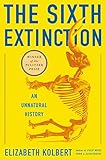
Gates brings exceptional clarity to the engineering and technology dimensions of climate change, and the sector-by-sector framework is one of the most practically useful in the genre. Critics note that his engineering mindset is less effective on political economy — the book is more confident about what needs to be built than about how to build the political coalitions to build it. For the policy and social dimensions, Elizabeth Kolbert's The Sixth Extinction and Bill McKibben's Falter address territory Gates's technology focus leaves underexplored.
What should I read after How to Avoid a Climate Disaster?
After How to Avoid a Climate Disaster, Gates's previous book The Road Ahead (1995) and Business @ the Speed of Thought (1999) are primarily of historical interest. For climate specifically, Elizabeth Kolbert's The Sixth Extinction covers the ecological dimension with more literary depth. Saul Griffith's Electrify (2021) covers the engineering transition to clean energy from a more granular technical perspective. Gates's annual blog at gatesnotes.com covers his ongoing reading and thinking across science, global health, and energy.