Where to Start with Elizabeth Kolbert: A Reading Guide
Where to start with Elizabeth Kolbert — how to approach The Sixth Extinction, her Pulitzer Prize-winning investigation of the ongoing mass extinction event. A complete reading guide.
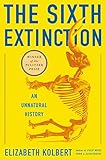
Elizabeth Kolbert (born 1961) is an American journalist who has been a staff writer at The New Yorker since 1999, where she covers science and the environment. She won the Pulitzer Prize for Nonfiction in 2015 for The Sixth Extinction: An Unnatural History (2014), published by Henry Holt. She had previously published Field Notes from a Catastrophe (2006), an account of climate change reporting, before expanding her scope to the broader biodiversity crisis in The Sixth Extinction.
Where to Start: The Sixth Extinction (2014)
The essential Elizabeth Kolbert — and one of the most important works of environmental journalism published in the twenty-first century. The Sixth Extinction begins with a question that most people cannot answer: how many mass extinction events has Earth experienced? The answer is five — the end-Ordovician, Late Devonian, end-Permian, end-Triassic, and end-Cretaceous events — each of which eliminated a substantial proportion of all species on Earth. The book’s argument is that we are living inside the sixth.
The fieldwork structure is what distinguishes the book from more abstract treatments of the biodiversity crisis. Kolbert does not write about extinction as a statistical abstraction; she reports from the places where it is happening. She goes to Panama to document the chytrid fungus that is destroying amphibian populations globally — a fungus spread by human travel and trade, killing species that survived the last ice age. She visits the Great Barrier Reef to document coral bleaching from ocean acidification. She goes to the Amazonian forest to study what happens to species populations when their habitat is fragmented into islands. Each chapter is a specific place, a specific species or ecosystem, a specific scientist whose work documents what is being lost.
The historical context of previous mass extinctions is essential to understanding what the current one means. Kolbert spends considerable time with the science of past events: the asteroid impact 66 million years ago that ended the Cretaceous, the volcanic eruptions 252 million years ago that ended the Permian (killing an estimated 90% of all species), the patterns of recovery and radiation that followed each event. This context is not reassuring — recovery from mass extinctions takes millions of years — but it provides the scientific framework necessary for understanding why biologists regard the current situation as a genuine emergency.
The ocean acidification chapters are among the book’s most important. As oceans absorb CO2 from the atmosphere, they become more acidic; this process is dissolving the calcium carbonate shells and skeletons of marine organisms and disrupting the chemistry of the food chain at its base. The current acidification rate is faster than anything in the geological record of the past millions of years — meaning that species adapted to ocean chemistry over evolutionary time cannot adapt quickly enough to the rate of change.
The current extinction rate — 100 to 1,000 times the natural background rate, depending on the method of calculation — is the book’s central quantitative claim, and Kolbert explains how paleontologists and biologists arrive at this figure, including the assumptions and uncertainties involved. She does not overstate; the range itself conveys the uncertainty while the lower bound is already alarming.
Why The Sixth Extinction Is the Ideal First Book
For a reader new to Elizabeth Kolbert, The Sixth Extinction is the ideal first book because it is her Pulitzer Prize-winning landmark work and the fullest expression of her distinctive gifts, the rigorous reporting, the clear and compelling prose, and the urgent engagement with humanity’s impact on the natural world. The Sixth Extinction documents the mass extinction of species now underway, driven by human activity, weaving together science, history, and vivid on-the-ground reporting from around the world. As an entry point it is ideal, for it is her most celebrated book and a perfect example of her authoritative, engaging environmental journalism. It welcomes the newcomer with its fascinating and sobering subject, its rich reporting, and its clear, compelling style, drawing the reader into one of the defining environmental books of our time. It is her most important work and the one that best represents her gifts, so the new reader encounters Kolbert at her finest. For the newcomer, then, The Sixth Extinction is the natural and ideal starting point.
What to Expect as a New Reader
As a new reader, you can expect The Sixth Extinction to be a rigorous, compelling, and sobering work of environmental journalism. You can expect a powerful central subject, the mass extinction of species now underway, driven by human activity, which Kolbert argues is comparable to the great extinctions of the geological past. You can expect rich reporting, for Kolbert travels the world and embeds with scientists to render her subject vivid and concrete. You can expect a blend of science and history, for she weaves together biology, geology, and the history of extinction and its discovery. You can expect clear, compelling prose that makes complex science accessible and engaging. You can expect a sobering but important message about humanity’s impact on the natural world. Expect, in short, a rigorous, compelling, and sobering work of environmental journalism, a superb introduction to Kolbert’s gifts.
Going Deeper After Your First Book
Once The Sixth Extinction has introduced you to Kolbert’s gifts, the reader who wishes to go deeper can explore her other books and the wider literature on the environment and humanity’s impact on the planet to which her work is a leading contribution. Her other work examines humanity’s attempts to manage and re-engineer the natural world in an age of profound human influence, continuing her rigorous reporting and clear, compelling style, while her earlier writing on climate change explores another dimension of the human impact on the planet. The broad field of environmental journalism and writing offers many further perspectives the reader is well prepared to explore. Reading more widely deepens your engagement with Kolbert’s distinctive gifts and with the urgent subjects she illuminates. Building your reading journey from The Sixth Extinction is a matter of following Kolbert’s reporting into her other books and the wider environmental literature. The reader who begins here will find one of the finest environmental journalists writing today.
Reading Elizabeth Kolbert
The Sixth Extinction is Kolbert’s essential and most widely read book. It stands alone and requires no prior science background.
For the full Elizabeth Kolbert bibliography, reviews, and biography, visit the Elizabeth Kolbert author page on Editors Reads.
Affiliate disclosure: Links to Amazon on this page are affiliate links. We earn a small commission at no extra cost to you.
Frequently Asked Questions
Where should I start with Elizabeth Kolbert?
The Sixth Extinction: An Unnatural History (2014) is Kolbert's essential book — a Pulitzer Prize-winning investigation of the ongoing mass extinction event, combining fieldwork from around the world (Panama, the Great Barrier Reef, Italian caves, Amazonian forest) with the science of previous mass extinctions to show that Earth is currently losing species at 100 to 1,000 times the natural background rate. One of the most important environmental books published this century.
What is The Sixth Extinction about?
The Sixth Extinction reports on the current mass extinction event — the first caused by a single species — through thirteen chapters each focused on a different species, location, or aspect of the crisis. Kolbert visits scientists working in the field, documents species already lost and others on the edge, and places the current crisis in the context of previous mass extinctions (the end-Cretaceous asteroid impact, the end-Permian volcanic event) to calibrate the scale of what is happening. The book's argument is that we are living inside a mass extinction event of our own making.
Is The Sixth Extinction alarmist or scientifically grounded?
Scientifically grounded. Kolbert is a journalist who covers science with unusual rigor — she spent years reporting the book, consulting extensively with biologists and paleontologists, and the claims she makes are supported by current scientific consensus. The book does not sensationalise; it reports. The alarming quality comes from the facts rather than from rhetorical amplification. Readers who find it disturbing are responding accurately to what the evidence shows.
What should I read after The Sixth Extinction?
After The Sixth Extinction, Edward O. Wilson's The Diversity of Life is the foundational scientific case for biodiversity, written by the biologist who coined the term 'biodiversity crisis'. Bill Bryson's A Short History of Nearly Everything provides broader context for deep time and the evolution of life on Earth. Kolbert's own Under a White Sky (2021) continues her reporting on human interventions in nature, examining both the problems and the attempted solutions.