Where to Start with Casey Means: A Reading Guide
Where to start with Casey Means — how to approach Good Energy, her comprehensive framework connecting metabolic health to chronic disease prevention. A complete reading guide.
By Priya Anand
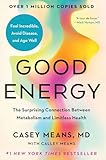
Casey Means trained as a surgeon at Stanford, completing medical school and beginning her residency before making the unusual decision to leave before finishing — a choice she describes in Good Energy with careful transparency. Her concern was that the medical system she was training in was not designed to address the root causes of the diseases it treated. Good Energy: The Surprising Connection Between Metabolism, Mental Health, and the Root Cause of Chronic Disease (2024) is the result of the years she spent developing an alternative framework.
Where to Start: Good Energy (2024)
The essential Casey Means — and one of the more ambitious unifying frameworks in recent health writing. Good Energy opens with an observation that most people intuitively feel but rarely see articulated with clinical precision: despite decades of biomedical research and medical advancement, rates of chronic disease in the United States have not declined. Obesity, type 2 diabetes, cardiovascular disease, depression, anxiety, autoimmune conditions, and several cancers are all more prevalent than a generation ago. Something is wrong with the model.
Means’s argument is that the problem is conceptual: medicine treats these conditions as separate diseases with separate causes requiring separate treatments, when in fact they share a common underlying mechanism — mitochondrial dysfunction and the metabolic derangement it produces. Mitochondria are the cellular organelles that convert food and oxygen into ATP, the energy currency that powers cellular function. When they malfunction, cells cannot produce sufficient energy for normal operation, and the resulting dysfunction manifests differently in different tissues and organs — as metabolic syndrome in the liver, as cognitive decline in neurons, as mood dysregulation in the brain.
The framework’s most useful practical implication is that metabolic health is unified. The same lifestyle interventions that stabilise blood glucose also improve sleep, reduce inflammation, support cardiovascular function, and protect cognitive health. You are not making separate trade-offs across separate systems; you are optimising a single underlying system whose effects cascade everywhere.
Blood glucose stability is the book’s central practical lever. Means argues that chronic blood glucose elevation and volatility — driven by ultra-processed food, sedentary behaviour, sleep disruption, and chronic stress — is among the most impactful contributors to metabolic dysfunction, and that continuous glucose monitoring gives individuals the most direct available window into their own metabolic state. The ability to see in real time how specific foods, meals, movement, and sleep affect your glucose trajectory transforms abstract dietary advice into personalised experimentation.
The lifestyle framework Means presents — sleep quality, consistent movement throughout the day, whole-food nutrition with attention to glucose response, sunlight exposure, stress regulation — synthesises research from a wide range of sources and presents it as an integrated system rather than a list of isolated recommendations. Each element affects the others: sleep deprivation impairs glucose regulation; chronic stress elevates cortisol and destabilises blood sugar; sedentary behaviour reduces metabolic flexibility.
The book’s most politically charged dimension is Means’s critique of how medicine is economically structured: procedure-based reimbursement, pharmaceutical dependency, and the absence of financial incentives for prevention create a system that is very good at treating the late-stage consequences of metabolic dysfunction but not designed to prevent it. This critique is not unique to Means, but her firsthand account of the training system gives it specific weight.
At 416 pages, Good Energy is longer than its central argument requires, and some readers will find the institutional critique more prominent than they want. But the metabolic framework it presents is coherent, well-supported, and genuinely useful as an organizing principle for health decisions.
Why Good Energy Is the Ideal First Book
For a reader new to Casey Means, Good Energy is the ideal first book because it is her major book and the fullest expression of her central argument about metabolic health and its role in well-being. Good Energy presents Means’s case that metabolic health, the way our cells produce and use energy, underlies much of our overall health, and offers guidance on diet, lifestyle, and tracking aimed at improving it. As an entry point it is ideal, for it is her best-known book and the clearest statement of her approach. It welcomes the newcomer with its central concept, its scientific framing, and its practical guidance, drawing the reader into her perspective on metabolic health. Readers are wise to engage critically, recognizing that the book argues a strong point of view, that the science of metabolic health is complex and evolving, and that it is not a substitute for medical advice. It is her defining work, so the new reader encounters Means’s argument directly. For the newcomer, then, Good Energy is a natural starting point, best approached thoughtfully.
What to Expect as a New Reader
As a new reader, you can expect Good Energy to be an ambitious, argument-driven, and practical book about metabolic health. You can expect a central concept, that metabolic health, how our cells produce and use energy, underlies much of our overall health and well-being. You can expect a wide-ranging argument, for Means links metabolic health to many conditions and aspects of modern life. You can expect practical guidance, on diet, lifestyle, and tracking metrics aimed at improving metabolic health. You can expect a scientific framing drawn from her medical background. You can expect a strong, advocacy-driven point of view. You should engage critically, recognizing that the book argues a strong position, that metabolic-health science is complex and evolving, and that the book is not a substitute for professional medical advice. Expect, in short, an ambitious, argument-driven, and practical book about metabolic health, best approached thoughtfully and critically.
Going Deeper After Your First Book
Once Good Energy has introduced you to Means’s argument, the reader who wishes to go deeper can carry its themes into the wider literature on metabolic health, nutrition, and well-being, reading throughout with appropriate critical awareness. The broad and evolving field of writing on metabolism, diet, and health offers many perspectives, some supporting and some qualifying her claims, that the thoughtful reader weighs together, and the reader is well served by consulting other experts and a doctor for personal decisions. Reading more widely, and critically, deepens your engagement with the complex questions of metabolic health that her book raises. Means’s strongly argued case is one voice in a contested and developing field. Building your reading journey from Good Energy is a matter of carrying its themes into the wider literature on metabolic health, held critically. The reader who begins here will have encountered a prominent and ambitious, if contested, argument about metabolic health and well-being.
Reading Casey Means
Good Energy is Means’s essential book. It stands alone and requires no prior reading.
For the full Casey Means bibliography, reviews, and biography, visit the Casey Means author page on Editors Reads.
Affiliate disclosure: Links to Amazon on this page are affiliate links. We earn a small commission at no extra cost to you.
Frequently Asked Questions
Where should I start with Casey Means?
Good Energy: The Surprising Connection Between Metabolism, Mental Health, and the Root Cause of Chronic Disease (2024) is Means's essential book — a unifying metabolic health framework arguing that mitochondrial dysfunction underlies most chronic diseases. Written by a Stanford-trained surgeon who left residency over concerns about medicine's focus on treatment over prevention. The scientific framework is ambitious and the lifestyle recommendations are specific.
What is Good Energy about?
Good Energy argues that most chronic diseases — type 2 diabetes, cardiovascular disease, obesity, depression, anxiety, Alzheimer's — share a common mechanism: mitochondrial dysfunction and the metabolic derangement it causes. Means's framework centres on how lifestyle factors (sleep, movement, nutrition, stress, light exposure) interact as integrated metabolic signals, and presents continuous glucose monitoring as the most direct tool for individuals to access their own metabolic data.
Is Good Energy's science reliable?
Good Energy synthesises substantial research, and the core mitochondrial dysfunction argument reflects a genuine and growing body of metabolic science. The breadth of conditions Means attributes to metabolic dysfunction will be contested by specialists in individual fields, and the book occasionally extrapolates beyond what the evidence strictly supports. Means is transparent about her perspective and her critique of conventional medicine, which readers should factor into their evaluation.
What should I read after Good Energy?
After Good Energy, Jessie Inchauspe's Glucose Revolution covers blood glucose stability with comparable specificity and more focus on practical interventions. Chris van Tulleken's Ultra-Processed People covers the food environment that drives the metabolic dysfunction Means describes. Peter Attia's Outlive covers the full longevity picture — exercise, sleep, nutrition, and metabolic health — with deeper scientific detail.