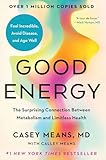
Editors Reads Verdict
Means presents a unifying metabolic health framework with genuine scientific ambition — the mitochondrial dysfunction argument is compelling, the lifestyle recommendations are evidence-grounded, and the book's critical analysis of the healthcare system is sharp and relevant.
What We Loved
- The unifying metabolic framework connects seemingly disparate health conditions persuasively
- Means's personal story — leaving surgery over ethical concerns — gives the critique credibility
- The practical recommendations are comprehensive and specific
- Engages honestly with the economic incentives that shape conventional medicine
Minor Drawbacks
- At 416 pages, the book is longer than its argument requires
- Some readers will find the institutional critique excessive
- The breadth of conditions attributed to metabolic dysfunction will be contested by specialists
Key Takeaways
- → Mitochondrial dysfunction drives a wide range of chronic conditions through cellular energy failure
- → Blood glucose stability is among the most impactful metabolic health markers
- → Sleep, movement, nutrition, sunlight, and stress management interact as integrated metabolic signals
- → The healthcare system's incentive structure rewards treatment over prevention
- → Continuous glucose monitoring gives individuals direct access to metabolic data previously unavailable
| Author | Casey Means |
|---|---|
| Publisher | Avery |
| Pages | 416 |
| Published | May 14, 2024 |
| Language | English |
| Genre | Health, Science, Nutrition |
| Difficulty | Intermediate |
| Best For | Health-conscious readers interested in the science of chronic disease prevention, integrative medicine, and comprehensive lifestyle medicine frameworks. |
How Good Energy Compares
Good Energy at a glance against 3 similar books readers weigh alongside it.
| Book | Author | Rating | Best for |
|---|---|---|---|
| Good Energy (this book) | Casey Means | ★ 4.3 | Health-conscious readers interested in the science of chronic disease |
| Glucose Revolution | Jessie Inchauspé | ★ 4.3 | Health-conscious readers interested in the science of metabolism, people |
| The Body Keeps the Score | Bessel van der Kolk | ★ 4.7 | Therapists, counsellors, trauma survivors and those who love them, anyone |
| Ultra-Processed People | Chris van Tulleken | ★ 4.4 | Health-conscious readers, public health professionals, policy makers, and |
The Root Cause Argument
Casey Means trained as a surgeon at Stanford. She left residency before completing it — an unusual decision that she describes in the book’s introduction with careful honesty — partly because she became convinced that the medical system she was training in was not designed to address the root causes of the diseases it was treating. It was designed to manage symptoms.
Her argument in Good Energy is that most chronic diseases — type 2 diabetes, cardiovascular disease, obesity, depression, anxiety, Alzheimer’s, many cancers — share a common underlying mechanism: mitochondrial dysfunction and the metabolic derangement it causes. Treat the metabolism, she argues, and you prevent or reverse most of what’s filling hospital beds.
The Mitochondrial Framework
Mitochondria are the cellular organelles responsible for converting food and oxygen into ATP — the energy currency that powers cellular function. When they malfunction, cells cannot produce sufficient energy for normal operation. The resulting dysfunction manifests differently in different tissues and organs, which is why metabolic illness presents as such a diverse range of conditions.
Means’s unifying framework is ambitious — it claims to explain conditions that specialists typically silo from one another. The evidence she assembles is substantial, though specialists in individual fields will find points to contest. The framework’s value is not that every detail is settled science but that it provides a coherent basis for a comprehensive preventive approach.
The Healthcare System Critique
The book’s most politically charged dimension is Means’s critique of how American medicine is structured: driven by procedure reimbursement, dependent on pharmaceutical revenue, and economically incentivized against the prevention strategies that would eliminate the conditions requiring treatment. This critique is not new, but Means makes it with specific institutional detail and with the authority of someone who trained inside the system.
The Practical Framework
The lifestyle recommendations — sleep optimization, continuous glucose monitoring, movement throughout the day, specific nutritional strategies, sunlight exposure, stress management — are synthesized from a broad research base and presented with enough specificity to be actionable. The comprehensiveness of the approach is also its challenge: implementing all of it simultaneously is overwhelming, and the book’s organization could better support incremental adoption.
The Author Behind the Argument
Casey Means co-founded Levels, a metabolic-health technology company built around continuous glucose monitoring, and Good Energy functions partly as the intellectual articulation of the worldview that company embodies — that individuals should have direct, real-time access to their own metabolic data rather than receiving it filtered through episodic clinical encounters. She co-wrote the book with her brother, Calley Means, a former food and pharmaceutical industry consultant who has become a prominent public advocate for metabolic-health reform, and the sibling collaboration gives the book a dual perspective: the clinician who saw the limits of intervention from inside the operating room, and the policy critic who saw the economic machinery from inside the industries that profit from chronic illness.
Means writes in the lineage of physician-authors who turn from practice toward prevention and public communication, and Good Energy sits comfortably alongside the recent wave of popular metabolic-health books. Readers who found Jessie Inchauspé’s work on glucose accessible, or Chris van Tulleken’s investigation of ultra-processed food persuasive, will recognize the territory — but Means is reaching for something more systemic than either, attempting to fold the diverse concerns of those books into a single unifying mechanism.
Reception and the Wider Conversation
The book arrived into an unusually receptive cultural moment. Public interest in metabolic health, continuous glucose monitoring, and the failures of the conventional dietary establishment had been building for years, and Good Energy became a bestseller by giving that interest a coherent framework and a credentialed advocate. It also became a focal point in a broader and more contentious public debate about diet, pharmaceutical influence, and the politics of American health — a debate in which Means and her brother have become recurring participants well beyond the pages of the book.
That visibility cuts both ways. The book’s strengths — its ambition, its willingness to indict institutions, its insistence that prevention deserves the resources currently devoted to treatment — are also the qualities that draw the sharpest pushback from specialists who regard the single-mechanism framing as too tidy for the messy biology of disease. A careful reader can hold both: the framework is a useful organizing lens and a genuine contribution to popular health literacy, and not every claim built on top of it is equally well supported.
Who Should Read It and How
Good Energy is best approached as a framework rather than a prescription. The reader who tries to adopt every recommendation at once will likely be overwhelmed and abandon the project; the reader who treats the book as a way of understanding why sleep, movement, light, food, and stress are not separate health concerns but facets of a single metabolic system will get more lasting value. It rewards the health-curious generalist more than the specialist, and it pairs well with more narrowly focused books on glucose, sleep, or nutrition that supply the operational detail Means’s broad synthesis necessarily leaves out. Read it for the orientation it provides, then build the specifics elsewhere.
The book is also worth reading as a document of a particular moment in how Americans relate to their own health data. Means’s central wager is that the wearable sensor and the continuous data stream will do for metabolism what the bathroom scale and the blood-pressure cuff did for earlier generations — turn an invisible internal process into something a person can observe, respond to, and take ownership of. Whether or not every clinical claim in Good Energy survives scrutiny, that underlying shift toward patient-held data is real and accelerating, and Means is among its most articulate advocates. For readers who want to understand where preventive health culture is heading, the book is a useful map of the terrain even where the destination remains contested.
Our rating: 4.3/5 — An ambitious metabolic health manifesto that successfully argues for a unifying framework connecting chronic disease, and provides a comprehensive evidence-based prevention approach.
Frequently Asked Questions
What is "Good Energy" about?
Stanford-trained surgeon Casey Means argues that mitochondrial dysfunction is the root cause of most chronic disease and presents a comprehensive lifestyle framework for optimizing metabolic health.
Who should read "Good Energy"?
Health-conscious readers interested in the science of chronic disease prevention, integrative medicine, and comprehensive lifestyle medicine frameworks.
What are the key takeaways from "Good Energy"?
Mitochondrial dysfunction drives a wide range of chronic conditions through cellular energy failure Blood glucose stability is among the most impactful metabolic health markers Sleep, movement, nutrition, sunlight, and stress management interact as integrated metabolic signals The healthcare system's incentive structure rewards treatment over prevention Continuous glucose monitoring gives individuals direct access to metabolic data previously unavailable
Is "Good Energy" worth reading?
Means presents a unifying metabolic health framework with genuine scientific ambition — the mitochondrial dysfunction argument is compelling, the lifestyle recommendations are evidence-grounded, and the book's critical analysis of the healthcare system is sharp and relevant.
Ready to Read Good Energy?
Check the current price on Amazon.
Check Price on Amazon (paid link)Prices and availability are subject to change. See Amazon for current price.
Review last updated: