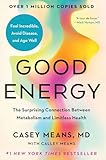
Casey Means is an American physician and metabolic health advocate known for her work on the connection between lifestyle, nutrition, and chronic disease.
Casey Means is a Stanford-trained physician who left conventional medicine to focus on metabolic health and the root causes of chronic illness. Co-founder of the health technology company Levels, she brings both clinical expertise and a personal reckoning with the healthcare system to her writing. Her debut book, Good Energy, draws on her medical background to argue that most modern diseases — from obesity to depression — share a common origin in cellular dysfunction.
In Good Energy, Means makes a sweeping case that the food system, healthcare incentives, and modern lifestyle have combined to undermine human metabolism at a fundamental level. The book is ambitious in scope, weaving together biochemistry, public health criticism, and personal anecdote into a readable whole. Her prescription is practical: prioritize sleep, movement, whole foods, and light exposure rather than pharmaceutical fixes. The argument is not always subtle, and critics have noted that her targets — ultra-processed food, the pharmaceutical industry — are sometimes drawn too broadly.
Means writes with genuine conviction and has built a significant audience among readers frustrated with conventional health advice. Those seeking nuanced scientific debate may find her certainty occasionally overreaches the evidence, but for readers looking for a clear framework to rethink their metabolic health, Good Energy is a galvanizing starting point.
The central thesis that animates Means’s work is the claim that metabolic dysfunction lies at the root of an enormous range of modern chronic illnesses, and that conventional medicine, by treating these conditions as separate diseases, misses their common origin. In Good Energy, she argues that conditions as seemingly unrelated as type 2 diabetes, heart disease, obesity, depression, infertility, and even certain cancers can be understood as downstream consequences of the same underlying problem: cells that are unable to produce and use energy efficiently. This framing leads her to emphasize blood sugar regulation, mitochondrial function, and the body’s capacity to convert food into usable energy as the foundations of health. Her prescriptions follow logically and are largely uncontroversial in their specifics, prioritizing whole, unprocessed foods, regular movement, quality sleep, exposure to natural light, and the reduction of chronic stress, while remaining skeptical of a medical system she sees as too quick to manage symptoms with pharmaceuticals rather than addressing root causes. The power of the argument lies in its unifying simplicity, offering readers a single explanatory framework for the bewildering array of health problems that afflict modern life, and a coherent, lifestyle-centered path toward addressing them.
From Surgeon to Health Entrepreneur
Means’s authority and her perspective are both shaped by an unusual personal trajectory: a Stanford-trained physician who began surgical training before leaving conventional medicine out of disillusionment with a system she came to see as oriented toward treating symptoms rather than preventing disease. This personal reckoning is central to her public identity and to the persuasive force of her writing; she presents herself not as an outsider attacking medicine from ignorance but as an insider who trained within the system and concluded that it was failing patients at a fundamental level. Following this departure, she became an entrepreneur, co-founding a health technology company focused on continuous glucose monitoring, which reflects her conviction that giving people real-time data about their own metabolic responses can empower them to make better choices. Her work thus combines clinical credentials, personal narrative, scientific argument, and commercial venture, a combination that has helped her build a substantial following among readers and consumers frustrated with conventional healthcare. This same combination, however, invites scrutiny, as critics note the potential tension between her health advocacy and her commercial interests, a tension that thoughtful readers will want to keep in view as they weigh her claims.
Reception and Controversy
Means has become a prominent and polarizing figure in the contemporary conversation about diet, metabolism, and chronic disease, drawing both an enthusiastic following and serious criticism. Her supporters credit her with articulating, clearly and accessibly, a message that mainstream medicine often neglects: that lifestyle and nutrition are powerful determinants of long-term health, and that prevention deserves far more emphasis than it receives. Her critics, including many within the medical and scientific establishment, caution that her arguments can be sweeping and overstated, that she sometimes draws targets, such as the entire pharmaceutical industry or broad categories of food, too broadly, and that her certainty occasionally outruns the nuance and uncertainty of the underlying evidence. The debate intensified as Means moved further into the public sphere and became associated with broader political and cultural movements around health and wellness, which brought her ideas to a much larger audience while also subjecting them to heightened and often partisan scrutiny. A fair assessment recognizes both the genuine value of her emphasis on metabolic health and lifestyle medicine, which aligns with substantial scientific evidence, and the legitimate concerns about overreach, commercial interest, and the gap between confident assertion and established proof. Readers are best served by engaging her ideas critically rather than accepting or dismissing them wholesale.
Where to Start with Means
The starting point is Good Energy, her debut book and the fullest statement of her metabolic health philosophy, co-written with her brother; it presents her central argument that cellular and metabolic dysfunction underlies much of modern chronic disease, along with her practical, lifestyle-focused prescriptions for addressing it. Readers should approach the book as a galvanizing, accessible framework for rethinking their own health rather than as a balanced scientific review, keeping in mind both the substantial evidence supporting the importance of nutrition, movement, sleep, and stress management, and the legitimate criticisms that her certainty sometimes exceeds the proof and that her commercial interests warrant awareness. Those who find her perspective compelling and want to engage further can explore her writing, interviews, and public talks, where she elaborates on metabolic health and her critique of the conventional medical system, and the continuous glucose monitoring approach her company champions for those interested in tracking their own metabolic responses. As with any single-perspective health book, readers will benefit from supplementing Good Energy with other viewpoints and consulting their own medical advisors. But for a clear, motivating introduction to the case for metabolic health and lifestyle medicine, Good Energy is the essential place to begin with Means’s work.
Reading Guides