Where to Start with Jessie Inchauspé: A Reading Guide
Where to start with Jessie Inchauspé — how to approach Glucose Revolution, her accessible, evidence-backed guide to flattening blood sugar spikes through ten practical daily habits without restricting the foods you love. A complete reading guide.
By Priya Anand
Jessie Inchauspé (born 1990) is a French biochemist who studied mathematics in London and biochemistry at Georgetown University before working at a genomics startup in Silicon Valley. A serious spinal injury during that period led her to begin wearing a continuous glucose monitor to understand how different foods and behaviours affected her recovery — and what she observed became the foundation for the Glucose Goddess Instagram account, which has attracted more than four million followers, and for Glucose Revolution (2022), her first book, which became an international bestseller.
Where to Start: Glucose Revolution (2022)
The essential Jessie Inchauspé — and one of the best-evidenced popular health books of recent years. Glucose Revolution begins with a claim that distinguishes it from most dietary advice: you do not need to give up the foods you love. The problem is not pasta or chocolate or bread in themselves but the conditions under which they are eaten — the order in which they arrive, what accompanies them, what happens in the hour afterward — and those conditions can be changed without deprivation.
The blood sugar spike thesis is the book’s central argument. When you eat carbohydrates, especially refined ones, your blood glucose rises rapidly; the pancreas releases insulin to bring it down; if the spike is large enough, the insulin response overshoots and glucose falls below baseline, triggering energy crashes, cravings, and mood fluctuations. Inchauspé argues that this cycle — spike, crash, crave — drives a surprising proportion of the energy problems, focus difficulties, and mood instability that most people attribute to stress, poor sleep, or personality. The fix is to flatten the spikes.
The food order hack is the book’s most counterintuitive and most research-supported recommendation: eat your vegetables first, then protein and fat, then starches and sugars — not all mixed together in the conventional Western way. The logic is straightforward: fibre consumed before carbohydrates slows gastric emptying and creates a physical barrier that reduces the speed of glucose absorption. Multiple clinical studies have shown that this sequence — identical food, different order — produces significantly flatter glucose curves. It requires no dietary restriction, no calorie counting, and no expensive supplements.
The post-meal walk is similarly evidence-grounded. Physical activity, particularly muscle contractions in the legs, pulls glucose from the bloodstream directly into muscle cells without requiring insulin. A ten-minute walk after eating — not before, not hours later, but within ninety minutes of finishing the meal — consistently reduces peak glucose by a meaningful amount. The mechanism is well-understood; the effect is real.
The savoury breakfast argument challenges the default of most Western countries. A breakfast of cereal, toast, fruit juice, or pastry — all primarily sugar and refined starch — produces a substantial morning glucose spike followed by a mid-morning crash that drives cravings and brain fog. Replacing it with eggs, avocado, Greek yogurt, or any combination of protein and fat produces a flat, sustained glucose profile through the morning. Inchauspé presents this not as a restriction but as an upgrade.
Where the book shows appropriate restraint is in its scope: Inchauspé is careful to position the hacks as practical improvements rather than medical treatments, and to acknowledge that individual responses to food vary considerably. The framework is a tool, not a prescription.
Why Glucose Revolution Is the Ideal First Book
For a reader new to Jessie Inchauspé, known as the Glucose Goddess, Glucose Revolution is the ideal first book because it is her breakout work and the fullest expression of her central message about blood sugar and health. Glucose Revolution presents her argument that managing blood-sugar spikes through simple changes to how we eat can improve energy, cravings, mood, and health, offered with accessible explanations and practical hacks. As an entry point it is ideal, for it is her best-known book and the clearest statement of her approach. It welcomes the newcomer with its accessible explanations, its practical tips, and its engaging style, drawing the reader into her perspective on blood sugar and health. Readers are wise to engage critically, recognizing that nutrition science is complex and evolving, that the book simplifies and has a strong point of view, and that it is not a substitute for medical advice, especially for those with diabetes or other conditions. It is her defining work, so the new reader encounters Inchauspé’s message directly. For the newcomer, then, Glucose Revolution is a natural starting point, best approached thoughtfully.
What to Expect as a New Reader
As a new reader, you can expect Glucose Revolution to be an accessible, practical, and engaging book about blood sugar and health. You can expect a central message, that managing blood-sugar spikes through simple changes to how we eat can improve energy, cravings, mood, and health. You can expect accessible explanations, for Inchauspé makes the science of blood sugar approachable for the general reader. You can expect practical hacks, for the book offers simple, actionable tips for steadying blood sugar, such as the order in which to eat foods. You can expect an engaging, friendly style. You should engage critically, recognizing that the book simplifies complex science, argues a strong point of view, and is not a substitute for medical advice, particularly for those with diabetes or other health conditions. Expect, in short, an accessible, practical, and engaging book about blood sugar and health, best approached thoughtfully and critically.
Going Deeper After Your First Book
Once Glucose Revolution has introduced you to Inchauspé’s message, the reader who wishes to go deeper can explore her other work and the wider literature on nutrition, metabolism, and health, reading throughout with appropriate critical awareness. Her follow-up offers further practical guidance and recipes in the same accessible style, while the broad and evolving field of nutrition science offers many perspectives, some supporting and some qualifying her claims, that the thoughtful reader weighs together. Reading more widely, and critically, deepens your engagement with the complex questions of diet and metabolic health, and the reader is well served by consulting other experts and a doctor for personal decisions. Inchauspé’s accessible message is one voice in a contested and simplifying field. Building your reading journey from Glucose Revolution is a matter of following its themes into her other work and the wider nutrition literature, held critically. The reader who begins here will have encountered a popular and accessible, if simplified, take on blood sugar and health.
Reading Jessie Inchauspé
Glucose Revolution is Inchauspé’s essential book and the natural starting point. Her follow-up The Glucose Goddess Method (2023) translates the framework into a structured four-week programme for readers who want a more guided implementation.
For the full Jessie Inchauspé bibliography, reviews, and biography, visit the Jessie Inchauspé author page on Editors Reads.
Affiliate disclosure: Links to Amazon on this page are affiliate links. We earn a small commission at no extra cost to you.
Frequently Asked Questions
Where should I start with Jessie Inchauspé?
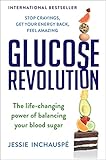
Glucose Revolution: The Life-Changing Power of Balancing Your Blood Sugar (2022) is Inchauspé's essential book — an accessible, evidence-backed guide to managing blood sugar spikes through ten practical daily habits rather than dietary restriction. Inchauspé is a French biochemist who began wearing a continuous glucose monitor after a serious accident and became fascinated by the patterns she observed. Her Glucose Goddess Instagram account preceded the book and has attracted millions of followers. The book translates the science of continuous glucose monitoring research into actionable strategies that don't require giving up the foods you love.
What is Glucose Revolution about?
The book argues that blood sugar spikes and crashes — not just for diabetics but for everyone — drive a surprisingly wide range of daily problems: energy crashes, brain fog, mood instability, cravings, poor sleep, and over time, metabolic and hormonal dysfunction. Inchauspé identifies ten 'glucose hacks' supported by clinical research: eating vegetables before starches and sugars (fibre first slows glucose absorption), having a savoury breakfast instead of a sweet one, walking after meals to pull glucose into muscle cells, adding vinegar before high-carbohydrate meals, eating fruit whole rather than juiced, and not eating naked carbohydrates without some protein or fat. The framework is non-restrictive: the goal is not eliminating foods but changing the order and context in which they are eaten.
How reliable is the science in Glucose Revolution?
The core research is solid. The continuous glucose monitoring studies Inchauspé cites are real, and the practical hacks she derives from them — particularly the food order hack and the post-meal walk — have consistent research support across multiple studies. Some of the more specific claims draw on smaller studies that require replication, and Inchauspé presents the findings with more certainty than the full evidence sometimes supports. The book should be read as a well-evidenced popular science work rather than settled clinical guidance. The hacks are low-risk and practically tested; readers with diabetes or other metabolic conditions should consult a doctor before applying them systematically.
What should I read after Glucose Revolution?
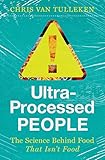
After Glucose Revolution, Satchin Panda's The Circadian Code covers the timing dimension of metabolic health — when you eat matters as much as what you eat — with a stronger scientific background and more depth on the circadian biology. Robert Lustig's Metabolical covers the same metabolic dysfunction territory at considerably greater depth and with more institutional critique. For a broader framework on ultra-processed food and metabolic health, Chris van Tulleken's Ultra-Processed People provides the most recent and most grounded popular treatment of how modern food is designed and what it does.