Where to Start with Chris van Tulleken: A Reading Guide
Where to start with Chris van Tulleken — how to approach Ultra-Processed People, his investigation into the science of ultra-processed food and its health effects. A complete reading guide.
By Priya Anand
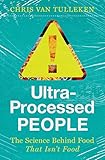
Chris van Tulleken is a British infectious disease doctor, academic at University College London, and BBC science presenter. Ultra-Processed People: The Science Behind Food That Isn’t Food (2023) was published by W. W. Norton and became a major bestseller in the United Kingdom, drawing wide attention to the NOVA classification system and the health implications of ultra-processed food at a scale the research community had not previously reached general audiences.
Where to Start: Ultra-Processed People (2023)
The essential Chris van Tulleken — and the most thorough and scientifically rigorous examination of ultra-processed food available in popular form. Ultra-Processed People begins with a classification system that most people have never heard of but which explains an enormous amount about why modern food is so difficult to stop eating.
The NOVA system, developed by Brazilian nutritionist Carlos Monteiro, classifies food not by nutrients — not by calories, fat content, or sugar — but by the degree of industrial processing. Ultra-processed foods (UPFs) are defined by the presence of ingredients not typically used in home cooking: emulsifiers, flavour enhancers, artificial colours, texture modifiers, and preservatives manufactured through industrial processes designed to produce convenience, hyperpalatability, and long shelf life. By this definition, ultra-processed food constitutes over 57% of calories consumed in the United Kingdom and over 60% in the United States. The figure is rising.
Van Tulleken spent years reading the research on UPF health outcomes, and what he found was consistent across countries, populations, and study designs: elevated UPF consumption is associated with obesity, type 2 diabetes, cardiovascular disease, certain cancers, depression, inflammatory bowel disease, and cognitive decline. The correlations are not marginal or contested; they are dose-dependent and observed even after controlling for overall dietary quality. The question is not whether the association exists but what causes it.
To understand the experience of UPF dependence directly, van Tulleken ate a diet of 80% ultra-processed food for one month while being monitored by UCL researchers. The results were visceral: significant weight gain, disrupted gut microbiome, changes to brain connectivity associated with compulsive eating, and subjective reports of being unable to stop eating even when satiated. The self-experiment is the book’s most persuasive section for readers who are sceptical of epidemiological correlations — van Tulleken is not reporting on other people’s bodies but on his own, in real time.
The book’s most politically important section is its analysis of the ultra-processed food industry. Van Tulleken traces the specific strategies used to protect profitable products from meaningful regulation: funding research with designs favourable to industry conclusions, promoting individual responsibility narratives that divert attention from product engineering, and deploying lobbying tactics documented and refined by the tobacco industry. The parallel is not metaphorical — several of the same consultants and strategies were directly transferred. The industry section is alarming because it demonstrates that the UPF problem cannot be solved by better individual choices alone. The choices available are themselves the product of industry decisions about palatability engineering and price accessibility.
Van Tulleken is careful throughout about what the evidence supports and what it does not. The epidemiological associations are strong; the precise mechanisms remain under investigation. He does not claim to have resolved the causal picture, but he argues — convincingly — that the weight of evidence is sufficient to warrant both individual caution and policy intervention.
Why Ultra-Processed People Is the Ideal First Book
For a reader new to Chris van Tulleken, Ultra-Processed People is the ideal first book because it is his acclaimed breakout work and the fullest expression of his central argument about ultra-processed food and its effects on health. Ultra-Processed People examines what ultra-processed food is, how it differs from real food, and how it may be harming our health, drawing on science, reporting, and the author’s own experiment. As an entry point it is ideal, for it is his best-known book and the clearest statement of his argument. It welcomes the newcomer with its compelling subject, its scientific reporting, and its engaging style, drawing the reader into the debate over ultra-processed food. Readers are wise to engage thoughtfully, recognizing that nutrition science is complex and evolving and that the book argues a strong point of view; it is not a substitute for medical advice. It is his defining work and the one that best represents his thinking, so the new reader encounters van Tulleken’s argument directly. For the newcomer, then, Ultra-Processed People is a natural starting point, best approached thoughtfully.
What to Expect as a New Reader
As a new reader, you can expect Ultra-Processed People to be a compelling, well-reported, and strongly argued book about ultra-processed food. You can expect a central argument, that ultra-processed food differs fundamentally from real food and may be harming our health. You can expect scientific reporting, for van Tulleken, a doctor and broadcaster, draws on research, interviews, and his own experiment of eating an ultra-processed diet. You can expect a critique of the modern food system and the industry behind it. You can expect engaging, accessible storytelling that makes the science vivid. You can expect a strong point of view, which the thoughtful reader weighs critically, recognizing that nutrition science is complex and evolving and that the book is not a substitute for medical advice. Expect, in short, a compelling, well-reported, and strongly argued book about ultra-processed food, best approached thoughtfully and critically.
Going Deeper After Your First Book
Once Ultra-Processed People has introduced you to van Tulleken’s argument, the reader who wishes to go deeper can carry its themes into the wider literature on nutrition, food systems, and health, reading throughout with appropriate critical awareness. The broad and evolving field of writing on diet, processed food, and public health offers many perspectives, some reinforcing and some qualifying his argument, that the thoughtful reader weighs together, and the reader is well served by consulting other experts and a doctor for personal decisions. Reading more widely, and critically, deepens your engagement with the complex questions of food and health that his book raises. Van Tulleken’s strongly argued case is one influential voice in an ongoing debate. Building your reading journey from Ultra-Processed People is a matter of carrying its themes into the wider literature on food and health, held critically. The reader who begins here will have encountered a prominent and engaging, if pointed, contribution to the debate over ultra-processed food.
Reading Chris van Tulleken
Ultra-Processed People is van Tulleken’s essential book. It stands alone and requires no prior reading.
For the full Chris van Tulleken bibliography, reviews, and biography, visit the Chris van Tulleken author page on Editors Reads.
Affiliate disclosure: Links to Amazon on this page are affiliate links. We earn a small commission at no extra cost to you.
Frequently Asked Questions
Where should I start with Chris van Tulleken?
Ultra-Processed People: The Science Behind Food That Isn't Food (2023) is van Tulleken's essential book — the most comprehensive and scientifically rigorous examination of ultra-processed food available. An infectious disease doctor combines personal experimentation, research synthesis, and industry analysis into an alarming and important account of how the food environment shapes health outcomes.
What is Ultra-Processed People about?
Ultra-Processed People investigates the science of ultra-processed food — the class of industrially manufactured products containing ingredients not typically used in home cooking, which now make up over 57% of calories consumed in the UK and over 60% in the US. Van Tulleken examines research linking UPF consumption to obesity, metabolic disease, cardiovascular disease, depression, and cancer, and investigates why these products are so difficult to stop eating.
Is Ultra-Processed People's science reliable?
Ultra-Processed People is written by an infectious disease doctor with NHS and academic credentials, and the research coverage is unusually careful and well-qualified. Van Tulleken distinguishes clearly between established correlations and speculative mechanisms, and he is transparent about the limitations of the evidence base. The epidemiological links between UPF consumption and negative health outcomes are extensive and consistent; the precise causal mechanisms are less settled and he says so.
What should I read after Ultra-Processed People?
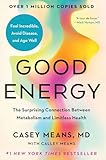
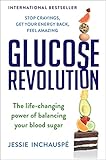
After Ultra-Processed People, Michael Pollan's The Omnivore's Dilemma covers the food system with comparable critical depth and reaches similar conclusions from a different angle. Jessie Inchauspe's Glucose Revolution covers blood glucose management — the specific metabolic mechanism most affected by ultra-processed food — with practical dietary strategies. Casey Means's Good Energy covers the metabolic framework into which UPF consumption fits as a primary driver.