Where to Start with Michael Greger: A Reading Guide
Where to start with Michael Greger — how to approach How Not to Die, his comprehensive examination of the nutritional science behind preventing the fifteen leading causes of premature death. A complete reading guide.
By Priya Anand

Michael Greger is an American physician, public health advocate, and founder of NutritionFacts.org, a non-profit science-based website that synthesises the primary nutrition literature for general audiences. How Not to Die: Discover the Foods Scientifically Proven to Prevent and Reverse Disease (2015) was published by Flatiron Books, became an immediate bestseller, and remained on bestseller lists for years — driven by its combination of medical credentials, exhaustive citation, and a practical framework that readers found immediately applicable.
Where to Start: How Not to Die (2015)
The essential Michael Greger — and the most comprehensive review of nutrition research and chronic disease available in popular form. How Not to Die opens with a straightforward and somewhat radical argument: the medical establishment, despite its enormous sophistication in treating disease, is poorly equipped to prevent it. Medical education includes very little nutrition training. The pharmaceutical industry has limited financial incentive to fund research on dietary prevention. The result is a system that is excellent at treating the late-stage consequences of chronic disease and structurally underprepared to prevent them.
The book’s first half is structured disease by disease, working through the fifteen leading causes of premature death in America: heart disease, lung disease, brain diseases (including Alzheimer’s), digestive cancers, infections, diabetes, hypertension, liver disease, blood cancers, kidney disease, breast cancer, suicidal depression, prostate cancer, Parkinson’s disease, and iatrogenic causes (harm caused by medical treatment). For each, Greger synthesises the research on nutritional risk factors and protective foods, with citation of primary studies.
The consistent pattern across most conditions is that whole plant foods — vegetables, fruits, legumes, whole grains, nuts, and seeds — appear most consistently associated with reduced disease risk in the research literature, while ultra-processed foods and high consumption of animal products appear most consistently associated with increased risk. Greger presents this evidence with a thoroughness that makes it difficult to dismiss, even for readers who do not adopt his plant-based conclusions.
The Daily Dozen is the book’s most practical contribution: a checklist of twelve food categories Greger recommends consuming each day — beans, berries, other fruits, cruciferous vegetables, greens, other vegetables, flaxseed, nuts, spices (particularly turmeric), whole grains, beverages (primarily water), and physical activity. The Daily Dozen app, available free, has been downloaded millions of times and provides the simplest practical implementation of the book’s conclusions.
Reading with appropriate critical evaluation is important with Greger. He is a committed plant-based advocate, and this position shapes how he presents evidence in ways that are not always fully acknowledged. Most of the research he cites is observational — it shows associations between dietary patterns and health outcomes, but cannot prove causation by itself. The leap from “populations with high vegetable intake have lower heart disease rates” to “eating vegetables prevents heart disease” requires more than observational data alone supports. Some conclusions extend further than the evidence strictly permits.
None of this negates the book’s value. The research Greger synthesises is real and important, and the overall picture — that dietary pattern matters enormously for chronic disease outcomes and that most people in Western countries eat in ways that increase their risk — is supported by a robust and growing body of evidence. The specifics require critical engagement; the broad argument does not.
Why How Not to Die Is the Ideal First Book
For a reader new to Michael Greger, How Not to Die is the ideal first book because it is his most popular work and the fullest expression of his distinctive approach, the marshaling of nutrition research to argue for the power of a whole-food, plant-based diet in preventing and treating disease. How Not to Die examines the leading causes of death and argues, citing research, that dietary and lifestyle changes, especially a plant-based diet, can help prevent and even reverse many of them. As an entry point it is ideal, for it is his best-known book and the fullest statement of his nutritional approach. It welcomes the newcomer with its sweeping argument, its emphasis on whole, plant-based foods, and its accessible style, drawing the reader into his perspective on diet and health. Readers are wise to engage critically, recognizing that nutrition science is complex and evolving, that the book has a strong point of view, and that other experts hold differing views; it is not a substitute for medical advice. It is his most prominent work, so the new reader encounters Greger’s arguments directly. For the newcomer, then, How Not to Die is a natural starting point, best approached thoughtfully.
What to Expect as a New Reader
As a new reader, you can expect How Not to Die to be a comprehensive, research-citing, and strongly argued book about diet and health. You can expect a central argument, that dietary and lifestyle changes, especially a whole-food, plant-based diet, can help prevent and even reverse many leading causes of death. You can expect a disease-by-disease structure, for Greger examines major causes of death and the dietary factors he links to them. You can expect heavy citation of studies, for Greger grounds his claims in research, though selectively and from a clear point of view. You can expect practical dietary guidance favoring whole, plant-based foods. You can expect an accessible, enthusiastic, and advocacy-driven style. You should engage critically, recognizing that nutrition science is complex, that the book argues a strong position, and that it is not a substitute for professional medical advice. Expect, in short, a comprehensive, research-citing, and strongly argued book about diet and health, best approached thoughtfully and critically.
Going Deeper After Your First Book
Once How Not to Die has introduced you to Greger’s approach, the reader who wishes to go deeper can explore his other books and the wider literature on diet and health, reading throughout with appropriate critical awareness. His later works offer practical guidance on eating and on weight, extending his plant-based approach, while the broad and evolving field of nutrition science offers many perspectives, some agreeing with Greger and some dissenting, that the thoughtful reader weighs together. Reading more widely, and critically, deepens your engagement with the complex questions of diet and health, and the reader is well served by consulting other experts and a doctor for personal decisions. Greger’s strongly argued case is one voice among many in a contested field. Building your reading journey from How Not to Die is a matter of following its themes into his other work and the wider nutrition literature, held critically. The reader who begins here will have encountered a prominent and strongly argued, if contested, advocate for a plant-based diet.
Reading Michael Greger
How Not to Die is Greger’s essential and most comprehensive book. It stands alone and requires no prior reading.
For the full Michael Greger bibliography, reviews, and biography, visit the Michael Greger author page on Editors Reads.
Affiliate disclosure: Links to Amazon on this page are affiliate links. We earn a small commission at no extra cost to you.
Frequently Asked Questions
Where should I start with Michael Greger?
How Not to Die: Discover the Foods Scientifically Proven to Prevent and Reverse Disease (2015) is Greger's essential book — a comprehensive disease-by-disease examination of the nutritional science behind preventing the fifteen leading causes of premature death in America. The most thorough review of nutrition and chronic disease available for general readers, with the caveat that Greger's plant-based advocacy position requires readers to apply critical evaluation to some conclusions.
What is How Not to Die about?
How Not to Die examines the scientific evidence on which foods prevent and sometimes reverse the fifteen leading causes of premature death — including heart disease, cancer, diabetes, and Alzheimer's. Greger synthesises research from the primary literature, disease by disease, and arrives at consistent conclusions: whole plant foods appear most consistently protective; processed foods and animal products most consistently associated with increased risk. The second half provides the Daily Dozen — a practical daily food checklist.
Is How Not to Die's science reliable?
How Not to Die cites a large body of real nutrition research, but Greger is a committed plant-based advocate and some of his conclusions extend further than the evidence strictly supports. Most cited research is observational — showing association between diet and outcomes rather than proving causation. The research is real and important; the interpretive framing sometimes overstates certainty. Readers will get the most from the book by engaging with the cited studies critically rather than accepting all conclusions at face value.
What should I read after How Not to Die?
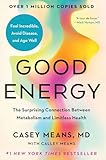
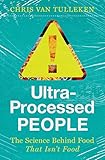
After How Not to Die, Chris van Tulleken's Ultra-Processed People covers the evidence on ultra-processed food specifically with comparable scientific rigour and without Greger's plant-based framing. Casey Means's Good Energy covers metabolic health as the underlying framework connecting diet and chronic disease with more integrative depth. Peter Attia's Outlive covers longevity nutrition with more nuance about protein, exercise, and the limits of observational nutrition research.