Where to Start with Max Lugavere: A Reading Guide
Where to start with Max Lugavere — how to approach Genius Foods, his research-based guide identifying the ten foods that most protect brain health and cognitive function, informed by watching his mother's Lewy body dementia diagnosis. A complete reading guide.
By Priya Anand
Max Lugavere (born 1983 in New York) is an American journalist, filmmaker, and health and science communicator who began investigating the relationship between diet and brain health after his mother was diagnosed with Lewy body dementia in 2010. He has reported on neuroscience and nutrition for Vice, Fast Company, and Medscape, produced documentary films, and built a substantial audience as a podcast host. Genius Foods (2018) is his first book — a synthesis of the research on dietary brain protection that he accumulated over several years — and was followed by The Genius Life (2020).
Where to Start: Genius Foods (2018)
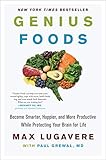
Lugavere began researching nutritional neuroscience after his mother was diagnosed with a rare dementia — and Genius Foods is the result: a rigorously sourced account of how diet affects the brain, made accessible without being simplified. Genius Foods opens with a personal origin story that establishes both its stakes and its author’s credibility: Lugavere’s mother began showing cognitive symptoms in her mid-fifties and was eventually diagnosed with Lewy body dementia, one of the more aggressive neurodegenerative diseases. The years he spent investigating what might have been done — and what can still be done — are the book’s animating force.
The neuroinflammation framework is the book’s central explanatory structure. Lugavere argues that chronic low-grade inflammation in the brain is the common pathway underlying most neurodegenerative disease, and that diet is one of the most powerful modifiable influences on that inflammation. The highly processed, high-glycaemic, seed-oil-rich diet of modern Western eating consistently drives neuroinflammation; the Mediterranean-adjacent pattern he advocates — rich in anti-inflammatory fats, polyphenols, and micronutrients — consistently reduces it. The research base for this is largely observational, which Lugavere acknowledges, but the mechanistic plausibility is strong and the risk of adopting a less processed diet is effectively zero.
The ten genius foods are presented individually with specific evidence for each. Extra-virgin olive oil is the most extensively studied single food in this context — the epidemiological evidence for Mediterranean olive oil consumption and cognitive protection is among the strongest in nutrition research. Wild-caught fatty fish provide the DHA that constitutes a substantial portion of brain cell membranes. Dark leafy greens, eggs, and avocados round out a list that is notable for overlapping almost entirely with foods that are independently recommended for cardiovascular health, which Lugavere argues is not coincidental: the brain and heart share most of the same dietary risk factors.
The practical section includes meal planning, food sourcing guidance, and a clear discussion of what to eliminate (industrial seed oils, refined carbohydrates, and ultra-processed food feature prominently) alongside what to add. The elimination argument is presented as at least as important as the addition argument, which reflects the research literature accurately.
Why Genius Foods Is the Ideal First Book
For a reader new to Max Lugavere, Genius Foods is the ideal first book because it is his breakout work and the fullest expression of his central subject, the relationship between nutrition and brain health. Genius Foods explores how the foods we eat affect our cognitive function, mood, and long-term brain health, presenting Lugavere’s case for eating in ways that support the brain, drawn from research and his own investigation prompted by his mother’s illness. As an entry point, it is ideal because it lays out his central subject directly and accessibly, offering an engaging exploration of nutrition and brain health along with practical guidance. It welcomes the newcomer with its compelling subject, its accessible presentation, and its practical orientation, drawing the reader into an engaging exploration of food and the brain. It is his best-known book and the one that best represents his approach, so that the new reader encounters Lugavere’s central subject from the first. For the newcomer interested in nutrition and brain health, then, Genius Foods is the natural and ideal starting point, though the reader is wise to engage critically with nutrition claims as with any popular health book.
What to Expect as a New Reader
As a new reader, you can expect Genius Foods to be an engaging and accessible exploration of the relationship between nutrition and brain health. You can expect a focus on food and the brain, for Lugavere explores how the foods we eat affect our cognitive function, mood, energy, and long-term brain health. You can expect a personal motivation, for Lugavere’s investigation was prompted by his mother’s illness, lending the book a personal urgency. You can expect practical guidance, for the book identifies foods that Lugavere argues support brain health and offers an approach to eating for the brain. You can expect an accessible, engaging presentation that draws on research while remaining approachable for the general reader. You should engage critically with the book’s nutrition claims, as is wise with any popular health book, recognizing that nutrition science is complex and evolving. Expect, in short, an engaging and accessible exploration of nutrition and brain health, a useful introduction to Lugavere’s subject, best approached with appropriate critical awareness.
Going Deeper After Your First Book
Once Genius Foods has introduced you to Lugavere’s subject, the reader who wishes to go deeper can explore his other work and the wider literature on nutrition, brain health, and well-being to which his work contributes, reading further with appropriate critical awareness. His other work continues his engagement with nutrition, health, and well-being, while the broad and evolving field of nutrition science and the wider literature on brain health offer further perspectives, which the thoughtful reader engages critically. Reading more deeply, and with appropriate critical awareness, deepens your engagement with the relationship between nutrition and health. Lugavere’s accessible presentation offers an engaging introduction, and the reader who has absorbed it is well equipped to explore the wider literature thoughtfully, recognizing the complexity and the evolving nature of nutrition science. Building your reading journey from Genius Foods is a matter of pursuing its subject through Lugavere’s further work and the wider literature on nutrition and health. The reader who begins with Genius Foods will have an accessible introduction to the relationship between nutrition and brain health, best held alongside a critical and well-rounded engagement with the science.
Reading Max Lugavere
Genius Foods is Lugavere’s essential book. The Genius Life (2020) is the natural follow-on, extending the framework beyond diet to sleep, exercise, light exposure, and environmental factors that affect cognitive function.
For the full Max Lugavere bibliography, reviews, and biography, visit the Max Lugavere author page on Editors Reads.
Affiliate disclosure: Links to Amazon on this page are affiliate links. We earn a small commission at no extra cost to you.
Frequently Asked Questions
Where should I start with Max Lugavere?
Genius Foods: Become Smarter, Happier, and More Productive While Protecting Your Brain for Life (2018) is Lugavere's essential book — a research-based guide identifying the dietary patterns and specific foods most associated with cognitive protection, written after his mother was diagnosed with Lewy body dementia and he spent years investigating what could have been done differently. Lugavere is a journalist and filmmaker who trained himself extensively in the neuroscience and nutrition research, and the book reflects that background: the science is carefully cited, the caveats are honest, and the practical recommendations are specific. The ten genius foods include extra-virgin olive oil, avocados, blueberries, dark chocolate, wild salmon, dark leafy greens, eggs, almonds, and grass-fed beef.
What is Genius Foods about?
Genius Foods argues that cognitive decline and dementia are not primarily genetic inevitabilities but largely preventable conditions whose risk can be substantially reduced through dietary intervention, beginning decades before symptoms appear. Lugavere identifies chronic neuroinflammation — driven primarily by diet, sleep deprivation, and sedentary behaviour — as the common mechanism underlying most neurodegenerative disease, and argues that the foods in his list are specifically protective because they reduce inflammation, support mitochondrial function, provide brain-essential fatty acids, or clear the metabolic waste products that accumulate in the brain during waking hours. The book also covers sleep, exercise, and stress management as essential complements to dietary changes.
How credible is the science in Genius Foods?
Lugavere is more careful about the evidence than most popular health authors — he distinguishes clearly between observational associations (most nutrition research) and mechanistic evidence, and flags when he is extrapolating from animal studies to human recommendations. The core claims about olive oil, omega-3 fatty acids, and the Mediterranean dietary pattern in general have the strongest evidence base; the claims about specific supplements and some individual foods are made on weaker grounds, and Lugavere acknowledges this. The book should be read as a summary of current research trends rather than a set of proven prescriptions. The direction of the evidence — that diet matters for brain health and that processed food is harmful — is well-supported even if many specific mechanisms remain uncertain.
What should I read after Genius Foods?
After Genius Foods, Lugavere's The Genius Life (2020) extends the framework beyond diet to encompass sleep, light exposure, exercise, and environmental toxins. Dale Bredesen's The End of Alzheimer's covers the clinical research on reversing early cognitive decline with more medical depth and a different protocol. For the broader metabolic context, Robert Lustig's Metabolical covers the industrial food system and its health effects with comparable scientific rigour. David Perlmutter's Grain Brain covers the carbohydrate-neuroinflammation link from a neurologist's perspective, making a similar argument from clinical practice rather than journalism.