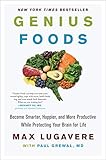
Editors Reads Verdict
Genius Foods is the most accessible and well-researched book on the diet-brain connection available — Lugavere translates complex neuroscience into practical dietary guidance with unusual clarity and genuine intellectual honesty about the state of the evidence.
What We Loved
- Lugavere is unusually honest about the strength and limitations of the evidence he cites
- The ten genius foods are well-chosen and the reasoning for each is clearly explained
- The personal story (his mother's Lewy body dementia diagnosis) gives the research genuine stakes
- The practical meal planning section makes the recommendations accessible
Minor Drawbacks
- Some recommendations are made ahead of what the evidence can currently support
- The book is nutrient-dense in places that general readers may find overwhelming
- The supplements section is less well-evidenced than the food section
Key Takeaways
- → Diet is one of the most modifiable risk factors for cognitive decline and dementia
- → The brain prefers fat and ketones over glucose as fuel — chronic high glucose damages it
- → Olive oil, dark leafy greens, dark chocolate, avocados, and wild-caught salmon are among the most brain-protective foods
- → Sleep is when the brain clears the metabolic waste products that accumulate during the day
- → Chronic inflammation — driven largely by diet — is the primary driver of neurodegenerative disease
| Author | Max Lugavere |
|---|---|
| Publisher | Harper Wave |
| Pages | 352 |
| Published | March 20, 2018 |
| Language | English |
| Genre | Health, Science |
| Difficulty | Beginner |
| Best For | Anyone interested in protecting their brain health and cognitive function through diet — particularly those with family history of dementia or concerns about cognitive ageing. |
How Genius Foods Compares
Genius Foods at a glance against 3 similar books readers weigh alongside it.
| Book | Author | Rating | Best for |
|---|---|---|---|
| Genius Foods (this book) | Max Lugavere | ★ 4.3 | Anyone interested in protecting their brain health and cognitive function |
| Metabolical | Robert Lustig | ★ 4.3 | Readers interested in the science of nutrition, metabolic health, and chronic |
| The Circadian Code | Satchin Panda | ★ 4.4 | Anyone interested in the science of health optimisation — particularly those |
| The Longevity Paradox | Steven Gundry | ★ 4.0 | Health-conscious readers interested in longevity, gut health, and anti-ageing |
Personal Stakes, Scientific Research
Max Lugavere’s mother was diagnosed with Lewy body dementia when she was in her late fifties. Her decline over the following years sent Lugavere on a years-long investigation into the neuroscience of cognitive ageing — consulting with researchers, reviewing the literature, and following the emerging science of diet and brain health. Genius Foods is the result.
The book has a quality that distinguishes it from most popular nutrition writing: Lugavere is genuinely honest about the state of the evidence. He distinguishes between association and causation, notes where research is preliminary, and avoids the overconfident extrapolations that make most dietary advice sound like certainty where uncertainty exists. For a journalist (not a scientist) writing for a general audience, this is unusual and valuable.
The Ten Foods
Lugavere’s central contribution is identifying ten foods with the strongest evidence for brain-protective effects: extra-virgin olive oil, avocados, blueberries, dark chocolate, eggs, grass-fed beef, dark leafy greens, wild salmon, almonds, and broccoli. For each, he explains the specific mechanisms by which it protects the brain — the polyphenols in olive oil, the omega-3s in salmon, the lutein in leafy greens.
The common thread is anti-inflammatory and antioxidant properties. The brain is extraordinarily metabolically active and therefore disproportionately vulnerable to oxidative stress and inflammation. Foods that reduce these processes protect it.
The Lifestyle Factors
Lugavere extends his analysis to lifestyle factors with equally good evidence: sleep (when the brain’s glymphatic system clears metabolic waste), exercise (which promotes BDNF, the brain’s primary growth factor), and stress management. The dietary advice is embedded in a broader picture of brain health that is consistently evidence-grounded.
The Central Mechanisms
What gives Genius Foods more substance than a typical superfood list is its insistence on explaining why each recommendation matters. Three mechanisms recur throughout. The first is inflammation: the brain is the body’s most metabolically demanding organ, and chronic low-grade inflammation, driven largely by a modern diet heavy in refined carbohydrates and industrial seed oils, is implicated across neurodegenerative disease. The second is metabolic health and the brain’s fuel supply: Lugavere argues that chronically elevated blood glucose and insulin resistance damage neural tissue, and that the brain can run efficiently on fat-derived ketones, which is why he favours olive oil, fatty fish, and a lower-glycaemic pattern. The third is oxidative stress, countered by the polyphenols and antioxidants concentrated in leafy greens, berries, and dark chocolate. By anchoring his food choices to these processes rather than to fashion, Lugavere builds a case that holds together as an argument, not just a shopping list, and that connects diet to the broader machinery of brain ageing.
A Journalist’s Honesty About Evidence
The most distinctive quality of Genius Foods is its candour about uncertainty. Lugavere is a science journalist and filmmaker, not a credentialed scientist, and he is upfront about that; rather than overcompensating with false authority, he repeatedly distinguishes correlation from causation, flags where findings rest on animal or observational studies, and resists the overconfident certainty that mars so much diet writing. He wrote the book in part by interviewing leading researchers in neurology and metabolism, and that reporting shows in the carefulness of his hedges. The honest reader will still note the book’s limits: a handful of recommendations run ahead of what the evidence can firmly support, the supplements chapter is weaker than the food chapters, and the dense nutritional biochemistry can overwhelm a casual reader. But these are the limits of an ambitious popular book rather than failures of integrity, and they are easy to forgive in a genre where outright overreach is the norm.
Lugavere’s Wider Project
Genius Foods, published in 2018, was Max Lugavere’s debut and became a bestseller, and it launched a broader career in public-facing nutrition science. He followed it with The Genius Life, which widened the lens from food to the full constellation of lifestyle inputs — light exposure, circadian rhythm, movement, and toxin avoidance — and later with Genius Kitchen, a recipe-driven companion that translates the dietary philosophy into meals. He also hosts a popular podcast and has produced a documentary on diet and brain health, building one of the larger platforms in the brain-nutrition space. Situating Genius Foods within that project clarifies what it is and is not: it is the foundational text, the place where Lugavere first laid out the diet-brain thesis that the rest of his work elaborates. Readers who find it compelling have a clear path forward; those who want a single, self-contained briefing on eating for cognitive health will find that the first book stands perfectly well on its own.
The Grief Beneath the Science, and Who Should Read It
Genius Foods is, at bottom, a book written out of loss. Max Lugavere began his investigation when his mother, in her late fifties, was diagnosed with a form of dementia, and her decline is the emotional spine that turns abstract research into something urgent and personal. That grief keeps the book from feeling like a wellness product; it reads instead like the work of a son trying to understand what might have helped, and what might still help others. The natural audience is anyone motivated to protect their cognitive future through diet and lifestyle — especially readers with a family history of dementia who feel the stakes the way Lugavere does. It also rewards the curious generalist who wants the mechanisms explained rather than merely asserted. Approach it as a well-sourced, accessible starting point rather than a final medical authority, pair its bolder claims with a sceptical eye, and use the closing meal-planning and lifestyle sections — covering sleep, exercise, and stress — to turn the science into daily practice.
Our rating: 4.3/5 — The most accessible and intellectually honest book on diet and brain health available: practically useful and genuinely evidence-based.
Frequently Asked Questions
What is "Genius Foods" about?
Max Lugavere presents the research on diet and brain health, identifying ten foods that improve cognitive function and protect against dementia and cognitive decline.
Who should read "Genius Foods"?
Anyone interested in protecting their brain health and cognitive function through diet — particularly those with family history of dementia or concerns about cognitive ageing.
What are the key takeaways from "Genius Foods"?
Diet is one of the most modifiable risk factors for cognitive decline and dementia The brain prefers fat and ketones over glucose as fuel — chronic high glucose damages it Olive oil, dark leafy greens, dark chocolate, avocados, and wild-caught salmon are among the most brain-protective foods Sleep is when the brain clears the metabolic waste products that accumulate during the day Chronic inflammation — driven largely by diet — is the primary driver of neurodegenerative disease
Is "Genius Foods" worth reading?
Genius Foods is the most accessible and well-researched book on the diet-brain connection available — Lugavere translates complex neuroscience into practical dietary guidance with unusual clarity and genuine intellectual honesty about the state of the evidence.
Ready to Read Genius Foods?
Check the current price on Amazon.
Check Price on Amazon (paid link)Prices and availability are subject to change. See Amazon for current price.
Review last updated: