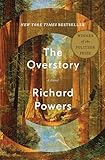
Editors Reads Verdict
The Overstory is an ambitious, necessary, and formally innovative novel that uses the structure of trees — roots, trunk, crown, seeds — to tell nine interlocking human stories about the thing that connects them all: forests. Powers asks what it would mean to take non-human life seriously, and the question changes the shape of every other question in the book.
What We Loved
- The structural conceit — the novel is arranged like a tree — is one of contemporary fiction's most perfect formal achievements
- The science of trees is rendered accessibly and with genuine wonder
- Each of the nine character stories is convincingly rendered as a complete world
- The Pulitzer Prize-winning novel succeeds as both activism and art
Minor Drawbacks
- At 502 pages, the novel's ambition occasionally outstruns its pace — some sections demand patience
- The ecological argument can feel didactic when the narrative yields to exposition
- Some characters serve the novel's themes more than they develop as fully independent people
Key Takeaways
- → Trees communicate, form alliances, support each other, and remember — the forest is not scenery but community
- → The timescale of human attention is catastrophically too short to perceive the life of the world we depend on
- → Radical action in defence of something you love raises moral questions that are not resolved by the love
- → The human story is a small episode in the story of life on Earth — the novel's formal structure embodies this reordering of scale
- → Loss at ecological scale is not metaphor but the literal disappearance of the conditions for life
| Author | Richard Powers |
|---|---|
| Publisher | W. W. Norton |
| Pages | 502 |
| Published | April 3, 2018 |
| Language | English |
| Genre | Literary Fiction, Environmental Fiction, Fiction |
| Difficulty | Advanced |
| Best For | Readers interested in environmental literature, literary fiction with scientific substance, and novels that argue for a fundamental reorientation of how humans understand the non-human world. |
How The Overstory Compares
The Overstory at a glance against 3 similar books readers weigh alongside it.
| Book | Author | Rating | Best for |
|---|---|---|---|
| The Overstory (this book) | Richard Powers | ★ 4.2 | Readers interested in environmental literature, literary fiction with |
| A Short History of Nearly Everything | Bill Bryson | ★ 4.6 | Anyone who has ever felt they missed out on science in school and wants to |
| Sapiens | Yuval Noah Harari | ★ 4.6 | Curious readers of all backgrounds who want to understand how Homo sapiens came |
| The Hidden Life of Trees | Peter Wohlleben | ★ 4.2 | Readers of popular science and nature writing, and anyone who loves forests and |
A Novel Structured Like a Tree
Richard Powers divides The Overstory into four sections named for parts of a tree: Roots, Trunk, Crown, Seeds. Roots introduces nine separate human stories — a multigenerational American family and their chestnut tree, a soldier who survives a fall from the sky because of a banyan, a computer scientist who can hear trees talking, a war veteran, an activist, a student brought back from death by a vision — each complete in itself, each apparently unconnected to the others. In Trunk, the stories begin to converge. In Crown, they meet. In Seeds, they scatter.
The structural conceit is not merely decorative. It is an argument: that the way human consciousness typically organises narrative — individual, causal, temporally compressed — is precisely the kind of consciousness that cannot perceive the forest. Trees operate on timescales that make human lifetimes look like a season, and the novel’s form is an attempt to build a different kind of attention in the reader, one that can begin to perceive things at arboreal scale.
What the Science of Trees Does to the Novel
Powers is one of American fiction’s most technically serious novelists, and The Overstory is built on the science of forest ecology — specifically the research of scientists like Suzanne Simard, whose work on mycorrhizal networks demonstrated that trees communicate and cooperate through underground fungal webs, sharing nutrients and chemical signals. One of the novel’s nine protagonists, the scientist Patricia Westerford, is a version of Simard: a researcher whose findings are initially dismissed as anthropomorphism and later vindicated.
The science transforms the novel’s moral stakes. If trees are not passive objects but agents with memories, relationships, and something that functions like choice, then the destruction of forests is not property damage but something closer to murder — a claim the novel makes explicitly and tests against the lives of characters who are willing to break the law in its defence.
Nine Lives and One Argument
The characters Powers assembles are carefully differentiated by class, background, and relationship to the natural world. Their convergence in the Tree Trunk section — at an old-growth redwood sit-in, at protest camps, in legal battles and bombings and escapes — is the novel’s most propulsive section, and it asks genuinely difficult questions about political violence, personal sacrifice, and the relationship between love and efficacy. The characters who commit to radical action do not become heroes in any conventional sense. Their actions have consequences that Powers refuses to resolve into clear moral judgement.
The Pulitzer Prize and the Novel’s Ambitions
The Overstory won the 2019 Pulitzer Prize for Fiction, a recognition that its ambition and achievement are inseparable from its subject matter. Powers is asking American literary culture to expand its definition of what a subject can be — to include the non-human, the geological, the arboreal — and the novel’s formal and narrative ambitions are in service of that expansion. It is a book that wants to change how its readers see when they look at a tree. For many readers, it succeeds.
Our rating: 4.2/5
A Novel With Trees as Protagonists
The boldest thing about The Overstory is its decision to decentre human beings. Richard Powers structures the novel like a tree — roots, trunk, crown, seeds — and gathers nine human characters whose separate stories gradually converge around the fate of forests, but the real protagonists are the trees themselves, rendered with a scientific richness and a sense of time so vast that the human dramas come to feel small and brief by comparison. That reversal of scale is the novel’s argument as much as its form: it asks the reader to imagine a world in which the slow, ancient, interconnected lives of trees matter as much as our own.
Science Turned Into Wonder
Much of the book’s power comes from how seamlessly Powers folds real botany and forest ecology into his fiction. The discoveries that trees communicate and cooperate through underground networks, that forests behave like single interconnected organisms, that individual trees can live for thousands of years — these are presented not as lectures but as sources of genuine awe, and they change how many readers see the trees outside their own windows. Powers’s gift is to make the science feel like revelation, and to use it to mount an urgent argument about humanity’s relationship to the living world.
Ambition and Its Risks
The Overstory is unashamedly a novel of ideas with a cause, and that ambition divides readers. Admirers, including the Pulitzer committee, find it overwhelming, visionary, and capable of altering how one sees the natural world; sceptics find its activism heavy-handed and its later sections more polemic than fiction. Both responses are fair: this is a book that prioritises its argument, and readers who want their fiction free of advocacy may resist it. But the ambition is also what makes it memorable.
Who Should Read It
This is a long, intellectually demanding, and emotionally expansive novel for readers willing to be challenged and changed by what they read. It rewards patience — the nine separate stories take time to cohere — and it asks the reader to care about something larger than the usual human concerns of fiction. For those open to it, The Overstory is among the most ambitious and moving novels of its decade, a book that genuinely succeeds at its enormous aim: to make the reader feel the aliveness, and the loss, of the forests.
Reading Guides
Frequently Asked Questions
What is "The Overstory" about?
Nine Americans whose lives intertwine around trees and forests, forming a novel about activism, loss, and humanity's relationship with the natural world. Winner of the Pulitzer Prize for Fiction.
Who should read "The Overstory"?
Readers interested in environmental literature, literary fiction with scientific substance, and novels that argue for a fundamental reorientation of how humans understand the non-human world.
What are the key takeaways from "The Overstory"?
Trees communicate, form alliances, support each other, and remember — the forest is not scenery but community The timescale of human attention is catastrophically too short to perceive the life of the world we depend on Radical action in defence of something you love raises moral questions that are not resolved by the love The human story is a small episode in the story of life on Earth — the novel's formal structure embodies this reordering of scale Loss at ecological scale is not metaphor but the literal disappearance of the conditions for life
Is "The Overstory" worth reading?
The Overstory is an ambitious, necessary, and formally innovative novel that uses the structure of trees — roots, trunk, crown, seeds — to tell nine interlocking human stories about the thing that connects them all: forests. Powers asks what it would mean to take non-human life seriously, and the question changes the shape of every other question in the book.
Ready to Read The Overstory?
Check the current price on Amazon.
Check Price on Amazon (paid link)Prices and availability are subject to change. See Amazon for current price.
Review last updated: