Bill Bryson is an American-British author whose popular science and travel writing combine meticulous research, genuine curiosity, and a wry comic voice that has made him one of the best-loved nonfiction writers alive.
Bill Bryson grew up in Iowa and has spent much of his adult life in Britain, which has given him the perspective of a perpetual outsider comfortable in two worlds — a position that serves his writing well. He is rightly counted among the most entertaining nonfiction writers working in English, and his particular gift is making complex, sprawling subjects feel accessible and thrilling without simplifying them into dishonesty.
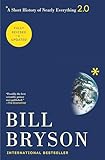
A Short History of Nearly Everything, published in 2003, is his most ambitious book: an attempt to explain the history of science — cosmology, geology, biology, chemistry — for general readers who may have found science dry or intimidating in school. It works because Bryson approaches every subject with the enthusiasm of someone who has just discovered it, because he prioritizes scientists as human beings over science as disembodied fact, and because he writes with a comic timing that makes even dense material engaging. The book is not a complete account — it can’t be — but it is a superb introduction. The Body: A Guide for Occupants applies the same approach to human biology, touring the systems and organs with characteristic curiosity and humor.
Bryson’s critics occasionally note that he can underestimate complexity and that his books sometimes skim the surface of their enormous subjects. This is fair, though it somewhat mistakes the genre. He is an enthusiast and a storyteller, not a specialist, and his books are best judged by whether they send readers toward further curiosity — which they reliably do.
A Master of Popular Nonfiction
Bill Bryson is among the most beloved and successful nonfiction writers in the world, an American-born author long resident in Britain whose witty, curious, and endlessly informative books have delighted millions of readers. Writing across travel, science, history, language, and memoir, Bryson combines genuine erudition with an irresistible comic voice and an infectious sense of wonder, making complex subjects accessible and difficult journeys hilarious. His gift for explaining, entertaining, and observing has made him a fixture of the bestseller lists and one of the most popular practitioners of accessible, good-humoured nonfiction at work today.
A Short History of Nearly Everything
One of Bryson’s most acclaimed works, A Short History of Nearly Everything, is an ambitious and enormously popular attempt to explain the whole of science, from the Big Bang to the rise of human civilisation, for the general reader. Driven by his own curiosity about how the universe and life came to be, Bryson distils vast and complex fields, from physics and chemistry to geology and biology, into a clear, fascinating, and frequently funny narrative. The book’s success demonstrated his remarkable ability to make science genuinely engaging and comprehensible, and it remains a model of popular science writing.
The Comic Traveller
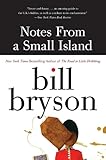
Bryson first made his name as a travel writer, and his travel books are beloved for their combination of keen observation, affectionate humour, and comic misadventure. Whether walking the Appalachian Trail in A Walk in the Woods, exploring his adopted Britain in Notes from a Small Island, or revisiting small-town America, Bryson brings a sharp eye, a wealth of curious information, and a gift for finding the absurd in any situation. His travel writing is as much about people, history, and the quirks of place as about the journey itself, and his humour makes even gruelling expeditions a joy to read about.
Curiosity and Wonder
What unites Bryson’s diverse subjects is his boundless curiosity and his capacity for wonder. He approaches every topic, however large or small, with genuine fascination and a desire to understand, and he communicates his own delight in discovery to the reader. Whether investigating the history of the home in At Home, the wonders of the human body in The Body, or the eccentricities of the English language, he turns research into a pleasure, sharing fascinating facts and surprising connections with infectious enthusiasm. This contagious curiosity is the engine of his appeal.
The Comic Voice
Central to Bryson’s success is his distinctive comic voice, marked by self-deprecation, wry observation, and a talent for the unexpected, perfectly timed joke. He has a gift for finding humour in his own ineptitude, in the absurdities of human behaviour, and in the gap between expectation and reality, and his books are genuinely, frequently laugh-out-loud funny. Yet his comedy never undermines his substance; rather, it makes his erudition accessible and his observations memorable, drawing readers happily through subjects they might otherwise find daunting or dry.
A Bridge Between Cultures
As an American who has spent much of his life in Britain, Bryson occupies a distinctive position between two cultures, and he has written affectionately and amusingly about both. His outsider-insider perspective gives his observations of British and American life a particular sharpness and warmth, and his memoirs and travel books capture the quirks, charms, and absurdities of each culture with evident fondness. This dual perspective enriches his writing and has made him a beloved chronicler and gentle satirist of the English-speaking world on both sides of the Atlantic.
Why Bill Bryson Endures
Bill Bryson has done more than almost any contemporary writer to make nonfiction fun, accessible, and popular, introducing vast audiences to science, history, travel, and language through his warmth and wit. For newcomers, A Short History of Nearly Everything is the essential introduction to his science writing, while A Walk in the Woods and Notes from a Small Island showcase his comic travel writing at its best. For readers seeking informative, curious, and consistently entertaining nonfiction by a writer who is both genuinely learned and genuinely funny, Bill Bryson ranks among the most reliable and delightful authors available.
Reading Guides