Where to Start with Bill Bryson: A Reading Guide
Where to start with Bill Bryson — whether to begin with A Walk in the Woods, Notes from a Small Island, or A Short History of Nearly Everything. A complete guide.
By Natalie Osei

Bill Bryson (born 1951) is the American-British writer whose books — combining the comedy of the memoir with the information density of popular science and the observation of the travel writer — have made him one of the bestselling nonfiction authors of the past thirty years. Born in Iowa, he has spent much of his adult life in Britain, and his work reflects the perspective of an American who loves Britain and a Briton-by-adoption who never entirely loses his American bewilderment at British culture. His particular gift is for making complex subjects (the history of the universe, the science of the human body, the natural history of the Appalachian Mountains) not just accessible but genuinely entertaining — and for rendering his own limitations and enthusiasms as comedy.
Where to Start: A Walk in the Woods (1998)
The essential Bryson — and his most immediately entertaining book. Returning to America after two decades in Britain, Bryson decides to walk the Appalachian Trail with his old friend Stephen Katz, a man who has never hiked and is, Bryson notes, somewhat rounder than he was in their youth. The result is one of the funniest books about outdoor adventure ever written — partly because neither Bryson nor Katz is remotely suited to the enterprise, and partly because Bryson’s research into the natural history, ecology, and human history of the Appalachian Mountains is woven into the comedy with great skill.
The book makes you want to walk the Trail and frightens you about the prospect simultaneously. His most immediately enjoyable work and the best starting point for readers who have not encountered him before.
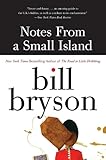
Notes from a Small Island (1995)
Bryson’s love letter to Britain — written as he was preparing to leave after two decades in the country, as an extended farewell tour of the places he had come to love. The book follows him by public transport through towns and villages across Britain: the seaside resorts, the cathedral cities, the industrial towns, the eccentric minor attractions. The comedy comes from the collision between his genuine affection for British culture and his American bewilderment at British habits — the warmth toward Britain that runs through the book is real.
Published in 1995 and now somewhat dated (Bryson himself has acknowledged this), but still the most warmly affectionate portrait of Britain by a non-British writer in recent memory.
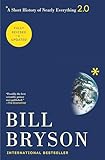
A Short History of Nearly Everything (2003)
Bryson’s most ambitious and most important book — an attempt to explain everything that scientists know about the history of the universe, the Earth, and life, written for readers with no science background. Bryson spent three years reading and interviewing scientists; the result covers the Big Bang, the formation of the solar system, the history of the Earth, the emergence of life, evolution, and the development of the human species. The book makes one of the most complex subjects imaginable genuinely accessible and consistently funny.
It won the Aventis Prize for Science Books and is one of the most successful popular science books of its era. His most educationally valuable work.
In a Sunburned Country (2000)
Bryson’s account of his travels in Australia — a country he finds baffling, beautiful, and full of things that can kill him. The book covers the cities, the Outback, the Great Barrier Reef, and various historical sites, with Bryson’s characteristic combination of enthusiastic research and comic bewilderment. Australia’s wildlife (the most lethal in the world, Bryson points out repeatedly) is a recurring source of comedy and genuine alarm.
His most vivid travel book after Notes from a Small Island and the best for readers interested in Australia specifically.
Why A Walk in the Woods Is the Ideal First Book
For a reader new to Bill Bryson, A Walk in the Woods is the ideal first book because it is among his most beloved works and a fine expression of his distinctive gifts, the warm humor, the curiosity, and the gift for blending entertaining storytelling with fascinating information. A Walk in the Woods recounts Bryson’s attempt to hike the Appalachian Trail with an old friend, blending comic misadventure with engaging digressions on the trail’s history, ecology, and characters. As an entry point it is ideal, for it is one of his best-known books and a perfect example of his funny, curious, and informative writing. It welcomes the newcomer with its humor, its curiosity, and its warmth, drawing the reader into his distinctive voice. It is among his most famous works and a fine representation of his gifts, so the new reader encounters Bryson at his most characteristic. For the newcomer, then, A Walk in the Woods is an excellent starting point.
What to Expect as a New Reader
As a new reader, you can expect A Walk in the Woods to be a funny, curious, and warmly engaging book. You can expect warm humor, for Bryson is genuinely funny, finding comedy in his misadventures and his mismatched hiking companion. You can expect a personal journey, for the book recounts his attempt to hike the Appalachian Trail. You can expect engaging digressions, for Bryson weaves in fascinating information on the trail’s history, ecology, and characters. You can expect curiosity, for Bryson is endlessly interested in the world around him. You can expect a blend of comic memoir and informative writing. You can expect an accessible, entertaining, and good-natured voice. You can expect both laughter and learning. Expect, in short, a funny, curious, and warmly engaging book, a fine introduction to Bryson’s gifts.
Going Deeper After Your First Book
Once A Walk in the Woods has introduced you to Bryson’s gifts, the reader who wishes to go deeper can explore his many other books, which apply the same warm humor, curiosity, and gift for blending entertainment and information to a remarkable range of subjects. His beloved travel books explore America, Britain, Australia, and beyond with his characteristic wit, while his acclaimed popular-science book offers a funny, fascinating tour of science and the history of nearly everything, and his other works explore history, language, the home, and the human body. Reading these after A Walk in the Woods deepens your appreciation of Bryson’s distinctive gifts, the warm humor, the curiosity, and the gift for blending storytelling and information. His characteristic voice runs through his work, and the reader who has enjoyed A Walk in the Woods will find it across his books. Building your reading journey through Bryson is a matter of following his writing from A Walk in the Woods into his travel books, his science writing, and beyond. The reader who begins here and continues will find one of the most funny, curious, and beloved nonfiction writers to follow.
Reading Bill Bryson
Bryson’s books offer something that is rare in nonfiction: the feeling of being guided through a complex or unfamiliar subject by someone who is simultaneously curious, well-informed, and very funny. He has a genuine passion for learning — for finding out how the universe works, how the human body works, how Britain came to be the way it is — and that passion communicates itself to the reader. Begin with A Walk in the Woods for the most immediately entertaining; read A Short History of Nearly Everything for the most informative and the most genuinely mind-expanding.
Frequently Asked Questions
Where should I start with Bill Bryson?
A Walk in the Woods (1998) is the most immediately engaging starting point — Bryson's account of his attempt to walk the Appalachian Trail with his old friend Stephen Katz, a man spectacularly unsuited to hiking. It is the funniest of his books and the one that most readers recommend to people who have not read him before. Notes from a Small Island is the best alternative for readers who want Bryson's love letter to Britain — his account of a farewell tour of Britain before returning to America, full of his characteristic affection for British eccentricity and his comic bewilderment at British customs.
What is A Walk in the Woods about?
A Walk in the Woods (1998) is Bryson's account of his decision to walk the Appalachian Trail, the 2,200-mile footpath from Georgia to Maine that traverses the Eastern seaboard of the United States. He is joined by Stephen Katz, an old friend who is overweight, out of shape, and has never hiked before. The book alternates between their frequently comic attempts to survive the trail and Bryson's research into the natural history of the Appalachian Mountains, the wildlife that lives there, the threats posed by pollution and development, and the cultural history of the trail itself. It is Bryson at his most entertaining and his most informative simultaneously.
What is A Short History of Nearly Everything about?
A Short History of Nearly Everything (2003) is Bryson's most ambitious and most unusual book — an attempt to tell the story of everything that scientists know about how the universe, the Earth, and life came to be, written for readers with no scientific background and a short attention span. Bryson spent three years reading and interviewing scientists, and the result is a book that makes the history of the universe — the Big Bang, the formation of the Earth, the emergence of life, the development of the species, the history of scientific discovery — genuinely thrilling and consistently funny. It won the Aventis Prize for Science Books. His most important book.
Is Bill Bryson's work accurate?
Bryson's popular science books (A Short History of Nearly Everything, The Body) are generally regarded by scientists as accurate and well-researched, and have been praised by scientists for making complex subjects accessible without distorting them. His travel books mix accurate observation with comic exaggeration — the comedy comes from how he renders his own reactions and limitations, not from distorting the places or people he describes. Some British readers find his account of Britain in Notes from a Small Island affectionately accurate; others feel it is a slightly outdated picture. His books are never intended as comprehensive academic treatments, and should be read as the intelligent general reader's guide that they are.