A great memoir does something a biography cannot: it shows you not just what happened, but what it felt like from the inside. These memoirs are written with the honesty and narrative skill that elevates personal experience into literature.
Art Spiegelman's Pulitzer Prize–winning graphic memoir tells the story of his father Vladek's survival of Auschwitz, drawn with Jews as mice and Nazis as cats — a harrowing Holocaust narrative braided with the fraught present-day relationship between an aging survivor and his son.
The deeply personal memoir of the former First Lady of the United States — from her childhood on the South Side of Chicago to the White House and beyond.
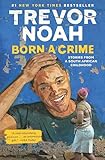
The memoir of The Daily Show host Trevor Noah, born in apartheid South Africa to a Black mother and white father — an act that was literally a crime under apartheid law.
Elie Wiesel's memoir of his experiences as a fifteen-year-old Jewish boy deported from Sighet, Transylvania to Auschwitz and then Buchenwald. One of the foundational documents of Holocaust testimony — a first-person account of the camps, the death marches, and the systematic destruction of faith, family, and identity.
Nike founder Phil Knight's memoir of building one of the world's most iconic brands — from $50 borrowed from his father and a handshake deal for Japanese running shoes to a multi-billion dollar empire. Brutally honest and compulsively readable.
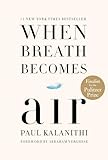
A neurosurgeon diagnosed with terminal lung cancer at 36 confronts the questions he spent his career preparing to face — and writes a book about mortality, meaning, and what makes a life worth living.
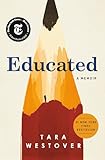
Tara Westover's memoir of growing up in the mountains of Idaho without formal education, in a survivalist family, and her journey to Cambridge and Harvard.
Anthony Bourdain's legendary memoir of twenty-five years in professional kitchens — the drug use, the violence, the camaraderie, and the obsessive craft of restaurant cooking.
The co-creator of ImageNet and a pioneer of modern computer vision tells the story of her journey from immigrant teenager to AI's most influential scientist — and reflects on what AI's creators owe to the humans whose data made it possible.
Krakauer's firsthand account of the 1996 Mount Everest disaster, in which eight climbers died during a single storm. One of the greatest adventure narratives ever written.
Bill Bryson returns to America after twenty years in England and decides to hike the Appalachian Trail — 2,200 miles from Georgia to Maine — with his out-of-shape friend Stephen Katz. They complete a memorable portion of it.
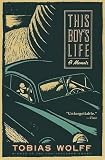
Tobias Wolff's memoir of his childhood in the late 1950s in Chinook, Washington, with his mother and her brutal second husband Dwight. He lies compulsively, reinvents himself repeatedly, and eventually escapes to a Connecticut boarding school on fraudulently obtained recommendations. One of the great American coming-of-age memoirs — about the self as a thing to be constructed rather than discovered.
Hemingway's memoir of his years in 1920s Paris: the cafés where he wrote, the poverty and pleasure of expatriate life, F. Scott Fitzgerald's insecurities, Gertrude Stein's salon, Ezra Pound's generosity, and the first wife he would lose by leaving her. Published posthumously, it remains one of the most beautiful books about writing and Paris ever written.
Part memoir, part urban history, Pamuk's portrait of Istanbul through his own childhood and adolescence explores the concept of hüzün—the melancholy that permeates the city's self-understanding after the fall of the Ottoman Empire—through family photographs, street scenes, and the Western writers who tried to capture Istanbul from the outside.
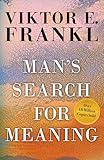
Psychiatrist Viktor Frankl's harrowing account of surviving Auschwitz forms the foundation of logotherapy — the idea that the primary human drive is not pleasure but the pursuit of meaning. One of the most important psychological texts of the 20th century.
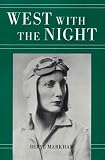
Beryl Markham's memoir of growing up in Kenya in the early twentieth century, training horses, becoming the first person to fly solo non-stop from England to North America west to east, and living a life that defied every category available to women of her era.
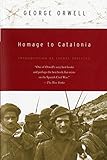
George Orwell's first-person account of fighting for the POUM militia in the Spanish Civil War — the trenches outside Huesca, the revolutionary Barcelona of 1936, the May Days street fighting, the Stalinist suppression of the independent left, and his narrow escape from arrest and execution.
Young Gerald Durrell's account of five years living on Corfu with his eccentric family in the 1930s — a childhood paradise of wildlife, sunshine, and complete freedom to roam.
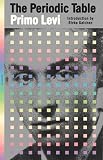
Primo Levi's luminous memoir in twenty-one chapters, each named for a chemical element. A chemist and Auschwitz survivor, Levi weaves the story of his life, his Piedmontese Jewish heritage, his craft, and his survival into a meditation on matter, humanity, and meaning.
Peter Matthiessen and zoologist George Schaller trek 250 miles into the Himalayas to study the bharal (Himalayan blue sheep) and their predator, the nearly mythical snow leopard — a physical journey that becomes a meditation on grief, Zen Buddhism, and the nature of consciousness.
A selection of Cheryl Strayed's advice columns written under the pseudonym 'Sugar' for The Rumpus. Honest to the point of pain, these essays — part advice, part memoir — have become one of the most loved pieces of American non-fiction writing of recent decades.
Philip Caputo's classic Vietnam memoir. As one of the first U.S. Marines sent to Vietnam in 1965, Caputo arrived full of idealism and left transformed by combat, moral injury, and the murder charges he faced. A searing, honest account of how war corrupts the men who fight it.
Soyinka's memoir of his childhood in the Yoruba town of Aké in colonial Nigeria—the parsonage compound where he grew up, his early encounter with spirits and schooling, his mother's role in a women's tax revolt, his father's dignity as a colonial schoolteacher. The most beautifully written African memoir.
The Glass Castle by Jeannette Walls, Educated by Tara Westover, and Becoming by Michelle Obama are among the most widely read modern memoirs. For literary craft, Mary Karr's The Liar's Club and Frank McCourt's Angela's Ashes are considered models of the form.
The best memoirs combine narrative propulsion with emotional honesty and a clear authorial perspective — a sense that the writer has genuinely reckoned with their material rather than simply documented it. The best test: does it feel true, and does it say something beyond the specific story being told?
The Diary of a Young Girl by Anne Frank remains the most widely read memoir globally. Recent memoirs, Educated by Tara Westover and Becoming by Michelle Obama, have reached tens of millions of readers and introduced new audiences to the form.
Disclosure: Amazon links on this page are affiliate links. If you purchase through them we earn a small commission at no extra cost to you.
We use cookies to understand how visitors use our site (Google Analytics). No data is collected until you accept.
Privacy Policy