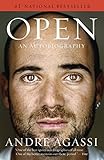
Editors Reads Verdict
Agassi's memoir is the best sports autobiography ever written. Its shocking central revelation — that he hated tennis — gives it a psychological depth that transforms a sports narrative into a profound study of identity, compulsion, and redemption.
What We Loved
- The central paradox — hating the sport you're the best in the world at — is genuinely extraordinary
- J.R. Moehringer's co-writing produces some of the most visceral sports prose ever published
- The father relationship sections are among the most powerful in any sports memoir
- The Brooke Shields and Steffi Graf relationships are handled with unusual candour
Minor Drawbacks
- Some readers find the meth admission more remarkable than the book acknowledges it to be
- The charitable work sections are less compelling than the tennis sections
Key Takeaways
- → External achievement and internal fulfilment are separable — you can be the best in the world and miserable
- → Compulsion can drive excellence even in the absence of genuine love for the work
- → Identity imposed in childhood can be dismantled and rebuilt in adulthood
- → The pressure of parental expectation can simultaneously create and destroy
- → Service to others can provide meaning when personal achievement cannot
| Author | Andre Agassi |
|---|---|
| Publisher | Vintage |
| Pages | 400 |
| Published | November 9, 2009 |
| Language | English |
| Genre | Memoir, Biography, Sports |
| Difficulty | Beginner |
| Best For | Sports fans, memoir readers, and anyone interested in the psychology of achievement, identity, and the gap between external success and internal fulfilment. |
How Open Compares
Open at a glance against 3 similar books readers weigh alongside it.
| Book | Author | Rating | Best for |
|---|---|---|---|
| Open (this book) | Andre Agassi | ★ 4.6 | Sports fans, memoir readers, and anyone interested in the psychology of |
| Born a Crime | Trevor Noah | ★ 4.8 | Anyone interested in apartheid South Africa, memoir as a form, questions of |
| Born to Run | Christopher McDougall | ★ 4.6 | Runners of all levels, people curious about human evolution and physiology, |
| Educated | Tara Westover | ★ 4.7 | Anyone interested in memoir, education, or the psychology of escaping |
The Best Sports Memoir Ever Written
Andre Agassi opens his memoir with a sentence that changes how you read everything that follows: “I play tennis for a living even though I hate tennis, hate it with a dark and secret passion and always have.” This declaration — made by a man who won eight Grand Slam titles and is widely considered one of the greatest players in the history of the sport — is one of the most extraordinary opening gambits in memoir literature.
Open was written with J.R. Moehringer, a Pulitzer Prize-winning journalist who would later write Phil Knight’s Shoe Dog. Their collaboration produced the finest sports autobiography ever written — not because of the tennis, but because of what the tennis reveals about identity, compulsion, and the costs of excellence.
The Father Who Made a Monster
Mike Agassi emigrated from Iran and became obsessed with creating a tennis champion from the children he and his wife would have. Before Andre was born, Mike had a tennis ball hanging in the crib where the child would sleep. By the time Andre could stand, he was hitting balls against a ball machine for hours a day. By the time he was thirteen, he was sent to a tennis academy in Florida where abuse was standard.
Agassi’s account of his childhood is one of the most devastating portraits of a parent’s ambition consuming a child’s identity. His father loved him — that much is clear. His father also turned tennis into something Agassi had no choice about, which made it impossible to love.
The Revelation
The book’s most discussed passage is Agassi’s account of a period in the late 1990s when he was using crystal meth, failed a drug test, and was saved from suspension by a letter to the ATP that Moehringer renders with agonising specificity. This passage is remarkable not just as a confession but as a demonstration of how thoroughly lost Agassi had become in the gap between his public image and his private life.
Steffi Graf and Redemption
The book’s final movement concerns Agassi’s relationship with Steffi Graf — not as a fairy tale ending but as a genuine account of two people finding each other at the right time — and his creation of the Andre Agassi College Preparatory Academy in Las Vegas, which provides education to at-risk children. The charity work gives Agassi something tennis never could: a sense that his effort is for something beyond himself.
The Moehringer Effect
Much of what makes Open extraordinary as a piece of writing comes from its collaborator, J.R. Moehringer, who has quietly become the most accomplished ghostwriter of his generation — the author behind his own memoir The Tender Bar, Nike founder Phil Knight’s Shoe Dog, and, later, Prince Harry’s Spare. Moehringer’s gift is for finding the deep narrative structure inside a life and rendering it in propulsive, novelistic prose, and Open is arguably his masterpiece. The book reads like literary fiction: the tennis matches are staged with the tension of thrillers, the interior life is rendered with a novelist’s psychological precision, and recurring images (the ball machine Agassi calls “the dragon,” the chronic back pain, the wig) accumulate into genuine motifs. Crucially, Moehringer keeps his own name off the cover and his voice subordinate to Agassi’s, producing a memoir that feels entirely authentic even as it is shaped with enormous craft. For anyone interested in how the best ghostwritten memoirs actually work, Open is the case study.
Why Open Transcends Sport
Open endures because it is barely about tennis at all. It is about the gap between a public image and a private self — a theme Agassi lived more visibly than almost any athlete of his era. In the 1990s he was marketed as the rebel of tennis, all flowing hair, neon clothes, and the famous Canon ad slogan “Image is Everything,” while privately he was balding, wearing a hairpiece, and despising the sport that made him famous. The memoir’s great subject is that irony: what it costs to perform a self you do not recognize, and how achievement at the highest level can coexist with profound emptiness. That is why readers who have never watched a tennis match find the book devastating. It speaks to anyone who has ever excelled at something they did not choose, or built a life around external validation, or struggled to separate who they are from what they do. It belongs on the short shelf of memoirs — alongside the best of the form — that use a single extraordinary life to illuminate something universal.
Final Verdict
Open is one of the most honest books ever written about the relationship between external achievement and internal fulfilment. Essential reading for anyone interested in sports, identity, or what it actually costs to be the best.
What finally distinguishes Open is its hard-won, unsentimental hopefulness. Agassi does not end his story with a tidy reconciliation to the sport or a redemptive embrace of his gift; he ends it with something more honest — the discovery of meaning outside the arena, in his marriage to Steffi Graf and in the school he founded for children with no advantages of their own. The book’s argument is that fulfillment came only when Agassi stopped performing and started choosing, and that the validation he chased for thirty years was never going to supply what he actually needed. It is a conclusion earned through hundreds of pages of genuine self-examination, and it lands with unusual weight precisely because the man delivering it achieved everything his sport had to offer and found it insufficient. For that reason, Open transcends its genre entirely: it is less a tennis book than a wisdom book, and one of the most quietly moving accounts of a life ever produced under a famous name.
Our rating: 4.6/5 — The gold standard of sports memoir. Even if you don’t follow tennis, this is essential reading about identity and achievement.
Reading Guides
Frequently Asked Questions
What is "Open" about?
Andre Agassi's remarkably candid memoir about a sporting career built on hating the sport that made him famous — written with J.R. Moehringer.
Who should read "Open"?
Sports fans, memoir readers, and anyone interested in the psychology of achievement, identity, and the gap between external success and internal fulfilment.
What are the key takeaways from "Open"?
External achievement and internal fulfilment are separable — you can be the best in the world and miserable Compulsion can drive excellence even in the absence of genuine love for the work Identity imposed in childhood can be dismantled and rebuilt in adulthood The pressure of parental expectation can simultaneously create and destroy Service to others can provide meaning when personal achievement cannot
Is "Open" worth reading?
Agassi's memoir is the best sports autobiography ever written. Its shocking central revelation — that he hated tennis — gives it a psychological depth that transforms a sports narrative into a profound study of identity, compulsion, and redemption.
Ready to Read Open?
Check the current price on Amazon.
Check Price on Amazon (paid link)Prices and availability are subject to change. See Amazon for current price.
Review last updated: