Where to Start with Andre Agassi: A Reading Guide
Where to start with Andre Agassi — how to approach Open, his essential memoir about professional tennis and self-discovery. A complete reading guide.
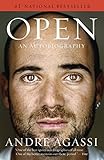
Andre Agassi (born 1970) is the American professional tennis player who won eight Grand Slam singles titles, held the world number one ranking for 101 weeks, and became one of the most recognisable and commercially successful athletes of his era. His memoir Open (2009), co-written with Pulitzer Prize-winning journalist J.R. Moehringer, became an international bestseller and is widely regarded as one of the finest sports memoirs ever written — in part because of its central, shocking admission: that Agassi hated tennis for most of his career.
Where to Start: Open (2009)
The essential Agassi — and one of the best sports memoirs in any language. The book opens with Agassi at thirty-six, preparing for what he knows will be one of his final matches, his body failing, his knees in constant pain, asking himself how he ended up here — how a man who hated tennis from childhood became a professional tennis player, and then one of the greatest who ever played, and then found something approaching peace in the sport.
The memoir’s most provocative disclosure comes early: ‘I hate tennis, with a dark and secret passion.’ Agassi traces this hatred to his childhood in Las Vegas, where his Iranian father Mike Agassi — a man who had boxed for Iran in the 1948 Olympics and had a ferocious will — decided his son would become a world champion and built a ball machine he called the Dragon to hit 2,500 balls a day at the young Andre. Tennis was never chosen; it was imposed.
The memoir covers the arc of Agassi’s career with unusual psychological honesty: the rebellious teenage professional who wore denim shorts and long hair as a performance of refusal; the crystal meth use and his self-reported positive test; his marriage to and divorce from Brooke Shields; his meeting with Steffi Graf; the late-career resurgence that brought him back from outside the world’s top 100 to win the 1999 French Open. The late matches — including the painful 2006 US Open farewell — are described with the precision of a man who has finally found his way to love what he was compelled to do.
Why Open Is the Ideal First Book
For a reader new to Andre Agassi, Open is the ideal and essential first book because it is his singular work, a memoir of remarkable candor and power, widely regarded as one of the finest sports memoirs ever written. Open recounts Agassi’s life and tennis career with an extraordinary honesty, including the startling revelation that he hated the sport that made him famous, and it is rendered with a literary quality that lifts it far above the typical celebrity memoir. As an entry point, it is the natural and only place to begin, for it is Agassi’s defining book, the candid and beautifully written memoir on which his reputation as an author rests. It welcomes the newcomer with its compelling story, its remarkable candor, and its literary quality, drawing the reader into a life of fame, struggle, and self-discovery rendered with unusual honesty and skill. It is his singular work and the fullest expression of his story, so that the new reader encounters Agassi’s life directly and powerfully. For the newcomer, then, Open is the natural and ideal starting point, the candid and acclaimed memoir that is Agassi’s defining book.
What to Expect as a New Reader
As a new reader, you can expect Open to be a remarkably candid and beautifully written memoir, a sports memoir of unusual honesty and literary quality that recounts Agassi’s life and career with startling frankness. You can expect remarkable candor, for Agassi holds little back, including the startling revelation that he hated tennis, the sport that made him famous, and his honest account of the pressures, struggles, and contradictions of his life. You can expect literary quality, for the memoir is rendered with a craft and a power that lift it far above the typical celebrity memoir, making it a genuinely fine piece of writing. You can expect a compelling story, of a life lived in the glare of fame, of struggle and reinvention, of the costs of greatness and the search for meaning. You can expect emotional honesty and self-examination, for Agassi reflects searchingly on his life and choices. Expect, in short, a remarkably candid and beautifully written memoir, one of the finest sports memoirs ever written, a compelling and honest introduction to Agassi’s life and story.
Going Deeper After Your First Book
Once Open has told you Agassi’s story, there is, in a sense, nowhere further to go within his own work, for Open is his singular book, the one memoir on which his reputation as an author rests, and it stands complete and self-sufficient. The reader who has been moved by Open and wishes to go deeper might turn to the wider literature of sports memoir, to which Open belongs as one of the finest examples, reading other athletes’ accounts of their lives and careers in the light of the candor and quality that Agassi’s memoir sets as a standard. The honesty, literary quality, and self-examination of Open make it a benchmark against which other sports memoirs can be measured, and the reader who has loved it has an excellent guide to what the form can achieve. But within Agassi’s own work, Open is the whole and the essential book, and the reader who has read it has encountered his story in full. Building your reading journey from Open is a matter of carrying its standard of candor and quality into the wider literature of memoir. The reader who begins and ends with Open will have read one of the finest sports memoirs ever written, complete in itself.
Reading Andre Agassi
Open is Agassi’s only book and one of the most honest and beautifully written sports memoirs available.
For the full Andre Agassi bibliography, reviews, and biography, visit the Andre Agassi author page on Editors Reads.
Affiliate disclosure: Links to Amazon on this page are affiliate links. We earn a small commission at no extra cost to you.
Frequently Asked Questions
Where should I start with Andre Agassi?
Open (2009) is the only book — Agassi's memoir co-written with J.R. Moehringer, covering his entire career from his Nevada childhood through his eight Grand Slam titles and his retirement in 2006. One of the great sports memoirs; notable for its honesty about hating tennis for most of his career, his crystal meth use, his first marriage to Brooke Shields, and the psychological complexity of performing at the highest level in a sport he found oppressive.
What is Open about?
Open is structured around the paradox of Agassi's career: he was one of the greatest tennis players in history and, for much of that career, hated tennis. The memoir covers his upbringing in Las Vegas under an obsessive father who hit 2,500 balls a day at him from childhood, his years as a rebellious teenager and young professional, his crystal meth use and confession to the ATP, his marriages to Brooke Shields and Steffi Graf, and the gradual maturation that turned a gifted but self-destructive young man into one of the sport's most respected elder figures.
Did Andre Agassi write Open himself?
Open was co-written with J.R. Moehringer, a Pulitzer Prize-winning journalist who also ghostwrote Phil Knight's Shoe Dog. Agassi provided the memories, experiences, and voice; Moehringer shaped them into narrative. The book reads as an unusually polished and literary memoir for an athlete; the quality of the writing — particularly the early childhood sections and the match descriptions — reflects Moehringer's craft applied to Agassi's material.
What should I read after Open?
Readers who enjoyed Open often go on to other elite sports memoirs: Andre Agassi's contemporary Phil Knight's Shoe Dog (also co-written by Moehringer) is a natural follow-on for the business-of-excellence angle. Matthew Syed's Bounce (on talent and practice in elite sport) or David Epstein's The Sports Gene address the underlying questions about excellence and development that Open raises from the athlete's perspective.