Editor's Pick
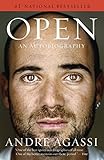
Open
by Andre Agassi
4.6
Andre Agassi's remarkably candid memoir about a sporting career built on hating the sport that made him famous — written with J.R. Moehringer.
Check Price on Amazon (paid link)American · b. 1970
Andre Agassi is a retired American tennis champion whose brutally candid memoir Open remains one of the finest sports autobiographies ever written.
Andre Agassi won eight Grand Slam singles titles over a career that spanned three decades and became one of the most recognizable athletes of the 1990s. Open, written with the novelist J.R. Moehringer, is the account of that career from the inside — and it is remarkable for its refusal to perform the expected gratitude and triumph. Agassi opens the book by stating that he hates tennis, and everything that follows is an attempt to explain how someone can dedicate their life to something they despise.
Open is a genuinely honest book about a complicated man. Agassi describes his domineering father, his self-destructive years, his drug use (and the ATP’s decision not to pursue the matter), his failed marriage to Brooke Shields, and the late-career transformation that made him arguably better in his thirties than his twenties. The psychological portrait — of a child who had no choice and an adult who had to manufacture choice out of nothing — is more searching than most celebrity memoirs attempt.
Moehringer’s prose is controlled and vivid, and it is worth acknowledging that this is a collaborative work: the voice belongs as much to the writer as the subject. Whether that diminishes its achievement is a matter of taste. What is not in question is that Open delivers what memoirs rarely do: genuine self-knowledge, real vulnerability, and a portrait of athletic greatness that makes greatness seem costly rather than simply enviable.
The emotional engine of Open is the relationship between Agassi and his father, a former Olympic boxer who decided before his son was born that the boy would become a tennis champion and engineered his childhood toward that single end. Agassi describes the dragon — the menacing ball machine his father built and aimed at him in the family’s Las Vegas backyard, firing thousands of balls a day at a small boy who was not permitted to refuse. From this portrait grows the book’s central and disquieting paradox: a man who reached the pinnacle of a sport he was conscripted into and never chose, whose hatred of tennis is inseparable from the love and fear he felt for the father who imposed it. This is what lifts the memoir above the genre. Most sports autobiographies celebrate the will to win; Open interrogates what it costs a person to be made into a champion without their consent, and whether the resulting achievements can ever feel like one’s own. The honesty with which Agassi traces this wound — without quite forgiving or condemning his father — gives the book a moral seriousness rare in celebrity writing.
The arc of Agassi’s career mirrors the arc of his self-understanding, and the memoir tracks both: the rebellious image of the 1980s and early ’90s, the flowing hair that turned out to be a wig concealing his anxiety about losing it, the precipitous fall to outside the world’s top hundred, and the grinding, deliberate climb back to the number one ranking in his late twenties and thirties. That second act — built on discipline, conditioning, and a hard-won maturity rather than raw talent — is the part of the story Agassi seems proudest of, because it was chosen rather than imposed. Off the court, his life acquired a purpose that tennis never gave him through the founding of a college-preparatory charter school for underserved children in Las Vegas, an undertaking he describes as the first thing he pursued out of genuine conviction. The memoir frames his philanthropy not as obligatory celebrity charity but as the discovery of a calling, the meaning he had been searching for during all the years he spent excelling at something he could not love.
Open has come to be regarded as a high-water mark for the athlete memoir, and its influence is visible in the wave of more candid, literary sports books that followed. Much of the credit belongs to the collaboration with J.R. Moehringer, the Pulitzer-winning journalist who would later ghost-write memoirs for other prominent figures and who brought to Agassi’s story a novelist’s structure and a reporter’s discipline. The partnership raises the familiar question of authorship in ghost-written books, and Agassi has been unusually generous in acknowledging Moehringer’s role, even asking that his collaborator’s name appear on the cover. Yet the candour is unmistakably Agassi’s own, including admissions — recreational drug use during his career and a misleading account given to the tour, the emptiness behind the public triumphs — that few public figures would commit to print. The result endures as a study of excellence achieved at great personal cost, and a reminder that the inner life of a champion can be far more conflicted, and far more interesting, than the trophies suggest.
Agassi’s literary output is essentially a single book, but it is a book that has outlasted his playing career in cultural influence and shows no sign of fading. Open is regularly recommended not only to tennis fans and sports readers but to anyone interested in ambition, family, identity, and the psychology of high performance, and it is frequently cited by athletes in other disciplines as a model of how to write honestly about a life in competition. Its appeal reaches well beyond sport because its real subjects — the difference between a chosen life and an imposed one, the search for meaning after the achievement of every external goal, the long work of becoming one’s own person — are universal. For readers who assume a celebrity memoir must be vanity or score-settling, Open is the standing rebuttal: a famous man using the form to genuinely examine himself, with the help of a gifted collaborator, and arriving somewhere true. It remains the first book to hand anyone curious about what greatness actually costs the person who achieves it.
by Andre Agassi
Andre Agassi's remarkably candid memoir about a sporting career built on hating the sport that made him famous — written with J.R. Moehringer.
Check Price on Amazon (paid link)Disclosure: Amazon links on this page are affiliate links. If you purchase through them we earn a small commission at no extra cost to you.