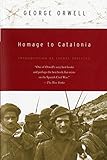
Editors Reads Verdict
The biographical source for everything Orwell subsequently wrote about politics. You cannot fully understand 1984 or Animal Farm without understanding what Orwell saw in Spain — specifically, how a nominally leftist government systematically lied about and destroyed its own revolutionary allies in the service of Soviet foreign policy.
What We Loved
- The most honest first-person account of war written in the 20th century — Orwell admits fear, confusion, and error with unusual precision
- Essential biographical context for 1984 and Animal Farm; the disillusionment here is the origin of both
- The chapters on Stalinist media manipulation read as eerily contemporary
- Orwell's prose is at its most transparent and direct — no other writer of the period is as easy to trust
Minor Drawbacks
- The detailed chapters on POUM vs. PSUC factional politics require some background knowledge to follow clearly
- The book was commercially unsuccessful on publication; Orwell's publisher declined it — worth noting as context for how long some essential books take to find their audience
- The appendices, which Orwell added to spare main-text readers from political detail, somewhat disrupt the narrative flow
Key Takeaways
- → Totalitarian systems lie not just to their enemies but to their own supporters — the lie is the point, not a regrettable necessity
- → The Spanish Civil War was, for the independent left, lost twice: once to Franco and once to Stalinist suppression of POUM and the anarchists
- → Orwell's firsthand experience of propaganda — watching events he participated in described falsely in newspapers — was the direct source of 1984's doublethink
- → Physical courage and political clarity are separable: the front was comprehensible; Barcelona in the May Days was not
| Author | George Orwell |
|---|---|
| Publisher | Harvest/HBJ |
| Pages | 232 |
| Published | April 25, 1938 |
| Language | English |
| Genre | Non-Fiction, Memoir, History |
| Difficulty | Intermediate |
| Best For | Anyone who has read 1984 or Animal Farm and wants to understand where Orwell's political convictions came from. Also essential for students of 20th-century history and the failure of the international left. |
How Homage to Catalonia Compares
Homage to Catalonia at a glance against 2 similar books readers weigh alongside it.
| Book | Author | Rating | Best for |
|---|---|---|---|
| Homage to Catalonia (this book) | George Orwell | ★ 4.5 | Anyone who has read 1984 or Animal Farm and wants to understand where Orwell's |
| Dune | Frank Herbert | ★ 4.7 | Readers of ambitious fiction, fans of the films who want the deeper version, |
| Something Wicked This Way Comes | Ray Bradbury | ★ 4.3 | Readers of literary dark fantasy and horror |
Where 1984 Begins
George Orwell arrived in Barcelona in December 1936 as a journalist and left as something different: a person who had looked directly at the machinery of totalitarian propaganda and watched it operate in real time, on events he had personally witnessed. Homage to Catalonia, published in 1938, is his account of what he saw. It is also, although this is easier to see in retrospect, the biographical source for nearly everything he subsequently wrote about politics — including both Animal Farm and Nineteen Eighty-Four.
The book describes Orwell’s time fighting with the POUM militia (Partido Obrero de Unificación Marxista — the independent Marxist party, affiliated with no international communist movement), the trenches outside Huesca in the winter cold, the extraordinary social experiment of revolutionary Barcelona, and then the May Days of 1937, when the Soviet-backed PSUC and the Spanish Republican government turned on their own left-wing allies and suppressed the revolution that had been fighting Franco alongside them.
Barcelona in 1936
The chapters describing Orwell’s first arrival in Barcelona in late 1936 are among the most striking he ever wrote, and not only because of his politics. What he found was a city in the grip of a genuine social revolution: churches burned, hotels collectivised, everyone addressing each other as “comrade,” the normal hierarchies of dress and deference suspended. Orwell, a committed democratic socialist but no ideologue, was moved by it in ways he was somewhat surprised to find himself moved. He was looking at something real — a society briefly organised on different principles — and he knew it while he was in it.
He was also aware, with characteristic honesty, that this was not the whole picture. The revolution had its ugliness, its fanaticism, its blind spots. Orwell never romanticised. But his account of what Barcelona felt like in those months before the suppression is one of the few contemporary descriptions of what a genuinely egalitarian social experiment looks and feels like from the inside, and it matters.
The Machinery of the Lie
What changed Orwell permanently was not the trenches, and not even being shot through the throat by a fascist sniper (which he describes with remarkable equanimity — he was more concerned about whether he would be able to speak again than about the fact of the bullet). What changed him was the May Days and their aftermath.
In May 1937, street fighting broke out in Barcelona between the PSUC-backed Assault Guards and the anarchist and POUM forces. Orwell found himself on a POUM rooftop watching the city he had arrived in three months earlier tear itself apart along political lines that had nothing to do with the war against Franco. When the fighting ended, the PSUC had won, and the suppression of the independent left began in earnest. The POUM was declared a fascist organisation — Trotskyist agents of Franco — and its members were arrested, imprisoned, tortured, and in some cases murdered.
Orwell, by then back from the front, had to flee Spain to avoid arrest. But the detail that stayed with him, and that surfaces in Nineteen Eighty-Four with obsessive intensity, was something more specific: he watched the newspapers — including the left-wing British press — describe the Barcelona street fighting in terms that bore no relationship to what had happened. Events he had personally participated in were reported in ways that were not merely incomplete but factually inverted. This was not error or exaggeration. It was deliberate falsification, organised and systematic, in the service of a political line decided in Moscow.
The Source of Winston Smith
Orwell’s Winston Smith, who works in the Ministry of Truth altering historical records so that the Party’s past statements are always consistent with its present ones, is a direct descendant of what Orwell witnessed in Spain. The chilling insight of 1984 — that a totalitarian state does not merely control behaviour but actively rewrites the past, and that people will comply — is not an extrapolation from dystopian theory. It is what Orwell watched happen to the Spanish Civil War in real time, in publications he could read on the same day the events occurred.
Homage to Catalonia sold modestly on publication and went out of print. Orwell’s own publisher, Victor Gollancz, declined it because he found the anti-Stalinist politics uncomfortable. It did not find its proper audience until after 1984 made readers curious about where Orwell had come from. That history is itself something Orwell might have recognised: essential books, books that say unflattering things about powerful movements, have a way of being difficult to publish and slow to be acknowledged.
Read Homage to Catalonia before or after 1984. Either order works. What it will give you is something that 1984, by virtue of being a novel, cannot: the direct evidence of a specific, real political betrayal, described by a participant, with the particular authority of someone who was there and was honest enough to know he had been lied to.
Our rating: 4.5/5 — One of the essential documents of the 20th century. The book that explains where Orwell’s convictions came from, and why they came from direct experience rather than theory.
Orwell at the Front
George Orwell’s Homage to Catalonia is his firsthand account of fighting in the Spanish Civil War, and it stands as one of the great works of political witness in the English language. Orwell went to Spain in 1936 to fight against fascism and ended up serving in a militia, and the book records both the daily reality of trench warfare — the cold, the boredom, the squalor, the sudden violence — and the revolutionary atmosphere of Barcelona, where for a brief moment he glimpsed a genuinely egalitarian society in action. His descriptions are honest, unglamorous, and vivid, refusing the heroics that usually attend war writing.
Disillusion and Integrity
The book’s deeper subject is Orwell’s disillusionment with the internecine politics of the Republican side, as he witnessed the Communist suppression of the very revolutionary factions he had fought alongside and saw how truth was distorted by propaganda on all sides. This experience was formative, sharpening the hatred of totalitarianism and the commitment to honest writing that would later produce Animal Farm and Nineteen Eighty-Four. What makes the book endure is Orwell’s integrity: his determination to record what he actually saw, including facts inconvenient to his own side, and to warn against the manipulation of truth for political ends. Clear-eyed, courageous, and morally serious, Homage to Catalonia is both a gripping war memoir and an essential document of one of the twentieth century’s defining conflicts.
Frequently Asked Questions
What is "Homage to Catalonia" about?
George Orwell's first-person account of fighting for the POUM militia in the Spanish Civil War — the trenches outside Huesca, the revolutionary Barcelona of 1936, the May Days street fighting, the Stalinist suppression of the independent left, and his narrow escape from arrest and execution.
Who should read "Homage to Catalonia"?
Anyone who has read 1984 or Animal Farm and wants to understand where Orwell's political convictions came from. Also essential for students of 20th-century history and the failure of the international left.
What are the key takeaways from "Homage to Catalonia"?
Totalitarian systems lie not just to their enemies but to their own supporters — the lie is the point, not a regrettable necessity The Spanish Civil War was, for the independent left, lost twice: once to Franco and once to Stalinist suppression of POUM and the anarchists Orwell's firsthand experience of propaganda — watching events he participated in described falsely in newspapers — was the direct source of 1984's doublethink Physical courage and political clarity are separable: the front was comprehensible; Barcelona in the May Days was not
Is "Homage to Catalonia" worth reading?
The biographical source for everything Orwell subsequently wrote about politics. You cannot fully understand 1984 or Animal Farm without understanding what Orwell saw in Spain — specifically, how a nominally leftist government systematically lied about and destroyed its own revolutionary allies in the service of Soviet foreign policy.
Ready to Read Homage to Catalonia?
Check the current price on Amazon.
Check Price on Amazon (paid link)Prices and availability are subject to change. See Amazon for current price.
Review last updated: