Where to Start with George Orwell: A Reading Guide
Where to start with George Orwell — whether to begin with 1984, Animal Farm, Homage to Catalonia, or Down and Out in Paris and London. A complete reading guide.
George Orwell (1903–1950) is the most important British political writer of the twentieth century — the essayist, journalist, and novelist whose clear prose, commitment to intellectual honesty, and analysis of totalitarianism’s techniques have made him the standard by which political writing is still measured. His two most famous works — Animal Farm and Nineteen Eighty-Four — are among the most widely read books in the world; his essays and journalism demonstrate a clarity of thought and expression that has made ‘Orwellian prose’ a benchmark for anyone who writes about politics.
Where to Start
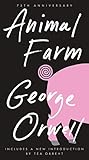
The Allegory: Animal Farm (1945)
The best first Orwell — the most formally perfect of his major works and the one that establishes his central political argument in its most concentrated form. The animals’ revolution and its gradual betrayal is a precise allegory of the Russian Revolution and Stalinist dictatorship (Napoleon the pig is Stalin; Snowball is Trotsky; Boxer the workhorse is the Soviet working class), but it works entirely as a fable: the horror of ‘Four legs good, two legs better’ does not require the historical knowledge to work on the reader. Orwell’s most disciplined and most economical writing. At approximately 100 pages, read it in one sitting.
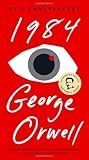
The Dystopian Masterpiece: 1984 (1949)
Orwell’s greatest achievement — a novel whose political imagination has proved so accurate that its vocabulary (doublethink, Newspeak, Room 101, Big Brother) has entered the English language as descriptions of real phenomena. Winston Smith’s rebellion against the Party — through diary-keeping, love, and political contact — and the Party’s response to it constitute the most sustained fictional account of how totalitarian systems actually operate: not through simple force but through the control of reality, the revision of history, and the manufacture of thought-criminals who must destroy themselves in order to save themselves. Written while Orwell was dying of tuberculosis; its darkness carries the weight of a man who had no illusions left.
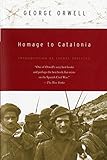
The Journalism: Homage to Catalonia (1938)
Orwell’s account of fighting in the Spanish Civil War — and one of the great war memoirs in English. What makes it essential is not the fighting (though the Aragon front is vividly rendered) but Orwell’s account of the factional politics within the Republican side: how the Soviet-backed Communists systematically destroyed the independent socialist militias, including Orwell’s own POUM, through denunciation, arrest, and murder. The experience crystallised Orwell’s lifelong opposition to Stalinism and his determination to tell the truth about the left’s own failures. The most important biographical context for understanding Animal Farm and 1984.
The Early Memoir: Down and Out in Paris and London (1933)
Orwell’s first book — an account of his deliberate immersion in poverty in Paris (as a plongeur, a kitchen worker) and London (sleeping in doss-houses and on the Embankment). The book is simultaneously a piece of journalism about poverty and a piece of autobiography about Orwell’s deliberate choice to experience the lives of those at the bottom of the social hierarchy. It is the starting point of Orwell’s lifelong engagement with class — his conviction that the English class system was the central fact of English social life and the primary source of political dishonesty.
Why Animal Farm Is the Ideal First Book
For a reader new to George Orwell, Animal Farm is the ideal first book because it is among his most perfect works and a fullest expression of his distinctive gifts, the clear prose, the moral and political clarity, and the brilliant use of fiction to expose tyranny and hypocrisy. Animal Farm tells, as a fable, the story of farm animals who overthrow their human master only to see their revolution betrayed, a precise and devastating allegory of how idealistic revolutions can curdle into tyranny. As an entry point it is ideal, for it is short, accessible, and a perfect example of his political vision and his crystalline style. It welcomes the newcomer with its vivid fable, its biting satire, and its enduring relevance, drawing the reader into his moral and political clarity. It is among his most famous and concentrated works, so the new reader encounters Orwell at his sharpest. For the newcomer, then, Animal Farm is the natural and ideal starting point.
What to Expect as a New Reader
As a new reader, you can expect Animal Farm to be a short, brilliant, and devastating political fable. You can expect a fable form, for the story is told through farm animals who overthrow their human master and attempt to run the farm themselves. You can expect biting allegory, for the tale is a precise allegory of how a revolution can be betrayed and curdle into tyranny. You can expect clear prose, for Orwell writes with famous clarity, simplicity, and force. You can expect moral and political clarity, for the book exposes hypocrisy, propaganda, and the corruption of power with unflinching insight. You can expect enduring relevance, for its lessons about power and propaganda remain strikingly applicable. You can expect a short, accessible, and unforgettable read. Expect, in short, a short, brilliant, and devastating political fable, a perfect introduction to Orwell’s gifts.
Going Deeper After Your First Book
Once Animal Farm has introduced you to Orwell’s gifts, the reader who wishes to go deeper can explore his other works, above all his masterpiece, Nineteen Eighty-Four, the great dystopian novel of totalitarianism, surveillance, and the manipulation of truth, which has given the language words and images we still use. Beyond his fiction, Orwell is celebrated as one of the greatest essayists in English, and his essays and reportage on politics, language, poverty, and society are essential, marked by the same clarity, honesty, and moral force. Reading these after Animal Farm deepens your appreciation of Orwell’s distinctive gifts, the clear prose, the moral and political clarity, and the exposure of tyranny and hypocrisy. His characteristic qualities run through his work. Building your reading journey through Orwell is a matter of following him from Animal Farm into Nineteen Eighty-Four and his essays. The reader who begins here and continues will encounter one of the most important and clear-sighted writers of the twentieth century.
Orwell’s Essays
Orwell’s essays — ‘Shooting an Elephant’, ‘Politics and the English Language’, ‘Why I Write’, ‘Such, Such Were the Joys’ — are among the finest in English. ‘Politics and the English Language’ (1946) argues that the corruption of political prose (passive constructions, pretentious vocabulary, dying metaphors) both reflects and produces corrupt political thought; it remains the most useful single text for anyone who wants to write clearly. Available in any edition of his collected essays; the Penguin Modern Classics collection Inside the Whale is a good introduction.
Frequently Asked Questions
Where should I start with George Orwell?
Animal Farm (1945) is the best starting point — a short allegorical fable in which farm animals overthrow their human farmer, establish a democratic community based on the principles of Animalism, and watch it gradually become a dictatorship indistinguishable from what it replaced. It is Orwell's most perfectly constructed work: complete, compressed, and irresistible as a fable while being entirely precise as a political allegory of Stalinism. At around 100 pages, it can be read in an afternoon. Then proceed to 1984.
What is 1984 about?
1984 (1949) is set in Airstrip One (England) in a totalitarian future state ruled by the Party and its figurehead Big Brother. Winston Smith works at the Ministry of Truth rewriting history to match the Party's current version of reality, and begins to rebel — first in his diary, then through a love affair with Julia, then through involvement with the Brotherhood (which may or may not exist). The novel's account of how totalitarian systems maintain power — through the control of language, the falsification of history, and the manipulation of reality itself — is Orwell's most sustained political argument and one of the most prescient political novels ever written.
Is Homage to Catalonia worth reading?
Homage to Catalonia (1938) is Orwell's first-person account of fighting in the Spanish Civil War on the Republican side — and one of the best books about war in English. Orwell joined the POUM (Marxist Workers' Party) militia in 1936 and spent several months on the Aragon front before being shot through the throat by a sniper. The book is remarkable for its combination of practical military observation, political analysis (of the factional fighting within the Republican side, and the Soviet-backed Communists' suppression of the POUM), and physical honesty about what it feels like to be at war. Essential for understanding Orwell's political development.
Why is Orwell still relevant?
Orwell is relevant because the threats he identified — the manipulation of language to control thought, the revision of history to serve present political needs, the use of surveillance and fear to maintain power, the corruption of idealistic movements by those who use them for personal gain — remain the characteristic techniques of authoritarian politics. 'Newspeak', 'doublethink', 'Thought Police', 'Big Brother', 'memory hole', 'unperson': Orwell's coinages have entered the language because the realities they describe have not gone away. Reading him in any period of political stress remains an act of political orientation.