George Orwell Books in Order: Complete Bibliography & Best Starting Points
George Orwell wrote six novels and a body of non-fiction that shaped the political language of the twentieth century. This guide covers his complete bibliography, the best books to start with, and how to read his work in context.
George Orwell died in 1950 at the age of forty-six, having published six novels, two extended documentary works, and hundreds of essays and journalism. What he left behind is not a large body of work by the standards of prolific novelists. It is, however, an extraordinarily influential one. The two words that define the political vocabulary of modern English — Orwellian and doublethink — both come from a writer who spent much of his life in poverty, illness, and political frustration, convinced that he was failing.
He was not failing. Animal Farm and Nineteen Eighty-Four have sold over 40 million copies combined, been translated into more than 65 languages, and remained continuously in print since publication. More than that: they provided the conceptual language — Big Brother, Room 101, thoughtcrime, the memory hole, 2+2=5 — that readers around the world reach for when they try to describe authoritarian control and the manipulation of truth. No other novelist of the twentieth century so completely installed new words and phrases into the political conversation.
This guide covers his complete bibliography, where to start, and what connects his novels and non-fiction into a coherent body of thought.
George Orwell’s Complete Bibliography in Order
| # | Title | Year | Type |
|---|---|---|---|
| 1 | Down and Out in Paris and London | 1933 | Non-fiction memoir |
| 2 | Burmese Days | 1934 | Novel |
| 3 | A Clergyman’s Daughter | 1935 | Novel |
| 4 | Keep the Aspidistra Flying | 1936 | Novel |
| 5 | The Road to Wigan Pier | 1937 | Documentary non-fiction |
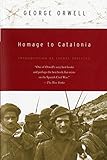
| 6 | Homage to Catalonia | 1938 | War memoir |
| 7 | Coming Up for Air | 1939 | Novel |
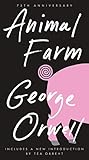
| 8 | Animal Farm | 1945 | Novel (fable) |
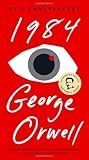
| 9 | Nineteen Eighty-Four | 1949 | Novel |
Note: Orwell also published four collections of essays during his lifetime, and his Collected Essays, Journalism and Letters (4 volumes, posthumous) contains his full non-fiction output including “Politics and the English Language,” “Shooting an Elephant,” and “Why I Write.”
Where to Start: The Two Essential Books
Animal Farm (1945)
The place to start. Orwell wrote Animal Farm in three months in 1943 and spent two years being rejected by publishers who found its anti-Stalinist allegory too politically inconvenient during the wartime alliance with the Soviet Union. When it was finally published, it sold out within days.
The story is simple: the animals of Manor Farm overthrow their human owner and establish an animal republic governed by the principles of Animalism. The commandment that matters is All animals are equal. The evolution of that commandment — through political manipulation, propaganda, and the gradual return of hierarchy — is one of the most efficiently delivered political arguments in the history of the novel.
What makes Animal Farm endure beyond its anti-Stalinist allegory is that it describes something more general: the mechanism by which revolutionary idealism is converted into oppressive power by those who claim to protect it. The pigs who run the farm are not exceptional villains. They are political actors behaving exactly as power tends to cause political actors to behave. This is why the book translates — literally and metaphorically — to contexts far beyond 1940s Soviet Russia.
Read it first. It takes an afternoon.
Nineteen Eighty-Four (1949)
Orwell wrote Nineteen Eighty-Four while dying of tuberculosis on the island of Jura. The bleakness of the finished novel reflects both the political moment — the crystallisation of Cold War totalitarianism — and the physical circumstances of its composition. He finished it in December 1948, reversing the last two digits of the year for his title.
The novel follows Winston Smith, a functionary of the Party in Airstrip One (formerly England), who works in the Ministry of Truth rewriting historical records to match the Party’s current version of reality. His small, doomed rebellion — a diary, a love affair, a meeting with the Brotherhood — is the plot. The ideas are the substance.
Those ideas — surveillance society, the manipulation of language as a tool of thought control, the erasure of the past as a mechanism of political power, the use of permanent war as social management, the psychology of doublethink — were not entirely original to Orwell. Aldous Huxley’s Brave New World (1932) and Yevgeny Zamyatin’s We (1924) preceded him. But no book has ever delivered these ideas with the combination of vividness, readability, and political precision that Orwell achieved. 1984 is the reason the word Orwellian exists.
The Essential Non-Fiction
Down and Out in Paris and London (1933)
Orwell’s first published book is a documentary memoir of poverty — his own poverty, deliberately chosen. He spent time living among the destitute in both cities, working as a plongeur (dishwasher) in Paris hotel kitchens and tramping through the casual ward system in England. The prose is precise, unsentimental, and driven by genuine moral curiosity about what poverty does to people and how it is organised by the societies that produce it.
The book established the method Orwell would use throughout his career: go and see, report what you find, refuse to sentimentalise it.
Homage to Catalonia (1938)
The most personally significant book Orwell wrote. He went to Spain in 1936 to observe the Civil War as a journalist and ended up fighting with the POUM militia against Franco. What he witnessed — the Soviet-directed destruction of the POUM by Stalinist propaganda, the falsification of history in real time, the willingness of the left-wing press to report events that did not happen — became the direct emotional and intellectual material for 1984.
Homage to Catalonia is essential reading if you want to understand where Orwell’s preoccupations came from. The experience of watching truth systematically destroyed by people claiming to serve it gave him both the urgency and the specific political vocabulary of his two great novels.
The Early Novels
Burmese Days (1934), A Clergyman’s Daughter (1935), and Keep the Aspidistra Flying (1936) are Orwell’s apprentice novels. He came to disown the latter two, considering them failures of both craft and imagination.
Burmese Days is the exception — a substantial and unsparing portrait of British imperialism in Burma drawn from Orwell’s five years serving as a police officer in the Indian Imperial Police. It is more interesting than the London novels that followed it, and “Shooting an Elephant” — the essay Orwell later wrote about the same experience — is one of his masterpieces.
Coming Up for Air (1939) is the best of the pre-war novels: a middle-aged insurance salesman escapes his suburban life to revisit the childhood village he remembers and finds it consumed by modernity. Quieter than the dystopias that follow, but elegiac and precise in a way the earlier books were not.
Reading Order Recommendations
If you’ve never read Orwell: Animal Farm → 1984. Those two books contain everything that made him essential. Everything else is context and development.
If you’ve read the novels and want more: Down and Out in Paris and London → Homage to Catalonia → The Road to Wigan Pier. These three books form a documentary trilogy about poverty, politics, and the failure of institutions that explains the emotional energy behind the novels.
For Orwell’s essays: Start with “Politics and the English Language.” It is the most practically useful essay he wrote and the best introduction to how he thought about writing as a political act.
Why Orwell Still Matters
The most honest answer is that the conditions that generated his major works have not disappeared. The manipulation of language to obscure political reality. The construction of alternative historical narratives. The conversion of revolutionary rhetoric into an instrument of social control. The use of surveillance as a governance tool. These are not historical curiosities. They are features of political life in 2026, and Orwell’s vocabulary for describing them — doublethink, newspeak, memory hole, unperson — remains more precise and more widely understood than any academic alternative.
The word Orwellian is used by people across the political spectrum to describe whatever they find most threatening about their opponents. This is occasionally ironic. But it also suggests that Orwell got something permanently right about the mechanics of political dishonesty, and that what he got right does not belong to any single political tradition.
Frequently Asked Questions
What is the best George Orwell book to start with?
Animal Farm is the best starting point — it is short (under 100 pages), brilliantly written, and introduces Orwell's central concerns about power, language, and political betrayal in a form that is immediately accessible. 1984 is the natural second read: longer and darker, but the most influential novel he wrote. Most readers find that reading Animal Farm first makes 1984 hit harder.
Do George Orwell's books need to be read in order?
No. Orwell's novels and non-fiction are entirely standalone and can be read in any order. Publication order does reveal the evolution of his political thought — from the documentary naturalism of Down and Out and The Road to Wigan Pier through the Spanish Civil War radicalism of Homage to Catalonia to the totalitarian nightmares of Animal Farm and 1984. But you can start anywhere.
Is 1984 or Animal Farm better?
They are doing different things. Animal Farm is a fable — compressed, allegorical, and almost classically shaped. 1984 is a dystopian novel of ideas — sprawling, sometimes claustrophobic, and deeply psychological. Animal Farm is the more perfectly crafted book. 1984 is the more ambitious one, and the one that gave the twentieth century its most enduring political vocabulary: Big Brother, doublethink, Room 101, thoughtcrime, newspeak.
What are Orwell's best essays?
Orwell's essays are among the best in the English language. The essential ones are: 'Politics and the English Language' (1946) — on how bad writing enables political dishonesty; 'Shooting an Elephant' (1936) — on imperialism and moral compromise; 'Why I Write' (1946) — on his motivations as a writer; and 'Such, Such Were the Joys' (1952) — a brutal memoir of his prep school. These essays are as important as his novels.
Is Homage to Catalonia worth reading?
Yes, especially for readers interested in the political context behind 1984. Homage to Catalonia is Orwell's account of fighting in the Spanish Civil War — a first-hand record of how idealism meets bureaucratic betrayal, Stalinist manipulation, and the erasure of historical truth. The experience of watching the POUM militia he fought with be discredited and destroyed by Stalinist propaganda directly shaped the themes of 1984. It is his most personally felt book.