George Orwell was a British novelist and essayist whose dystopian novels 1984 and Animal Farm remain among the most widely read and politically influential books of the 20th century.
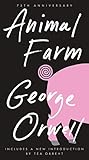
George Orwell’s two most enduring works — Animal Farm and 1984 — were written in the final decade of his life, and both drew directly on his experience of totalitarianism and his disillusionment with ideological movements that betrayed the values they claimed to represent. Animal Farm, published in 1945, is a brilliantly compressed allegory of the Soviet revolution: a fable in which farm animals overthrow their human master and establish an egalitarian society that is steadily corrupted by the pigs until the original principles are entirely reversed. The novel is short, clear, and devastating — one of the most effective political parables ever written.
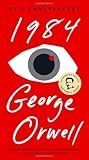
1984, published in 1949, is darker and more sustained. Set in a totalitarian state that controls not just behaviour but language and thought, the novel follows Winston Smith’s futile attempt to maintain interiority against a system designed to eliminate it. Orwell’s inventions — doublethink, Newspeak, the memory hole, Room 101 — have entered the language as shorthand for the mechanisms of authoritarian control, and the novel’s portrait of how power maintains itself through perpetual war and the destruction of history remains alarmingly relevant.
Both books have been embraced by readers across the political spectrum, sometimes in ways Orwell would have found troubling — his own politics were explicitly democratic socialist, not libertarian or conservative. The quality of 1984’s prose becomes occasionally didactic in its final third, where Orwell includes lengthy excerpts from an imaginary revolutionary text. But as a political warning, it has lost none of its force.
A Conscience of the Twentieth Century
George Orwell was one of the most important and influential writers of the twentieth century, an English novelist, essayist, and journalist whose passionate commitment to truth, justice, and political honesty made him a moral conscience for his age. Renowned for his clear, direct prose and his fierce opposition to totalitarianism and tyranny in all their forms, Orwell created works that have shaped how generations think about power, language, and freedom. His two great novels and his brilliant essays have had an enormous and lasting impact, and concepts and terms he coined have entered the language, making him one of the most influential writers in modern history.
Nineteen Eighty-Four
Orwell’s masterpiece, Nineteen Eighty-Four, ranks among the most influential novels ever written, a chilling dystopian vision of a totalitarian future in which the state controls every aspect of life and even thought itself. Depicting a world of constant surveillance, propaganda, and the manipulation of truth and language, the novel introduced concepts such as Big Brother, doublethink, thoughtcrime, and the memory hole that have become essential to how we discuss tyranny and surveillance. Its prophetic power and its profound warning about the dangers of totalitarianism have made it a permanent touchstone, and it remains urgently relevant to the present day.
Animal Farm
Orwell’s other great work, Animal Farm, is a brilliant satirical fable that uses the story of farm animals overthrowing their human masters to expose the corruption of revolutionary ideals and the betrayal of the Russian Revolution. With deceptive simplicity, the novel traces how the animals’ dream of equality degenerates into a new tyranny, encapsulated in the famous maxim that “all animals are equal, but some animals are more equal than others.” A devastating critique of totalitarianism and the corruption of power, the fable’s clarity and force have made it a classic, widely read and admired for its sharp political insight.
The Power of Clear Language
Orwell was passionately concerned with language and its relationship to truth and political honesty. He believed that clear, honest writing was essential to clear thinking and political integrity, and that the corruption of language served the corruption of politics, as he argued in his famous essay “Politics and the English Language.” His own prose is a model of clarity, directness, and precision, and his insistence on honest language as a defense against propaganda and deception is central to his significance. This concern with the integrity of language remains one of his most important and influential legacies.
A Brilliant Essayist
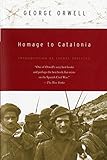
Beyond his famous novels, Orwell was one of the greatest essayists in the English language, and his nonfiction is admired for its clarity, honesty, and moral force. His essays and reportage, on subjects ranging from poverty and imperialism to literature, politics, and his own experiences, combine sharp observation, intellectual honesty, and a deep commitment to truth and justice. Works such as his accounts of poverty and his reporting from the Spanish Civil War reflect his lifelong willingness to confront uncomfortable realities. This body of nonfiction is a major part of his achievement and confirms his stature as a writer of exceptional integrity.
Political Integrity
Throughout his life and work, Orwell was guided by a fierce political and moral integrity. A democratic socialist who hated tyranny and injustice of every kind, he was willing to criticize his own side and to confront unwelcome truths, refusing the comforts of ideology and propaganda. His firsthand experience of poverty, imperialism, and the betrayals of the Spanish Civil War shaped his unflinching commitment to honesty and his hatred of totalitarianism. This integrity, his refusal to subordinate truth to political convenience, is central to his enduring significance and to his stature as a moral conscience for his century and beyond.
The Lasting Legacy of George Orwell
George Orwell’s influence on literature, politics, and language is immense, and his warnings about totalitarianism, surveillance, and the corruption of truth remain profoundly relevant. For newcomers, Animal Farm offers a short and powerful starting point, with Nineteen Eighty-Four representing his prophetic masterpiece and his essays showcasing his nonfiction brilliance. For readers seeking clear, honest, and morally serious writing that confronts the dangers of tyranny and the importance of truth and freedom, George Orwell remains an essential and enduringly vital author, one of the indispensable voices of the modern age.
Reading Guides