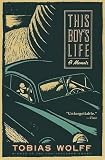
Editors Reads Verdict
The finest American memoir of the postwar period alongside Mary Karr's The Liars' Club — Wolff writes about his lying, thieving, angry younger self with the clarity of someone who has fully understood rather than merely excused him.
What We Loved
- The prose is among the most lucid and controlled in American memoir — Wolff never excuses himself but never condemns himself either
- Dwight is one of memoir's great villains — a small man who requires absolute submission and punishes self-assertion
- The portrait of lying as a survival strategy and a form of self-construction is philosophically original
Minor Drawbacks
- Some readers want more retrospective analysis than Wolff provides — he renders rather than explains
- The pace slows in the Chinook sections before the escape to Hill School
Key Takeaways
- → The self is not discovered but constructed — Wolff's compulsive lying is an early, desperate version of what the memoir itself performs
- → A brutal domestic environment does not automatically produce self-knowledge — it takes decades and writing to understand what happened
- → Escape is not the end of the story — what you carry from the place you escaped continues to operate on you
| Author | Tobias Wolff |
|---|---|
| Publisher | Grove Press |
| Pages | 288 |
| Published | January 1, 1989 |
| Language | English |
| Genre | Memoir, Non-Fiction |
| Difficulty | Beginner |
| Best For | Memoir readers and literary non-fiction readers who want one of the great American coming-of-age narratives, and readers of Wolff's fiction who want the autobiographical source. |
How This Boy's Life Compares
This Boy's Life at a glance against 3 similar books readers weigh alongside it.
| Book | Author | Rating | Best for |
|---|---|---|---|
| This Boy's Life (this book) | Tobias Wolff | ★ 4.4 | Memoir readers and literary non-fiction readers who want one of the great |
| Jesus' Son | Denis Johnson | ★ 4.3 | Literary fiction readers who want American short fiction at its most formally |
| Stoner | John Williams | ★ 4.5 | Literary fiction readers |
| The Things They Carried | Tim O'Brien | ★ 4.5 | Readers who value literary experimentation alongside emotional weight, anyone |
Toby
The boy in the memoir calls himself Jack, then Toby, then Jack again — the name changes are part of the self-construction that is his central activity. He is ten when the memoir begins, moving from Florida to Utah with his mother, Rosemary, who is trying to escape a violent boyfriend. They are always moving. The self is always under construction.
In Concrete, Washington, Rosemary meets Dwight, who is solid and employed and attentive. He seems like stability. Toby knows immediately that Dwight is wrong, that the attention is surveillance, that the stability is a mechanism for control. He is not entirely wrong.
Dwight
Dwight Hansen is one of memoir’s great portraits of small-scale domestic tyranny. He is not a dramatic villain — he does not make speeches or perform cruelty with theatrical flair. He is petty, systematic, relentless. He assigns Toby chores whose real purpose is humiliation. He confiscates the money Toby earns on his paper route. He requires gratitude for things that are not gifts.
Wolff’s escape — fabricated recommendations, a false transcript, a successful application to the Hill School in Connecticut — is the memoir’s triumph. But the memoir is honest about what it cost and what it left behind. His mother remained with Dwight for years.
The 1993 film with Robert De Niro as Dwight, Ellen Barkin as Rosemary, and Leonardo DiCaprio as Toby is one of the better literary adaptations of its decade.
What Distinguishes This Book
Among the qualities that set This Boy’s Life apart: The prose is among the most lucid and controlled in American memoir — Wolff never excuses himself but never condemns himself either; Dwight is one of memoir’s great villains — a small man who requires absolute submission and punishes self-assertion; and The portrait of lying as a survival strategy and a form of self-construction is philosophically original. These strengths are evident from the first pages and sustain across the whole work.
Core Ideas
The central arguments the book develops are worth summarising. The self is not discovered but constructed — Wolff’s compulsive lying is an early, desperate version of what the memoir itself performs. A brutal domestic environment does not automatically produce self-knowledge — it takes decades and writing to understand what happened. Escape is not the end of the story — what you carry from the place you escaped continues to operate on you. These ideas are grounded in evidence and example rather than speculation, which distinguishes this book from comparable titles that rely on anecdote alone.
The Reading Experience
This Boy’s Life is the kind of book that changes slightly depending on when you read it. The surface — plot, character, setting — remains constant, but the reader brings different things to it at different points in life, and the book meets them there. This is a property of enduring work, and it distinguishes This Boy’s Life from titles that are consumed once and not returned to.
Limitations
Some readers want more retrospective analysis than Wolff provides — he renders rather than explains. The pace slows in the Chinook sections before the escape to Hill School. These are worth knowing before starting, though they are unlikely to diminish the experience for the readers the book is written for.
Who This Is For
Memoir readers and literary non-fiction readers who want one of the great American coming-of-age narratives, and readers of Wolff’s fiction who want the autobiographical source.
Our rating: 4.4/5 — One of the great American memoirs; Wolff’s clarity about his own younger self is extraordinary.
A Masterpiece of Memoir
This Boy’s Life is Tobias Wolff’s acclaimed memoir of his troubled boyhood in 1950s America, a vivid and unflinching account of growing up that helped define the modern literary memoir. Following young Toby as he moves with his restless mother across the country and into a fraught life with an abusive stepfather in a small town in Washington State, the book renders the confusions, deceptions, and yearnings of adolescence with extraordinary honesty and craft. Wolff captures the boy’s reinventions of himself, his small rebellions and lies, and his struggle to forge an identity amid instability, in prose of remarkable clarity and grace.
Honesty Without Self-Pity
What distinguishes Wolff’s memoir is its refusal of sentimentality and self-pity. He portrays his younger self with unsparing honesty, including his lies, failures, and bad behavior, and renders the difficult figures of his childhood, especially his bullying stepfather, with complexity rather than mere condemnation. This clear-eyed, compassionate truthfulness gives the book its integrity and power, and Wolff’s refusal to cast himself as a simple victim or hero makes his account all the more affecting. The result is a portrait of childhood that feels genuinely true, capturing both its pain and its strange resilience.
A Model of the Form
This Boy’s Life is widely regarded as one of the finest American memoirs of its era and a model of the genre, admired for its literary craftsmanship as much as its candor. Wolff brings a novelist’s skill to the shaping of real experience, and his evocation of time, place, and the inner life of a boy is masterful. Later adapted into a notable film, the memoir has influenced countless writers and helped establish the literary memoir as a serious form. For readers seeking honest, beautifully written life-writing that illuminates the universal experience of growing up through one vivid particular story, it remains an essential and rewarding work.
Reading Guides
Frequently Asked Questions
What is "This Boy's Life" about?
Tobias Wolff's memoir of his childhood in the late 1950s in Chinook, Washington, with his mother and her brutal second husband Dwight. He lies compulsively, reinvents himself repeatedly, and eventually escapes to a Connecticut boarding school on fraudulently obtained recommendations. One of the great American coming-of-age memoirs — about the self as a thing to be constructed rather than discovered.
Who should read "This Boy's Life"?
Memoir readers and literary non-fiction readers who want one of the great American coming-of-age narratives, and readers of Wolff's fiction who want the autobiographical source.
What are the key takeaways from "This Boy's Life"?
The self is not discovered but constructed — Wolff's compulsive lying is an early, desperate version of what the memoir itself performs A brutal domestic environment does not automatically produce self-knowledge — it takes decades and writing to understand what happened Escape is not the end of the story — what you carry from the place you escaped continues to operate on you
Is "This Boy's Life" worth reading?
The finest American memoir of the postwar period alongside Mary Karr's The Liars' Club — Wolff writes about his lying, thieving, angry younger self with the clarity of someone who has fully understood rather than merely excused him.
Ready to Read This Boy's Life?
Check the current price on Amazon.
Check Price on Amazon (paid link)Prices and availability are subject to change. See Amazon for current price.
Review last updated: