Where to Start with Tobias Wolff: A Reading Guide
Where to start with Tobias Wolff — whether to begin with This Boy's Life, In Pharaoh's Army, or his short stories. A complete reading guide to the American memoirist.
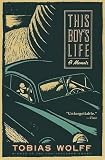
Tobias Wolff (born 1945) is the American memoirist, short story writer, and novelist whose This Boy’s Life (1989) is one of the finest American memoirs ever written, and whose short story collections — particularly In the Garden of the North American Martyrs and The Night in Question — have made him one of the most respected practitioners of the American short story tradition. A Vietnam veteran, a professor at Stanford for many years, and the brother of the novelist Geoffrey Wolff (whose own memoir, The Duke of Deception, covers their shared childhood from the perspective of the father Tobias barely knew), Wolff writes with exceptional precision about violence, moral failure, and the capacity of the self for self-deception.
Where to Start: This Boy’s Life (1989)
The essential Wolff — and one of the great American memoirs. Toby’s mother has fled a violent boyfriend and is trying to start over. They end up in Concrete, Washington, where she meets Dwight — who is charming to her and methodical in his cruelty to Toby. Toby steals, lies, forges signatures, creates multiple versions of himself for different audiences, and survives by becoming expert at performance.
What makes the memoir extraordinary is its honesty about both sides of the violence. Wolff does not write Dwight as a simple monster; he is recognisable as the specific kind of man who uses small powers to compensate for large inadequacies. And Wolff does not write himself as a simple victim; the Toby of the memoir is genuinely troubling in his capacity for self-serving deception, genuinely impressive in his survival instinct, and genuinely human in his need for a father figure even from men who fail him.
The ending — Toby’s escape to the Hill School through an application that fabricates most of his history — is made with full awareness of what that fabrication means: he is not yet who he wants to be. The memoir is the account of how he eventually became something closer to it.
In Pharaoh’s Army (1994)
Wolff’s Vietnam memoir — the bewilderment and waste of war from the inside of a military advisor’s position. Shorter and more meditative than This Boy’s Life; his portrait of a war that no one understood.
Why This Boy’s Life Is the Ideal First Book
For a reader new to Tobias Wolff, This Boy’s Life is the ideal first book because it is his most celebrated work, a classic of contemporary American memoir, and the fullest expression of his distinctive gifts, the unflinching honesty, the precise prose, and the searching examination of the self and the past. This Boy’s Life recounts Wolff’s difficult boyhood, rendering the experiences of his troubled youth with honesty, vividness, and craft, and refusing to flinch from the unflattering realities of his own past. As an entry point, it offers the fullest expression of Wolff’s gifts, the scrupulous honesty, the precise and controlled prose, and the unflinching self-examination that have made him a master of the memoir. It welcomes the newcomer with its compelling story, its honesty, and its literary quality, drawing the reader into a vivid and honest account of a difficult youth. It is his best-known work and the one that best represents his gifts, so that the new reader encounters Wolff at his finest. For the newcomer, then, This Boy’s Life is the natural and ideal starting point, the classic memoir that established his reputation.
What to Expect as a New Reader
As a new reader, you can expect This Boy’s Life to be an honest, vivid, and beautifully crafted memoir, recounting a difficult boyhood with unflinching honesty and literary skill. You can expect scrupulous honesty, for Wolff examines his own past, including his own faults and failings, with an unflinching candor that refuses self-flattery and evasion. You can expect a compelling story, for the memoir recounts the experiences of his troubled youth, his difficult family circumstances, and his struggles, rendered with vividness and emotional truth. You can expect precise, controlled prose, for Wolff is a master craftsman whose writing achieves its effects through precision and economy rather than display. You can expect a thoughtful engagement with memory and truth, for Wolff reckons honestly with the difficulty of capturing the truth of one’s own past. Expect, in short, an honest, vivid, and beautifully crafted memoir of a difficult boyhood, a classic introduction to Wolff’s gifts as a writer.
Going Deeper After Your First Book
Once This Boy’s Life has introduced you to Wolff’s gifts, the reader who wishes to go deeper can explore his other work, including his further memoir and his acclaimed fiction, which display the same honesty, precision, and craft. His other memoir recounts his experience of the Vietnam War with the same unflinching honesty and precise prose, while his celebrated short stories reveal his mastery of fiction, marked by the same precision, control, and quiet power. Reading these after This Boy’s Life deepens your appreciation of Wolff’s distinctive gifts, the scrupulous honesty, the precise prose, and the searching examination of experience that mark his work in both memoir and fiction. His characteristic qualities run through his writing, and the reader who has admired This Boy’s Life will find them in his other memoir and his fiction. Building your reading journey through Wolff’s work is a matter of following his honest, precisely crafted writing from his classic memoir into his further memoir and his acclaimed fiction. The reader who begins with This Boy’s Life and continues through his work will find a master of both memoir and the short story.
Reading Tobias Wolff
Begin with This Boy’s Life — it is his essential memoir and one of the finest American memoirs period. Read In Pharaoh’s Army for his Vietnam account. For his short fiction — which is equally important to his reputation — begin with The Night in Question.
For the full Tobias Wolff bibliography, reviews, and biography, visit the Tobias Wolff author page on Editors Reads.
Affiliate disclosure: Links to Amazon on this page are affiliate links. We earn a small commission at no extra cost to you.
Frequently Asked Questions
Where should I start with Tobias Wolff?
This Boy's Life (1989) is the essential starting point — Wolff's memoir about his childhood and adolescence with his mother and abusive stepfather in a small Washington state town in the 1950s, his own delinquency and resilience, and his eventual escape through a deceptively obtained scholarship to a prep school. One of the finest American memoirs, written with exceptional candour about the narrator's own moral failures as well as his suffering; adapted for film in 1993 with Leonardo DiCaprio and Robert De Niro.
What is This Boy's Life about?
This Boy's Life follows Toby Wolff (who calls himself Jack in the memoir) from his mother's flight from a violent man in Utah through their eventual settlement in Concrete, Washington, where she marries Dwight — a man who proves to be controlling, petty, and cruel. The memoir is honest about both the violence of Dwight's household and Toby's own capacity for lying, stealing, and self-invention; it is a memoir about the formation of character in conditions designed to prevent it, and about the uses of narrative in both surviving and escaping.
What is In Pharaoh's Army about?
In Pharaoh's Army (1994) is Wolff's memoir of his year as a military advisor in Vietnam — stationed with a South Vietnamese unit in a village near the Cambodian border, witnessing the war from inside rather than as a front-line combatant. Shorter and more meditative than This Boy's Life; Wolff's account of Vietnam is notable for its refusal of both heroism and condemnation, its portrait of bewilderment and waste rather than clear moral narrative.
Is Tobias Wolff known for short stories?
Wolff is one of the most distinguished American short story writers of his generation — his collections In the Garden of the North American Martyrs (1981), Back in the World (1985), and The Night in Question (1996) are considered essential works in the American short story tradition. His story 'Bullet in the Brain' is one of the most anthologised American stories of the late twentieth century. Readers who want to explore beyond the memoirs should start with The Night in Question.