Tobias Wolff Books in Order: Complete Bibliography & Best Starting Points
Tobias Wolff's complete bibliography in order — from This Boy's Life and In Pharaoh's Army to Old School. Best starting points for new readers.
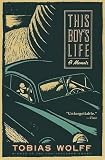
Tobias Wolff is one of the finest American writers of his generation — his short stories, his two memoirs, and his novel have all been received as major works, and his influence on American short fiction (he taught at Stanford for decades and edited the Best American Short Stories series) is substantial. His work is characterised by moral precision, clarity of prose, and a compassionate but unsparing view of human weakness.
Born in 1945, Wolff served as an Army Special Forces advisor in Vietnam — an experience that shaped both his memoir In Pharaoh’s Army and many of his short stories. His memoir This Boy’s Life (1989) made him famous; it was adapted into a film with Robert De Niro and Leonardo DiCaprio.
Where to Start
This Boy’s Life (1989)
The essential starting point — Wolff’s memoir of his violent, inventive, aspirational adolescence in the Pacific Northwest. The young Toby Wolff, living with an abusive stepfather in a small logging town, responds by creating alternative versions of himself — lying his way into a private school, forging recommendations, inventing a self that might escape. The memoir is about the relationship between identity and story, and it is written with the precision and control of his finest fiction.
In Pharaoh’s Army (1994)
Wolff’s Vietnam memoir — a quieter, more reflective book than This Boy’s Life, focused on his year as an Army advisor in a Vietnamese village. The moral complexity of the advisory mission, the gap between the American story of the war and the reality on the ground, and the specific texture of that particular year are rendered with the same precision as his fiction. The best American memoir of the Vietnam experience.
Complete Bibliography (Major Works)
| Title | Year | Note |
|---|---|---|
| In the Garden of the North American Martyrs | 1981 | First story collection |
| The Barracks Thief | 1984 | Novella; PEN/Faulkner Award |
| Back in the World | 1985 | Story collection |
| This Boy’s Life | 1989 | Memoir; breakthrough; film adaptation |
| The Night in Question | 1996 | Story collection |
| In Pharaoh’s Army | 1994 | Vietnam memoir |
| Old School | 2003 | Novel; boarding school; literary fraud |
| Our Story Begins | 2008 | Selected stories |
A Master of Memoir
Tobias Wolff is celebrated as one of the masters of contemporary American memoir, a writer whose autobiographical works, particularly his account of his troubled boyhood, set a standard for the form through their honesty, craft, and unflinching self-examination. Wolff’s memoirs are among the finest in contemporary American literature, distinguished by their honesty, their craft, and their unflinching examination of the self and the past. His celebrated This Boy’s Life, an account of his difficult boyhood, is a model of the memoir form, rendering the experiences of his youth with honesty, vividness, and craft, and refusing to flinch from the difficult and unflattering realities of his own past. Wolff brings to his memoirs the craft and artistry of a master of fiction, shaping the material of his life into works of literary power while maintaining a scrupulous honesty about the past, and his memoirs set a standard for the form through their combination of craft, honesty, and unflinching self-examination. This mastery of memoir is central to Wolff’s achievement, for his autobiographical works are models of the form, combining literary craft with honesty and unflinching self-examination. For readers, Wolff offers some of the finest memoirs in contemporary American literature, honest, crafted, and unflinching accounts of the self and the past. A master of memoir, Wolff is celebrated for his autobiographical works, particularly his account of his troubled boyhood, which set a standard for the form through their honesty, craft, and unflinching self-examination.
Memory, Truth, and the Examined Past
A defining concern of Tobias Wolff’s memoirs is the complex relationship between memory and truth, the difficulty of honestly examining one’s own past, and the scrupulous effort to render the truth of experience without evasion or self-flattery. Wolff’s memoirs are notably thoughtful about the nature of memory and truth, about the difficulty of honestly reconstructing and examining one’s own past, and about the temptations of evasion, distortion, and self-flattery that the memoirist must resist. He brings to his autobiographical work a scrupulous concern for honesty, examining his own past, including his own faults and failings, with an unflinching honesty that refuses self-flattery and evasion, and reckoning thoughtfully with the difficulty of truly knowing and rendering the truth of one’s own experience. This concern with memory, truth, and the honest examination of the past gives Wolff’s memoirs their integrity and their depth, for he does not offer a flattering or evasive account of his life but a scrupulously honest examination, reckoning with the difficulty of memory and truth and refusing to spare himself. His unflinching honesty about his own past, including its difficult and unflattering realities, and his thoughtful reckoning with the nature of memory and truth, are central to the integrity and power of his memoirs. For readers, Wolff’s memoirs offer a scrupulously honest examination of the past and a thoughtful reckoning with memory and truth, refusing evasion and self-flattery. Memory, truth, and the examined past are defining concerns of Wolff’s memoirs, the complex relationship between memory and truth, the difficulty of honestly examining one’s own past, and the scrupulous effort to render the truth of experience without evasion or self-flattery.
A Craftsman of Prose
Beyond his memoirs, Tobias Wolff is a master craftsman of prose, a writer whose work, in both memoir and fiction, is distinguished by its precision, its control, and its quiet power. Wolff is a writer of exceptional craft, and his prose, in both his memoirs and his acclaimed fiction, is distinguished by its precision, economy, and control, achieving its effects through careful craft rather than display. He is celebrated as a master of the short story as well as the memoir, and his fiction, like his autobiographical work, is marked by its precise and controlled prose, its careful craft, and its quiet power. Wolff’s prose does not strain for effect but achieves its power through precision and control, through the careful and economical rendering of experience, and his mastery of craft is evident throughout his work. This craftsmanship is central to Wolff’s achievement, for his precise and controlled prose, in both memoir and fiction, gives his work its quiet power and its artistry. His mastery of the short story in particular has made him one of the celebrated practitioners of the form, and his fiction, like his memoirs, demonstrates his exceptional craft. For readers, Wolff offers prose of exceptional craft, precision, and control, in both his memoirs and his fiction, achieving its quiet power through careful craftsmanship. A craftsman of prose, Wolff is a master whose work, in both memoir and fiction, is distinguished by its precision, control, and quiet power, achieving its effects through careful craft rather than display, and his mastery extends to the short story as well as the memoir.
Reading Order Recommendations
New to Wolff: This Boy’s Life → In Pharaoh’s Army → Old School.
Short story focus: In the Garden of the North American Martyrs → Back in the World → The Night in Question.
Chronological: In the Garden of the North American Martyrs → The Barracks Thief → This Boy’s Life → In Pharaoh’s Army → Old School.
Frequently Asked Questions
What is the best Tobias Wolff book to start with?
This Boy's Life (1989) is the best starting point — Wolff's memoir of his turbulent adolescence in the Pacific Northwest in the 1950s, with a violent stepfather and a determined effort to reinvent himself. It is one of the finest American memoirs of the twentieth century and the book that established Wolff's reputation. In Pharaoh's Army (1994) is the second memoir — a quieter, more reflective account of his year as an Army advisor in Vietnam, and the book that most directly addresses his experience of the war.
What is This Boy's Life about?
This Boy's Life (1989) follows Toby Wolff (the author as a boy) and his mother as they move across the American West — from Florida to Utah to Seattle to the small logging town of Concrete, Washington, where his mother marries Dwight, a controlling and violent man. Toby's response to this environment is a sustained effort at self-invention: he lies, he forges letters of recommendation, he creates an alternative self who will escape to somewhere better. The memoir is about the relationship between identity and story — the extent to which we can invent ourselves, and what it costs.
What is In Pharaoh's Army about?
In Pharaoh's Army (1994) is Wolff's memoir of his year as an Army advisor in a Vietnamese village during the Vietnam War — a year of waiting, boredom, occasional violence, and moral complexity. Wolff's account is unusual among Vietnam memoirs for its quietness: there are no large battles, no dramatic heroics, but the war's ethical corrosion is precisely rendered. The Tet Offensive touches his village; the pointlessness of the advisory mission becomes clear; the gap between the American version of the war and the reality becomes the book's subject.
What is Tobias Wolff known for?
Tobias Wolff is known primarily for three things: his short stories (he is one of the finest American short story writers of his generation, in the tradition of Chekhov and Cheever), his memoirs (This Boy's Life and In Pharaoh's Army are among the best American memoirs of the twentieth century), and his novel Old School (2003), about a boy at a New England boarding school in the early 1960s whose encounter with great writers and the temptation of literary fraud explores what literature means and costs. He taught at Stanford for many years and influenced a generation of writers.