J.D. Salinger Books in Order: Complete Bibliography & Best Starting Points
J.D. Salinger's complete bibliography in order — from The Catcher in the Rye and Nine Stories to Franny and Zooey. Best starting points for new readers.
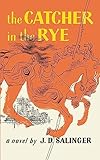
J.D. Salinger (1919–2010) is the most significant presence in American literature who published the smallest body of work — one novel, one collection of stories, and two novellas published together, all produced between 1951 and 1963, before his complete withdrawal from public life. What he published in those twelve years was, in the case of The Catcher in the Rye and Nine Stories, genuinely exceptional.
Where to Start
The Catcher in the Rye (1951)
The essential starting point — Holden Caulfield’s voice, the most distinctive in postwar American fiction, is both immediately recognisable and endlessly analysed. The novel is a coming-of-age story, a breakdown narrative, and a satire of the American middle class; what it is most consistently is a portrait of a young man who sees the phoniness around him with painful clarity and has no idea what to do about it.
Nine Stories (1953)
The best second book — nine stories including the Glass family’s introduction (‘A Perfect Day for Bananafish’) and the finest short story of Salinger’s career (‘For Esmé—with Love and Squalor’). The range of the collection — from the comedy of ‘Just Before the War with the Eskimos’ to the tragedy of ‘A Perfect Day’ — shows Salinger’s full command of the form.
Franny and Zooey (1961)
The first full account of the Glass family — Franny’s breakdown at a football weekend and her brother Zooey’s attempt to help her. Salinger’s most didactically spiritual work (the ending is a direct statement of his Vedanta-influenced theology) and the most controversial — many readers find the Glass siblings insufferable; others find them the most fully imagined characters in his work.
Complete Bibliography
| Title | Year | Note |
|---|---|---|
| The Catcher in the Rye | 1951 | Novel; Holden Caulfield |
| Nine Stories | 1953 | Story collection; Seymour Glass |
| Franny and Zooey | 1961 | Two novellas; Glass family |
| Raise High the Roof Beam, Carpenters | 1963 | Two novellas; Seymour Glass’s wedding |
| Hapworth 16, 1924 | 1965 | Final publication; The New Yorker |
The Voice of Adolescent Alienation
J.D. Salinger created in The Catcher in the Rye one of the most influential and enduring portraits of adolescent alienation in all of literature, giving voice, through his narrator Holden Caulfield, to the disaffection, confusion, and yearning of youth with a power that has resonated with generations of readers. Salinger’s great achievement was to capture the voice and experience of adolescent alienation with unprecedented authenticity and power, and his narrator Holden Caulfield became an emblem of youthful disaffection, his voice and perspective speaking to generations of young readers who recognized in him their own confusion, alienation, and yearning. The novel’s rendering of adolescent experience, its distinctive voice, its disaffection with the adult world, and its yearning for authenticity and connection, struck a profound chord and has continued to resonate with young readers across the decades. Holden’s voice, with its distinctive idiom, its mixture of cynicism and vulnerability, and its yearning beneath its disaffection, is one of the most memorable and influential in American fiction, and it gave voice to the experience of adolescent alienation with a power that made the novel an enduring touchstone of youth. For readers, Salinger offers the definitive voice of adolescent alienation, the disaffection, confusion, and yearning of youth rendered with unprecedented authenticity and power. The voice of adolescent alienation is Salinger’s great achievement, his rendering, through Holden Caulfield, of the disaffection, confusion, and yearning of youth with an authenticity and power that have resonated with generations and made The Catcher in the Rye an enduring touchstone.
Authenticity Against Phoniness
A central preoccupation of Salinger’s fiction, articulated most memorably in Holden Caulfield’s contempt for “phoniness,” is the yearning for authenticity in a world that seems false, hypocritical, and corrupt, and the difficulty of preserving genuine feeling and integrity against the pressures of a phony world. Salinger’s fiction is animated by a deep concern with authenticity, with the difficulty of remaining genuine, sincere, and true in a world that seems to him false, hypocritical, and compromised, and Holden Caulfield’s famous contempt for “phoniness” captures this central preoccupation. Salinger’s characters yearn for authenticity, for genuine feeling and connection, and recoil from the falseness, hypocrisy, and compromise that they perceive in the adult world and in society, and this tension between authenticity and phoniness runs throughout his fiction. The yearning for the genuine and the recoil from the false reflect a deep moral and spiritual concern, a search for integrity and authentic feeling in a world that seems to corrupt and compromise them, and this concern gives Salinger’s fiction its emotional and moral depth. The preoccupation with authenticity against phoniness resonated powerfully with readers, particularly young readers, who recognized in it their own yearning for the genuine and their own recoil from the false, and it is central to the enduring appeal of Salinger’s fiction. For readers, this preoccupation gives Salinger’s fiction its moral and emotional depth, the yearning for authenticity and the recoil from phoniness that animate his work. Authenticity against phoniness is a central preoccupation of Salinger’s fiction, the yearning for genuine feeling and integrity in a world that seems false and hypocritical, captured in Holden Caulfield’s contempt for phoniness, and it gives his work its moral and emotional depth.
The Reclusive Legend
J.D. Salinger’s life as a writer became as legendary as his fiction, for after achieving fame he withdrew almost entirely from public life into a famous reclusiveness, ceasing to publish and guarding his privacy with an intensity that made him a figure of enduring fascination. After the enormous success of The Catcher in the Rye and his other published work, Salinger withdrew from public life into a profound reclusiveness, retreating from fame, ceasing to publish, and guarding his privacy fiercely for the rest of his long life. This reclusiveness became part of his legend, deepening the fascination surrounding him and his small body of published work, and making him one of the most famously private and mysterious figures in American literature. Salinger’s withdrawal from publishing and public life, his refusal of the fame his work had brought, and his fierce protection of his privacy made him a figure of enduring fascination and speculation, the famous recluse whose silence only deepened the mystery surrounding him. His small published output, combined with his decades of reclusiveness and silence, made each of his published works all the more precious and his legend all the more compelling. For readers, the reclusive legend adds to the fascination of Salinger’s small but influential body of work, the mystery of the famous writer who withdrew from the world. The reclusive legend is part of Salinger’s enduring fascination, for after achieving fame he withdrew almost entirely from public life, ceasing to publish and guarding his privacy fiercely, and his decades of reclusiveness and silence made him one of the most famously private and mysterious figures in American literature.
Reading Order Recommendations
New to Salinger: The Catcher in the Rye → Nine Stories → Franny and Zooey.
Glass family focus: Nine Stories → Franny and Zooey → Raise High the Roof Beam, Carpenters.
Complete: The Catcher in the Rye → Nine Stories → Franny and Zooey → Raise High the Roof Beam, Carpenters.
Frequently Asked Questions
What is the best J.D. Salinger book to start with?
The Catcher in the Rye (1951) is the essential starting point — Holden Caulfield's three-day wandering through New York after being expelled from prep school, one of the most distinctive voices in American fiction and one of the most misunderstood novels. Nine Stories (1953) is the best second book — nine stories including 'A Perfect Day for Bananafish' (Seymour Glass's last day) and 'For Esmé—with Love and Squalor' (the finest American short story of the 1940s). The Glass family stories (Franny and Zooey, Raise High the Roof Beam, Carpenters) complete the main body of his work.
What is The Catcher in the Rye about?
The Catcher in the Rye (1951) follows Holden Caulfield, sixteen years old, who has just been expelled from his fourth school. He spends three days wandering New York before he has to go home to his parents — visiting a former teacher, hiring a prostitute, meeting his sister Phoebe. Holden's narrative voice (suspicious of 'phonies,' longing for authenticity, drawn to the vulnerable and the young) has been the most imitated in American fiction. The novel is simultaneously a comic novel about adolescent alienation and a tragedy about a young man on the edge of breakdown.
What is Nine Stories about?
Nine Stories (1953) collects nine stories Salinger published in the late 1940s and early 1950s. 'A Perfect Day for Bananafish' introduces Seymour Glass — the most important figure in Salinger's work — on the last day of his life. 'For Esmé—with Love and Squalor' follows a soldier's encounter with a girl in pre-D-Day England and his subsequent breakdown. 'Uncle Wiggily in Connecticut' is a portrait of suburban spiritual emptiness. The collection is the most consistently high-quality work Salinger produced, and 'For Esmé' is the finest American short story of the decade.
Why did Salinger stop publishing after 1965?
Salinger published his last work in 1965 ('Hapworth 16, 1924,' a letter from seven-year-old Seymour Glass from summer camp) and then retreated entirely into privacy in his New Hampshire home, where he lived until his death in 2010. He reportedly continued writing but refused to publish. The reasons he gave varied — distaste for the literary marketplace, the invasion of his privacy by fame, religious devotion to Vedanta Hinduism — but the withdrawal itself became part of his legend. After his death, his estate announced that he had left several unpublished manuscripts; the timetable for their publication has not been disclosed.