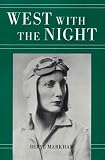
Editors Reads Verdict
One of the finest memoirs ever written about aviation, Africa, and a life of genuine independence. Hemingway said it was a great book — 'she has written so well, and marvelously well, that I was completely ashamed of myself as a writer.' He was not wrong.
What We Loved
- The prose is extraordinary — Markham writes with a precision and lyricism that most professional writers cannot approach
- The portrait of colonial Kenya from the inside — without either nostalgia or post-colonial guilt — is historically rare
- The aviation passages are among the best writing about flight in English
- Markham's matter-of-fact account of an extraordinary life is more powerful than any dramatisation could be
Minor Drawbacks
- Questions about how much of the prose was written with assistance from her companion Raoul Schumacher remain unresolved
- The book is not structured chronologically — readers wanting a sequential life story may find the organisation confusing
- Some readers find the colonial context uncomfortable; Markham herself is unreflective about the political dimension of her world
Key Takeaways
- → Markham was the first person to fly solo non-stop from England to North America, landing in Nova Scotia in 1936
- → She was raised by Africans as much as by her father — her first language was Nandi, not English
- → Becoming a horse trainer in colonial Kenya required Markham to operate in a world that had no category for her
- → Aviation in the 1930s was genuinely dangerous — navigation was dead reckoning, weather forecasting was approximate, and the technology was new
| Author | Beryl Markham |
|---|---|
| Publisher | North Point Press |
| Pages | 294 |
| Published | January 1, 1942 |
| Language | English |
| Genre | Memoir, Travel, Adventure |
| Difficulty | Intermediate |
| Best For | Readers drawn to aviation history, colonial African memoirs, and exceptional women's life writing — and anyone who wants to encounter prose that regularly approaches perfection. |
How West with the Night Compares
West with the Night at a glance against 3 similar books readers weigh alongside it.
| Book | Author | Rating | Best for |
|---|---|---|---|
| West with the Night (this book) | Beryl Markham | ★ 4.6 | Readers drawn to aviation history, colonial African memoirs, and exceptional |
| In Patagonia | Bruce Chatwin | ★ 4.4 | Readers who value literary prose over conventional travel narrative, and anyone |
| Seven Years in Tibet | Heinrich Harrer | ★ 4.4 | Readers interested in adventure narrative, Himalayan history, Tibetan Buddhism, |
| Wild | Cheryl Strayed | ★ 4.2 | Memoir readers, hikers, and anyone who has experienced significant loss and is |
Ernest Hemingway read West with the Night in 1942 and wrote to a friend: “She has written so well, and marvellously well, that I was completely ashamed of myself as a writer. I felt that I was simply a carpenter with words, picking up whatever was furnished on the job, and she had turned the whole trade into something better.” The assessment is not false modesty. Beryl Markham’s prose has a quality of inevitability — sentences that seem to have been discovered rather than composed — that distinguishes genuinely great writing from excellent writing, and it is present throughout a book that was dictated by an aviator and horse trainer with no formal education past the age of ten.
Markham was born in England in 1902 and brought to Kenya at age four when her father took a farm in the highlands near Nairobi. Her mother returned to England shortly after; her father stayed and raised Beryl unconventionally, allowing her to roam the African savannah with the Nandi and Murani boys of the neighbouring tribe, from whom she learned to hunt and to speak Nandi before she spoke English with any fluency. She became a horse trainer in her teens, the first licensed female trainer in Kenya, and established a reputation for finding talent in horses that seemed unmanageable. The Kenya she describes — the farms, the settlers, the Africans, the wildlife, the quality of the light and the air — is rendered with the specificity of someone who grew up there and loved it without quite understanding it.
The aviation passages are the book’s most celebrated sections. Markham became a bush pilot in the 1930s, flying cargo and mail across East Africa in aircraft with no instruments worth trusting, navigating by landscape and dead reckoning, regularly landing in places where no aircraft had been before. In 1936 she flew solo from England to North America, west to east against the prevailing winds — a journey that had been attempted several times without success — landing in Cape Breton, Nova Scotia, after twenty-one hours and some minutes in the air, slightly off target but alive. The chapter she devotes to that flight — the long approach over the Atlantic in darkness, the fuel gauges unreliable, the coast of North America somewhere ahead — is among the finest aviation writing in English.
The question of authorship — whether the prose was written in collaboration with, or primarily by, her companion Raoul Schumacher — remains unresolved and does not diminish the book. Whatever its origin, West with the Night exists as a complete and extraordinary work, and Markham’s voice — direct, unsentimental, alive to the physical world with an animal attentiveness — is consistent throughout. It is a book about Africa, about aviation, and about a woman who lived outside every category that her era provided for women, and who described doing so in prose that Hemingway, justifiably, envied.
A Life Beyond Category
The deepest fascination of West with the Night lies in the singular life it records, that of a woman who refused every constraint her era placed upon women and pursued instead a series of dangerous, male-dominated vocations with extraordinary boldness. Raised in colonial Kenya largely without a mother and given unusual freedom by an indulgent father, Markham grew up running with Nandi and Murani children, learning to hunt and to speak their language before she was fluent in English, an upbringing of wildness and self-reliance that shaped her fearless character. She became the first licensed female racehorse trainer in Kenya as a teenager, succeeding in a world that had no place for her, before turning to aviation and working as a bush pilot across the vast and often perilous landscapes of East Africa. Her record-setting solo flight across the Atlantic from east to west in 1936, against the prevailing winds, the harder direction that had defeated previous attempts, sealed her reputation among the daring aviation pioneers of the age. The book conveys this existence not as a feminist statement, which Markham never intended, but as the simple, matter-of-fact record of a person who lived entirely on her own terms, and it is precisely this unselfconscious freedom, rendered without apology or explanation, that gives the memoir its bracing and timeless appeal.
The Quality of the Prose
What lifts West with the Night from a merely remarkable life story to a genuine literary achievement is the extraordinary quality of its prose, the very quality that moved Ernest Hemingway to confess himself “ashamed” as a writer by comparison. Markham’s sentences have a rare quality of inevitability, seeming to have been discovered rather than composed, direct and unsentimental yet alive to the physical world with an almost animal attentiveness. Her descriptions of the Kenyan landscape, the farms and the wildlife, the quality of the light and the air, are rendered with the specificity of someone who grew up in that world and loved it without quite understanding it, while her account of flight conveys both its technical reality and its strange solitude. The celebrated chapter describing her transatlantic crossing, the long approach over a dark ocean with unreliable fuel gauges and the coast of North America somewhere ahead, stands among the finest aviation writing in the English language. Throughout, the voice is consistent: spare, vivid, unflinching, attentive to the concrete texture of experience rather than to sentiment or introspection. This prose is the book’s chief glory, and it is what has secured its place not merely as an adventure memoir but as a work of lasting literary distinction admired by writers and general readers alike.
Authorship, Rediscovery, and Legacy
The story of West with the Night carries two enduring complications that any full account must address: the question of its authorship and the remarkable arc of its reception. The polish and assurance of the prose, produced by a woman with little formal education, has long fueled speculation that her third husband, the ghostwriter Raoul Schumacher, contributed substantially to or even primarily wrote the book, and the question has never been conclusively resolved. Yet the consensus holds that whatever editorial collaboration occurred, the voice, the experiences, and the sensibility are authentically Markham’s, since no one else lived the life the book describes or possessed its intimate knowledge of Africa, horses, and flight, and the controversy has become part of the work’s mystique rather than a true diminishment of it. Equally striking is the book’s path to fame: published in 1942, it sold poorly and slipped into obscurity, and Markham herself fell into relative poverty and was largely forgotten before a reissue decades later, prompted by the rediscovery of Hemingway’s praise, became an unexpected bestseller and restored both book and author to acclaim in her final years. Today West with the Night is regarded as a classic of memoir, travel, and aviation literature, and Markham endures as a symbol of female courage and independence, her singular life and luminous prose held together in a work whose beauty has proven, against the odds, to be lasting.
Our rating: 4.6/5 — A luminous classic of memoir and aviation writing whose prose moved Hemingway to envy, recording the singular life of a woman who lived entirely beyond the categories her era allowed.
Reading Guides
- Books Like West with the Night: Aviation and Adventure Memoirs
- Books Like In Patagonia: Literary Adventure Travel at Its Finest
- Books Like Seven Years in Tibet: Himalayan Adventure and Escape Narratives
- Books Like The Snow Leopard: Spiritual and Himalayan Travel Narratives
- Best Travel Books of All Time: 20 Essential Reads for Every Kind of Wanderer
Frequently Asked Questions
What is "West with the Night" about?
Beryl Markham's memoir of growing up in Kenya in the early twentieth century, training horses, becoming the first person to fly solo non-stop from England to North America west to east, and living a life that defied every category available to women of her era.
Who should read "West with the Night"?
Readers drawn to aviation history, colonial African memoirs, and exceptional women's life writing — and anyone who wants to encounter prose that regularly approaches perfection.
What are the key takeaways from "West with the Night"?
Markham was the first person to fly solo non-stop from England to North America, landing in Nova Scotia in 1936 She was raised by Africans as much as by her father — her first language was Nandi, not English Becoming a horse trainer in colonial Kenya required Markham to operate in a world that had no category for her Aviation in the 1930s was genuinely dangerous — navigation was dead reckoning, weather forecasting was approximate, and the technology was new
Is "West with the Night" worth reading?
One of the finest memoirs ever written about aviation, Africa, and a life of genuine independence. Hemingway said it was a great book — 'she has written so well, and marvelously well, that I was completely ashamed of myself as a writer.' He was not wrong.
Ready to Read West with the Night?
Check the current price on Amazon.
Check Price on Amazon (paid link)Prices and availability are subject to change. See Amazon for current price.
Review last updated: