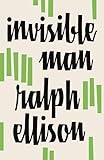
Editors Reads Verdict
Ralph Ellison's only completed novel is one of American literature's supreme achievements: a formally dazzling, politically precise, and humanly comprehensive account of Black experience in mid-century America. The narrator's invisibility is not a metaphor but an accurate description of how society actually works.
What We Loved
- The formal range is extraordinary — realism, surrealism, satire, expressionism in a single novel
- The battle royal chapter is one of American fiction's most shocking and precisely observed openings
- The Brotherhood section is a devastatingly accurate portrait of how political organisations use and discard people
- The prologue and epilogue frame the novel with a philosophical complexity that elevates it above social realism
Minor Drawbacks
- The length and density require sustained commitment
- Some satirical sections (Liberty Paints, certain Brotherhood meetings) are broad to the point of allegory
- The female characters are largely vehicles for the narrator's experiences rather than independent presences
Key Takeaways
- → Invisibility is not a personal condition but a social one — it is imposed by those who prefer not to see
- → Every ideology that promises Black liberation — nationalism, communism, accommodationism — ultimately demands self-erasure
- → Identity is not given but constructed — and the construction requires seeing through every false identity offered
- → American democracy contains its own contradiction: the promise of individual freedom and the practice of racial erasure
- → The underground — the margin, the basement — can be a position of clarity rather than defeat
| Author | Ralph Ellison |
|---|---|
| Publisher | Vintage International |
| Pages | 581 |
| Published | April 14, 1952 |
| Language | English |
| Genre | Fiction, Classic Literature, American Literature |
| Difficulty | Intermediate |
| Best For | Every serious reader of American literature — *Invisible Man* is essential reading for understanding race, identity, and the gap between American ideals and American practice. |
How Invisible Man Compares
Invisible Man at a glance against 3 similar books readers weigh alongside it.
| Book | Author | Rating | Best for |
|---|---|---|---|
| Invisible Man (this book) | Ralph Ellison | ★ 4.7 | Every serious reader of American literature — *Invisible Man* is essential |
| Beloved | Toni Morrison | ★ 4.5 | Serious readers of literary fiction with the patience for challenging, |
| The Color Purple | Alice Walker | ★ 4.7 | Readers who want powerful, voice-driven fiction about female experience and |
| Their Eyes Were Watching God | Zora Neale Hurston | ★ 4.7 | Every reader who values great prose and psychological depth — and particularly |
“I Am an Invisible Man”
Ralph Ellison’s prologue opens with one of American literature’s most resonant declarations: “I am an invisible man. No, I am not a spook like those who haunted Edgar Allan Poe; nor am I one of your Hollywood-movie ectoplasms. I am a man of substance, of flesh and bone, fiber and liquids — and I might even be said to possess a mind. I am invisible, understand, simply because people refuse to see me.”
This invisibility is not a supernatural condition but a social and political one: the narrator is a Black man whose individual humanity, thoughts, and desires are systematically unseen by a white society that can only perceive racial categories. Invisible Man, published in 1952, won the National Book Award and changed American literature.
From South to North
The novel follows its unnamed narrator from a Southern Black college — where he impresses the trustees, makes mistakes, and is expelled — to New York, where he is used by everyone he meets: the college president Dr. Bledsoe, who destroys him for humiliating a trustee; the factory at Liberty Paints, whose product is the whitest white in the country; and the Brotherhood, a communist-adjacent organisation that enlists him as a speaker and dispenses with him when he becomes inconvenient.
Each section is a different kind of erasure. The college asks him to perform grateful, deferential Black achievement for white approval. The factory demonstrates that Black labour supports white institutions while remaining invisible in them. The Brotherhood offers him a political identity in exchange for his individual one — and the political identity is the Brotherhood’s to define, not his.
Ras the Exhorter
The novel’s most theatrically compelling figure is Ras the Exhorter/Destroyer, a Black nationalist leader whose fury at the narrator’s involvement with the racially integrated Brotherhood is presented with genuine ambivalence: Ras is wrong in his methods and his conclusions, but his understanding of how white political organisations use Black people is not entirely wrong. Ellison refuses to make the nationalist position simply villainous.
The Riot and the Underground
The novel ends with a Harlem riot and the narrator’s flight into an underground coal cellar, where he has been living, surrounded by thousands of stolen lightbulbs burning simultaneously. The surreal brightness of the underground — visibility achieved in the dark, light stolen from Monopolated Light & Power — is the novel’s final image: a man who is invisible above ground becoming fully visible to himself, preparing to emerge.
Our rating: 4.7/5 — The most formally ambitious and politically precise American novel of the twentieth century — essential reading without qualification.
The Invisibility at Its Centre
Ralph Ellison’s title names the novel’s controlling idea: his unnamed narrator is invisible not because of any physical condition but because the people around him refuse to see him as a full human being, perceiving only their own projections, fears, and uses for a Black man in mid-century America. From the surreal prologue, in which the narrator lives hidden underground in a cellar blazing with stolen light, the novel works as both a vivid realist story and a sustained metaphor for the erasure of Black identity. The narrator’s long, picaresque journey is, at bottom, a search to be genuinely seen.
A Journey Through American Illusions
The novel follows its narrator from a Southern Black college through the factories and streets of Harlem and into a political movement that uses and discards him, and at each stage Ellison exposes a different illusion about race, identity, and belonging in America. The narrator is repeatedly handed an identity by others — the grateful student, the obedient worker, the symbol for a cause — and repeatedly betrayed when he tries to live inside it. The book’s structure is a series of awakenings, each one stripping away another false promise, until the narrator withdraws to define himself on his own terms.
Style as Substance
Part of what makes Invisible Man a landmark is its formal richness. Ellison blends gritty realism with surrealism, folklore, and the rhythms of jazz and Black oratory, so that the prose itself enacts the narrator’s shifting, improvised search for self. The famous set pieces — the brutal “battle royal,” the paint factory, the Harlem riot — are rendered with a virtuosic energy that makes the novel as much a stylistic achievement as a political one. It demands and rewards close attention.
Why It Endures
Decades after publication, Invisible Man remains one of the essential American novels because its central question — what it means to be unseen, and how a person constructs an identity in a society that refuses to recognise it — has lost none of its urgency. Ellison refuses easy answers or political slogans, insisting instead on the full, irreducible complexity of his narrator’s humanity. As a profound, inventive, and stylistically dazzling exploration of race, identity, and selfhood in America, it stands among the towering achievements of twentieth-century literature. Ellison published only this one novel in his lifetime, and its singular power — the fusion of realism and surrealism, of political urgency and stylistic brilliance — has only grown clearer with time, which is why it remains a fixture of any serious account of the American novel.
Why It Should Be Read Now
Invisible Man has lost none of its relevance, and an honest case for it rests on more than its place in the canon. Its central insight — that a person can be rendered invisible by the refusal of others to see them as fully human — speaks directly to ongoing conversations about race, recognition, and identity in America. Ellison resisted reducing his narrator to a symbol or a spokesman, insisting instead on the full, contradictory complexity of an individual consciousness, and that insistence is part of the novel’s enduring power. It is a demanding book that rewards the effort, and it remains essential reading for anyone seeking to understand both American literature and the American experience it so searchingly examines.
Reading Guides
Frequently Asked Questions
What is "Invisible Man" about?
An unnamed Black man's journey from the South through Harlem, joining and leaving organisations that all fail to see him as an individual — a meditation on identity, race, and visibility in America.
Who should read "Invisible Man"?
Every serious reader of American literature — *Invisible Man* is essential reading for understanding race, identity, and the gap between American ideals and American practice.
What are the key takeaways from "Invisible Man"?
Invisibility is not a personal condition but a social one — it is imposed by those who prefer not to see Every ideology that promises Black liberation — nationalism, communism, accommodationism — ultimately demands self-erasure Identity is not given but constructed — and the construction requires seeing through every false identity offered American democracy contains its own contradiction: the promise of individual freedom and the practice of racial erasure The underground — the margin, the basement — can be a position of clarity rather than defeat
Is "Invisible Man" worth reading?
Ralph Ellison's only completed novel is one of American literature's supreme achievements: a formally dazzling, politically precise, and humanly comprehensive account of Black experience in mid-century America. The narrator's invisibility is not a metaphor but an accurate description of how society actually works.
Ready to Read Invisible Man?
Check the current price on Amazon.
Check Price on Amazon (paid link)Prices and availability are subject to change. See Amazon for current price.
Review last updated: