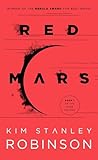
Editors Reads Verdict
Red Mars is the most scientifically rigorous and politically serious Mars novel ever written — a landmark of hard science fiction that is as interested in ecology, politics, and philosophy as in spectacle, and rewards patient readers enormously.
What We Loved
- The scientific and ecological detail is extraordinarily thorough and convincing
- The political and philosophical debates about terraforming are genuinely complex
- Robinson creates a large cast of memorable characters across the First Hundred
- The Martian landscape is rendered with sustained, beautiful precision
Minor Drawbacks
- The density of technical and political material demands patience
- The pace is deliberately slow — this is not an adventure novel
- Some readers find the ideological debates more compelling than the characters
Key Takeaways
- → Terraforming raises genuine ethical questions about whether we have the right to transform another world
- → Political divisions on Earth will inevitably follow humanity to any new frontier
- → The novel's ecological thinking was decades ahead of mainstream SF
- → Robinson uses the First Hundred as a microcosm for all of humanity's ideological conflicts
- → Hard science fiction at its best makes the technical constraints generate the drama
| Author | Kim Stanley Robinson |
|---|---|
| Publisher | Bantam Books |
| Pages | 572 |
| Published | January 1, 1993 |
| Language | English |
| Genre | Science Fiction |
| Difficulty | Advanced |
| Best For | Hard science fiction readers willing to invest in a dense, politically sophisticated epic — particularly those interested in ecology, space colonisation, and the limits of human ambition. |
How Red Mars Compares
Red Mars at a glance against 3 similar books readers weigh alongside it.
| Book | Author | Rating | Best for |
|---|---|---|---|
| Red Mars (this book) | Kim Stanley Robinson | ★ 4.1 | Hard science fiction readers willing to invest in a dense, politically |
| 2001: A Space Odyssey | Arthur C. Clarke | ★ 4.3 | Science fiction readers interested in hard SF, AI, space exploration, and the |
| Childhood's End | Arthur C. Clarke | ★ 4.2 | Science fiction readers drawn to big ideas, cosmic perspective, and classic SF |
| The Dispossessed | Ursula K. Le Guin | ★ 4.4 | Serious science fiction readers interested in political philosophy, utopian |
Mars as Political Laboratory
Kim Stanley Robinson spent years researching the science and politics of Mars colonisation before writing Red Mars. The result is the most rigorously imagined account of terraforming ever committed to fiction — and something considerably more than a science fiction novel about space.
One hundred colonists — scientists, engineers, technicians — arrive on Mars in 2026. They are the First Hundred, and their decisions about how to treat the planet will determine everything that follows. The central conflict is between those who want to terraform Mars — transform its atmosphere and surface into something habitable for unprotected humans — and those who believe Mars should remain as it is, preserved in its ancient, alien state.
The Terraforming Debate
Robinson takes both sides seriously. The argument for terraforming is essentially humanist: Mars can support life, life is good, and the constraints of a dead world are artificial limitations. The argument against is essentially ecological: Mars has a history of three billion years that belongs to it, not to us, and the assumption that every world should be made habitable for humans is precisely the kind of arrogance that has already damaged Earth.
These are genuine philosophical positions, held by characters who are intelligent and internally consistent. Robinson does not resolve the debate; he explores it.
The Characters and the Planet
The First Hundred are richly differentiated — including Ann Clayborne, the chief opponent of terraforming; Sax Russell, its most enthusiastic proponent; Nadia Chernevsky, who builds rather than debates; and John Boone, the first human to walk on Mars and the closest thing the group has to a political leader.
The landscape of Mars is rendered with sustained, exact beauty. Robinson’s geology is sound, and his descriptions of Martian sunsets, dust storms, and the scale of the planet’s topography are some of the finest nature writing in science fiction.
Our rating: 4.1/5 — A landmark of hard science fiction: dense, rigorous, and genuinely important for anyone serious about the genre.
The Definitive Mars Colonisation Epic
Red Mars, the first volume of Kim Stanley Robinson’s acclaimed trilogy, is the definitive science-fiction treatment of the colonisation and terraforming of the red planet. It follows the first hundred settlers as they establish humanity’s foothold on Mars and confront the immense scientific, political, and human challenges of building a new world from nothing. What sets the novel apart is its rigour and ambition: Robinson grounds the story in detailed, plausible science — the geology, the engineering, the slow work of making a dead planet habitable — while giving equal weight to the political and ideological struggles that inevitably erupt among the colonists. Should Mars be transformed to suit humanity, or preserved in its pristine state? Who should govern the new society, and on what principles? These questions drive the human drama as powerfully as the technical ones, and the novel becomes a profound meditation on idealism, power, and the founding of a civilisation. With its large cast, its sweeping scope across decades, and its serious engagement with science, politics, and ecology, Red Mars is demanding, ideas-rich hard science fiction rather than fast-paced adventure, and it rewards readers willing to immerse themselves. As the opening of one of the most ambitious and respected works of modern science fiction, it remains the essential starting point for the saga of humanity’s future on Mars.
Reading Guides
- Books Like Jurassic Park: 12 Techno-Thrillers Where Science Goes Wrong
- Books Like Project Hail Mary: 11 Science Fiction Novels for Problem-Solvers
- Books Like Dune: 14 Epic Sci-Fi Novels for Herbert Fans
Awards
Red Mars won the Nebula Award for Best Novel in 1993 and the BSFA Award (British Science Fiction Association) for Best Novel in 1992. It was also nominated for the Hugo Award for Best Novel (1993). The second and third novels in the trilogy — Green Mars (1994) and Blue Mars (1996) — won the Hugo Award for Best Novel in their respective years (1994 and 1997), making the Mars Trilogy the only series to win the Hugo Award for three consecutive novels, though not all three Hugos went to Kim Stanley Robinson (the second novel won while he was writing it).
The Hundred
The Mars Trilogy begins with the First Hundred — the initial colonists sent to Mars from Earth in 2026, each a specialist in a different discipline. Robinson developed each of the major characters as embodiments of different relationships to the Martian environment: Ann Clayborne as the “Red,” who believes Mars should remain pristine; Sax Russell as the “Green,” who wants to terraform; Nadia Chernevsky as the pragmatic engineer; Hiroko Ai as the idealist agriculturalist. The political and personal conflicts among the Hundred drive the trilogy’s action across two thousand pages and several centuries.
Research and Method
Robinson spent years researching planetary science, geology, and terraforming theory before writing Red Mars; he has described his method as wanting to make the geology of Mars feel as specific and vivid as a landscape he had visited. The novel’s descriptions of the Martian surface draw on NASA data from the Viking and Mariner missions, and on geological principles applied to a body with different chemistry and gravity from Earth. The novel’s scientific detail was vetted by researchers and contributed to its adoption as required reading in some university geology courses.
The trilogy is the defining work of “hard” science fiction about Mars and has influenced public discourse about planetary colonisation and terraforming since its publication.
Kim Stanley Robinson’s Career
Kim Stanley Robinson began writing science fiction in the late 1970s and first drew major critical attention with The Wild Shore (1984), the first in a California Trilogy. The Mars Trilogy is his career centrepiece: he has said that the three novels represent the longest sustained project he has undertaken, requiring years of research into planetary science, sociology, and ecology. Robinson has described himself as an “ecological utopian” writer, meaning that his fiction consistently explores the possibility of sustainable human civilisation rather than its collapse — an unusual orientation in science fiction, which tends to prefer catastrophe.
The First Hundred in Context
The division among the First Hundred colonists — between “Reds” who want to preserve Mars as it is and “Greens” who want to terraform it into a second Earth — maps onto real debates about wilderness preservation, indigenous land rights, and ecological intervention that were live issues in the early 1990s when Robinson wrote the novel. Ann Clayborne, the most committed Red, becomes one of the trilogy’s most compelling characters precisely because her position — that no place should be changed without its own consent, even if it cannot give consent — is philosophically serious and practically impossible. Robinson does not resolve the argument; he dramatises it across three novels and 2,000 pages.
Frequently Asked Questions
What is "Red Mars" about?
One hundred colonists arrive on Mars in 2026 to begin humanity's first permanent settlement — and the political and philosophical fault lines that will define the planet's future immediately emerge.
Who should read "Red Mars"?
Hard science fiction readers willing to invest in a dense, politically sophisticated epic — particularly those interested in ecology, space colonisation, and the limits of human ambition.
What are the key takeaways from "Red Mars"?
Terraforming raises genuine ethical questions about whether we have the right to transform another world Political divisions on Earth will inevitably follow humanity to any new frontier The novel's ecological thinking was decades ahead of mainstream SF Robinson uses the First Hundred as a microcosm for all of humanity's ideological conflicts Hard science fiction at its best makes the technical constraints generate the drama
Is "Red Mars" worth reading?
Red Mars is the most scientifically rigorous and politically serious Mars novel ever written — a landmark of hard science fiction that is as interested in ecology, politics, and philosophy as in spectacle, and rewards patient readers enormously.
Ready to Read Red Mars?
Check the current price on Amazon.
Check Price on Amazon (paid link)Prices and availability are subject to change. See Amazon for current price.
Review last updated: