Kim Stanley Robinson is an American science fiction author celebrated for scientifically rigorous, politically engaged novels that imagine how humanity might — or might not — survive its own future.
Kim Stanley Robinson earned a PhD in English literature, and his science fiction bears the mark of someone who has thought seriously about both the scientific and the humanistic dimensions of speculative storytelling. He is probably the most politically explicit major science fiction writer of his generation, consistently centering questions of ecology, economics, and collective action in his work. His Mars trilogy — beginning with Red Mars in 1992 — is widely considered the definitive fictional account of planetary colonization and one of the landmarks of the genre.
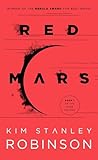
Red Mars is vast, meticulous, and genuinely difficult in the best possible sense. Robinson populates the first Mars colony with a cast of scientists who disagree not just about politics but about fundamental values — whether Mars should be terraformed or left in its primordial state, whether human survival justifies transforming another world. The scientific detail is dense enough to satisfy hard SF readers, but the novel’s real subject is the collision of competing visions of the future, played out in the regolith and ice of another planet. It is not a comfortable or fast-moving read.
Robinson is a demanding author. His books are long, idea-dense, and deliberately paced in ways that prioritize intellectual argument over narrative momentum. Readers who want action-driven plot will be frustrated. But for those willing to engage on his terms, Red Mars and its sequels offer a vision of humanity’s future — flawed, fractious, and still worth fighting for — that few science fiction works have equalled.
A Master of Science Fiction
Kim Stanley Robinson remains one of the most respected and influential science fiction writers of his generation, an author renowned for his scientifically rigorous, intellectually ambitious, and politically engaged novels. Celebrated for his ability to combine hard science with serious consideration of social, political, economic, and environmental questions, Robinson has used the genre to explore how humanity might confront its greatest challenges, from climate change to the colonisation of other worlds. His thoughtful, detailed, and hopeful approach to speculative fiction has earned him major awards and a devoted readership, and he stands as one of the foremost thinkers working in the field.
The Mars Trilogy
Robinson’s most celebrated achievement is the Mars trilogy, comprising Red Mars, Green Mars, and Blue Mars, an epic and meticulously detailed chronicle of the colonisation and terraforming of the planet Mars over generations. The trilogy combines rigorous scientific extrapolation with deep engagement in politics, economics, and the question of how a new human society might be built, and it is widely regarded as one of the masterpieces of modern science fiction. Its blend of grand vision, scientific plausibility, and serious social thought exemplifies Robinson’s distinctive ambitions and secured his major reputation.
Science and Rigour
A defining feature of Robinson’s fiction is its commitment to scientific rigour and detail. He researches his subjects deeply and grounds his speculation in real and plausible science, whether describing planetary engineering, climate systems, or ecological processes, and his novels convey both the excitement of scientific possibility and the complexity of real-world problems. This dedication to getting the science right, combined with his interest in the practical and political challenges of applying it, gives his work an authority and a substance that distinguish it within the genre.
Climate and Ecology
Robinson has become one of the most important literary voices on climate change and humanity’s relationship with the environment. Much of his work confronts ecological crisis, sustainability, and the question of how civilisation can survive and adapt, and his novel The Ministry for the Future offers a detailed, hopeful vision of how the world might address the climate emergency. This engagement with the defining challenge of our era, treated with seriousness, realism, and ultimately optimism, has made his fiction urgently relevant and established him as a crucial writer for the present moment.
Utopian Thinking
Unlike much contemporary science fiction, which tends toward dystopia, Robinson is a notable practitioner of utopian thought, interested in imagining better futures and the difficult work required to achieve them. His novels seriously consider alternative economic and political systems, the possibility of building more just and sustainable societies, and the collective effort needed to solve humanity’s problems. This constructive, hopeful orientation, grounded in realism rather than naive optimism, sets him apart and reflects his conviction that fiction can help us imagine and work toward a better world.
Politics and Society
Robinson’s fiction is deeply engaged with political, economic, and social questions, and he uses the freedom of science fiction to explore how societies are organised and how they might be changed. His work examines capitalism, inequality, governance, and collective action with genuine intellectual seriousness, and his characters are often involved in the practical and ideological struggles of building new ways of living. This political dimension, integrated with his scientific imagination, gives his novels their distinctive depth and their relevance to real-world debates about the future.
Why Kim Stanley Robinson Endures
Kim Stanley Robinson’s influence on science fiction and on thinking about the future is considerable, and his rigorous, hopeful, and politically engaged work has expanded the genre’s intellectual ambitions. For newcomers, Red Mars is the essential starting point and the gateway to his major trilogy, while the timely The Ministry for the Future offers a powerful standalone introduction to his climate-focused vision. For readers seeking intelligent, scientifically grounded, and thoughtfully optimistic science fiction that grapples seriously with humanity’s future, Robinson is among the most rewarding and important authors in the field.
Reading Guides