Best Long Books Worth the Commitment: Epic Reads Over 600 Pages
The best long books worth reading — from War and Peace and Middlemarch to A Little Life and Infinite Jest. Epic reads that reward the commitment they require.

The best long books are not long because their authors lacked economy but because the worlds they built required space. War and Peace needs its length to accumulate the weight of history it carries; A Little Life needs its length to make Jude’s suffering comprehensible and Yanagihara’s portrait of friendship credible; Middlemarch needs its length to demonstrate, slowly and without sentiment, how a life is formed by the choices it makes and the choices it fails to make.
The books listed here are the ones that repay the commitment they demand.
The Essential List
War and Peace — Leo Tolstoy (1869)
The greatest long novel ever written. Tolstoy’s account of five aristocratic families and their experiences during the Napoleonic Wars — the battles of Austerlitz and Borodino, Napoleon’s occupation of Moscow, the retreat — is simultaneously the finest historical novel in any language and the most complete psychological portrait of human life in fiction. Natasha’s adolescent joy and subsequent betrayal, Andrei’s disillusionment and death, Pierre’s hapless search for meaning, and the relationship between individual fate and the vast historical forces that determine it: these are not plotlines but lives, felt with the completeness that only very long fiction can achieve. Approximately 1,400 pages. The Pevear and Volokhanshy translation is the best available.
Middlemarch — George Eliot (1871–72)
The greatest English novel. Eliot’s portrait of provincial life in the fictional Midlands town of Middlemarch in the 1830s — Dorothea Brooke’s disastrous marriage to the elderly Casaubon, Lydgate’s medical idealism destroyed by his unsuitable wife Rosamond, Bulstrode’s hypocritical religious banking life, and the interwoven plots of an entire community — achieves what Virginia Woolf called ‘one of the few English novels written for grown-up people.’ Its central subject is the way that idealism — Dorothea’s, Lydgate’s — meets the stubborn resistance of the world as it actually is. Approximately 900 pages.
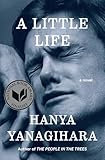
A Little Life — Hanya Yanagihara (2015)
The most emotionally demanding contemporary novel. Yanagihara’s account of Jude St. Francis — whose childhood and adolescent abuse is slowly revealed across hundreds of pages — and the friendship of four men from their college years through middle age is simultaneously the most powerful portrait of male friendship in contemporary fiction and one of the most unflinching accounts of trauma and its lifelong consequences ever written. Readers describe finishing it as a physically exhausting experience; it is the one novel on this list that most severely tests whether the commitment is worth the cost. For many readers, it is. Approximately 720 pages.
Les Misérables — Victor Hugo (1862)
Hugo’s novel of post-Revolutionary France — Jean Valjean’s decades-long attempt to escape his past and the detective Javert’s pursuit of him — is the most widely adapted long novel in the Western tradition (stage musical, films, television series, opera). But the original is richer and stranger than its adaptations suggest: Hugo’s digressions on the Battle of Waterloo, the Paris sewers, and the argot of criminal Paris are as interesting as the central narrative. Approximately 1,200 pages in most editions; the Julie Rose translation is the best recent English version.
Infinite Jest — David Foster Wallace (1996)
The most intellectually demanding American novel since Gravity’s Rainbow. Wallace’s near-future North America — where a tennis academy and a halfway house exist in uneasy proximity, and where an entertainment so pleasurable that it kills everyone who watches it has been deployed as a geopolitical weapon — is a sustained inquiry into the nature of addiction, entertainment, and the failure of irony as a mode of living. The novel’s 388 footnotes are not optional extras but integral to its argument; its multiple narrative threads converge only partially and deliberately. Approximately 1,079 pages. Requires patience and reward sustained attention.
The Luminaries — Eleanor Catton (2013)
The most formally ambitious contemporary long novel. Catton’s mystery, set in the New Zealand goldfields of 1866, is structured on an elaborate astrological schema: twelve characters representing the twelve zodiac signs, ten characters representing celestial bodies, a narrative that halves in length with each new section as the novel approaches its centre. The mystery plot (murder, fraud, a missing man) is engaging in itself; the formal architecture — which can be studied independently of the story — is extraordinary. Won the Booker Prize; the youngest author to do so. Approximately 850 pages.
The Corrections — Jonathan Franzen (2001)
The finest American family novel of its generation. The Lambert family’s final Christmas together — Enid’s determination to reassemble her disintegrating family, Alfred’s Parkinson’s disease, and the separate lives that each of the three adult children has constructed to escape the Midwest childhood they share — is narrated with a combination of satirical precision and genuine emotional warmth that Franzen has never quite equalled since. Approximately 580 pages; the shortest entry on this list, but long enough to earn its place.
The Immersive Power of the Long Book
The defining gift of the long book, and the deepest reward of the commitment it demands, is immersion — the capacity of a sufficiently long work to draw the reader so completely into its world that the experience approaches the depth and totality of lived life itself, an immersion that shorter works, however excellent, cannot achieve. There is a particular and incomparable experience available only in the long book: the experience of total immersion in a world, a story, and a cast of characters so fully realized and so long inhabited that they come to feel less like fiction than like a remembered reality. The sheer length of these works, which can seem daunting, is precisely the source of their distinctive power, for it allows the reader to spend so long in the world of the book, to come to know its characters and places so intimately, and to be so completely absorbed in its reality, that the experience attains a depth and totality unavailable in shorter works. The long book, by virtue of its length, can create a world of unmatched fullness and a cast of characters of unmatched intimacy, can develop its themes and its drama with a thoroughness and a richness that brevity cannot allow, and can immerse the reader so completely that the world of the book becomes, for the duration, a second reality. This immersive power is the deepest gift of the long book, the reward that justifies the commitment it demands, for the reader who gives themselves to a great long book gains an experience of total immersion in a fully realized world, an intimacy with characters and places that shorter works cannot provide, and a depth of absorption that approaches the totality of lived experience. The immersive power of the long book is its defining gift, available only through the commitment of length, and it offers the reader an experience of depth, fullness, and total absorption that no shorter work can match.
The Rewards of Slow Accumulation
The long book offers a distinctive form of literary reward unavailable to shorter works: the reward of slow accumulation, the gradual building of meaning, emotion, and understanding across hundreds or thousands of pages, until the cumulative weight of the whole achieves an impact that no single passage and no shorter work could deliver. There is a particular kind of power that depends on length, that can only be achieved through the slow accumulation of detail, development, and meaning across a long work. The long book builds its effects gradually, layer upon layer, developing its characters through countless pages until we know them with extraordinary depth, weaving its themes through long stretches of narrative until they achieve a richness and complexity that brevity cannot allow, and accumulating emotional and dramatic weight across the whole until the cumulative impact of the long journey achieves a power that no single moment could deliver. This reward of slow accumulation is unique to the long book, for it depends on the very length that defines these works, on the gradual building of meaning and emotion across the long span of the narrative. The reader who completes a great long book experiences the cumulative weight of the whole, the accumulated power of hundreds or thousands of pages of development, and an impact that depends on and rewards the long commitment the book has demanded. The slow accumulation of the long book also produces a particular relationship between reader and work, for the long time spent in the book’s company, the gradual deepening of one’s knowledge of its characters and world, creates an intimacy and an investment that shorter works cannot match. The rewards of slow accumulation are among the distinctive gifts of the long book, available only through the commitment of length, offering the reader the cumulative power of a work that builds its effects gradually across its long span, and an impact that depends on and rewards the long journey the book has demanded.
The Transformation of Finishing
There is a distinctive satisfaction in completing a great long book that goes beyond the pleasure of any individual reading experience — a sense of accomplishment, of having undertaken and completed a significant journey, and even of personal transformation, that marks the finishing of a long and demanding work and that constitutes one of the deepest rewards of the commitment. To finish a great long book is to complete not merely a reading but a journey, an undertaking of real significance that has demanded a substantial investment of time, attention, and effort, and the completion of such a journey carries a satisfaction unlike that of finishing a shorter work. There is the simple sense of accomplishment, the satisfaction of having undertaken and completed a significant and demanding work, of having given oneself fully to a long journey and seen it through to its end. There is the sense of having been changed by the experience, for the long immersion in a great book, the extended time spent in its world and company, can leave a lasting mark, altering one’s understanding, expanding one’s experience, and even changing, in some measure, who one is. And there is the particular intimacy and investment that the long book creates, so that finishing it carries something of the poignancy of parting from a world and characters one has long inhabited and come to know intimately. This transformation of finishing is among the deepest rewards of the long book, the sense of accomplishment and even of personal change that marks the completion of a long and demanding journey, and that constitutes one of the distinctive gifts of the commitment these works require. The reader who finishes a great long book gains not merely the pleasure of the reading but the satisfaction of a significant accomplishment, the sense of having been changed by the experience, and the poignant intimacy of parting from a world long inhabited. The transformation of finishing is a distinctive reward of the long book, marking the completion of a significant journey, and offering a depth of satisfaction and even of personal change that the commitment of length uniquely provides.
Why Length Matters
The long novel offers something the short novel cannot: the experience of living with characters over time, of watching a world accumulate, of understanding how the events of chapter three shape the events of chapter forty. The best long novels require commitment but repay it with a depth of experience unavailable in any other form. Their length is not padding but precision — the space required to do what they set out to do.
Frequently Asked Questions
What is the best long book to read?
War and Peace (1869) by Leo Tolstoy is the greatest long novel ever written — an account of the Napoleonic Wars and their aftermath in Russian aristocratic society that is also the fullest portrait of human life in fiction. Middlemarch (1871–72) by George Eliot is the greatest English novel of its length — a study of provincial life in a Midlands town in the 1830s that V.S. Pritchett called 'the central masterpiece of the Victorian novel.' Both are worth the commitment; both will change how you read everything else.
Is War and Peace too long to read?
War and Peace (approximately 1,400 pages in most editions) is not too long if approached correctly. The novel is not a sustained narrative of equal density throughout: it alternates between the peace sections (Natasha's adolescent social season, Andrei's philosophical disengagement, Pierre's hapless search for meaning) and the war sections (the battles of Austerlitz and Borodino, the French occupation and retreat). The battles are thrilling; the peace sections are where Tolstoy's psychological genius is most evident. The Pevear and Volokhanshy translation is the best currently available.
Is A Little Life worth reading despite its length and darkness?
A Little Life (2015) by Hanya Yanagihara is 720 pages of extraordinary psychological intensity — the most emotionally demanding novel on this list. Its account of Jude St. Francis's childhood abuse and its lifelong consequences is unflinching; readers who reach the novel's end describe it as one of the most difficult and most rewarding literary experiences available. Whether to read it depends on whether you can sustain its specific emotional demands. It is not worth beginning if you cannot finish it; it is worth everything if you can.
Is Infinite Jest worth reading?
Infinite Jest (1996) by David Foster Wallace is the most intellectually demanding novel on this list — 1,079 pages plus 388 footnotes, structured around an entertainment so pleasurable it kills everyone who watches it, set in a near-future North America. It requires patience, tolerance for digression, and willingness to hold multiple narrative threads simultaneously for hundreds of pages before they resolve. It is worth reading for readers who respond to intellectual ambition and to Wallace's specific quality of brilliance; it is not worth beginning if you are uncertain whether you will finish it.