Best Novellas and Short Novels: Masterpieces Under 200 Pages
The best novellas and short novels — from The Stranger and Of Mice and Men to Heart of Darkness and The Metamorphosis. Masterpieces readable in a single sitting.
The novella — fiction that achieves its effects with the economy of a short story and the depth of a novel — is among the most demanding literary forms. Unlike the short story, which typically captures a single moment or revelation, the novella develops character and argument across time; unlike the novel, it cannot rely on accumulation and digression. The works listed here are the ones that have most completely solved the novella’s central challenge: achieving everything a novel does, in a fraction of the space.
The Essential List
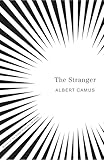
The Stranger — Albert Camus (1942)
The most important novella of the twentieth century. Meursault’s narration of his mother’s death, his beach romance, his killing of an Arab, and his trial — told in the same flat, affectless first-person throughout — is simultaneously a philosophical argument about the absurdity of human attempts to impose meaning on existence and a formally perfect narrative. The novel’s first sentence (‘Mother died today. Or maybe yesterday; I can’t be sure.’) remains the most famous opening in postwar fiction. Matthew Ward’s 1988 translation is preferred to older versions. Approximately 120 pages.
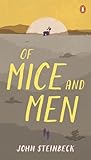
Of Mice and Men — John Steinbeck (1937)
The most emotionally powerful American novella. George and Lennie’s itinerant California dream — the small farm, the rabbits Lennie will tend — is understood by the reader to be impossible before the characters understand it themselves. Steinbeck’s narrative moves with the inevitability of Greek tragedy; the final scene, in which George must make the hardest choice in the book to protect the person he loves, is among the most devastating in American literature. The novella was designed to be performed as a play as well as read; its dialogue has the economy of theatre.
The Metamorphosis — Franz Kafka (1915)
The most formally original short fiction in the Western canon. Gregor Samsa’s transformation into a giant insect — announced in the novella’s famous first sentence, accepted without explanation or resolution — is handled with the matter-of-fact precision of a bureaucratic report. Kafka’s concern is not the metamorphosis itself but what follows: his family’s response, the economic consequences, the slow dissolution of Gregor’s human selfhood. The story resists allegorical reduction: it is not simply ‘about’ alienation or family dysfunction but about the specific texture of a situation that is simultaneously fantastic and mundane. Approximately 90 pages.
Heart of Darkness — Joseph Conrad (1899)
Conrad’s novella — Marlow’s account of his journey up the Congo River to find the ivory trader Kurtz — is the most important short fiction in English literary modernism: a meditation on colonialism, civilisation, and the darkness beneath the European project’s self-justifying rhetoric. The famous phrase ‘The horror! The horror!’ — Kurtz’s dying words — has entered the language as a shorthand for confrontation with the worst of what human beings are capable of. T.S. Eliot used it as the epigraph to ‘The Hollow Men’; Coppola transposed the entire novella to Vietnam. Approximately 100 pages.
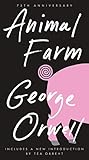
Animal Farm — George Orwell (1945)
Orwell’s political allegory is the most widely taught and most widely read short political fiction in the English language. The allegorical account of a farm’s revolution — and of how ‘All animals are equal’ becomes ‘All animals are equal, but some are more equal than others’ — works both as a direct satire of Soviet communism and as a timeless analysis of how revolutionary idealism becomes authoritarian power. Orwell’s prose is beautifully clear; the novella’s compressed narrative covers the full arc of a revolution’s betrayal in fewer than 100 pages.
The Great Gatsby — F. Scott Fitzgerald (1925)
Strictly speaking a short novel rather than a novella (at 47,000 words), but achieves its effects with the economy of the shorter form. Nick Carraway’s account of Jay Gatsby’s doomed love for Daisy Buchanan, filtered through the summer of 1922 in West Egg and East Egg, is the American Dream examined and found hollow. Fitzgerald’s prose is among the most beautiful in American fiction — the famous final lines about boats against the current remain one of the most quoted passages in the language. A novel that can be read in a single sitting and rewards rereading.
On Chesil Beach — Ian McEwan (2007)
McEwan’s most concentrated novel — 166 pages that trace the way a single evening’s failure destroys two lives. Edward and Florence’s wedding night in 1962, their inability to communicate across the gulf of their different needs and fears, and the cascading consequences that McEwan traces into old age is a study in the relationship between one moment and a lifetime. The novel is also an account of a specific historical moment: the year before the sexual revolution, when ignorance and repression could still determine the shape of a life.
A Form Between Two Worlds
The novella occupies a distinctive and valuable position in the landscape of fiction, suspended between the short story and the full-length novel, and possessing a character and a set of possibilities that belong to neither — and understanding this in-between nature is the key to appreciating the novella as a form in its own right rather than merely a short novel or a long story. The novella is too long to be a short story and too short to be a novel, and this in-between length is not a deficiency but the source of the form’s distinctive character and possibilities. The novella has more room than the short story, allowing for a development of character, situation, and theme that the brief compass of the story cannot accommodate, but it lacks the expansiveness of the novel, demanding a concentration and economy that the longer form does not require. This in-between position gives the novella its distinctive character, combining something of the concentration and unity of the short story with something of the development and depth of the novel, and producing a form with its own particular strengths and possibilities. The novella can develop a character or situation more fully than a story while maintaining a concentration and unity that a novel cannot sustain; it can achieve a depth and development beyond the story’s reach while preserving an economy and focus beyond the novel’s; and it can combine the intensity of the short form with the substance of the longer one. This distinctive position between two worlds is the key to the novella’s character and value, for the form possesses possibilities that belong to neither the story nor the novel, combining elements of both into a distinctive whole. To appreciate the novella is to recognize it as a form in its own right, with its own distinctive character and possibilities, suspended between the story and the novel and possessing the strengths of both, and to value it not as a deficient novel or an overgrown story but as a distinctive form with its own particular powers.
The Single, Sustained Effect
The distinctive power of the novella lies in its capacity to develop a single, sustained effect or impression with a concentration and intensity that neither the story nor the novel can match — to pursue one central situation, character, or idea to its full depth while maintaining a unity and focus that the diffuse novel cannot sustain. The novella, by virtue of its in-between length, is uniquely suited to the development of a single, sustained effect, the full and concentrated exploration of one central situation, character, theme, or idea. Unlike the novel, which can sprawl across multiple plots, characters, and themes, the novella maintains a tight focus on its central concern, pursuing it with a concentration and unity that the longer form, with its many elements and diffuse energies, cannot sustain. And unlike the short story, which must achieve its effect within a very brief compass, the novella has the room to develop its single effect fully, to explore its central situation or character to a real depth, building and sustaining its central impression across a substantial but concentrated span. This capacity for the single, sustained effect is the distinctive power of the novella, allowing it to develop one central concern with a depth beyond the story’s reach and a concentration beyond the novel’s, and to build and sustain a unified impression with an intensity that the longer form cannot match. The novella’s tight focus on a single central effect produces a particular kind of power, the power of a concentrated and unified exploration pursued to its full depth, undiluted by the multiple elements and diffuse energies of the novel. To appreciate the novella is to recognize this distinctive power, the capacity to develop a single, sustained effect with a concentration and intensity unavailable to the story or the novel, and to value the form for its unique ability to pursue one central concern to its full depth while maintaining a unity and focus that the longer form cannot sustain. The single, sustained effect is the distinctive achievement of the novella, the source of its particular power, and the quality that most clearly marks it as a form with its own distinctive strengths.
Why Masters Choose the Novella
It is a striking fact, and a testament to the form’s distinctive value, that many of the greatest writers have turned to the novella to produce some of their finest and most enduring work — choosing the in-between form not as a compromise or a lesser effort but as the ideal vehicle for particular artistic purposes that neither the story nor the novel could serve as well. The novella has attracted some of the greatest writers, who have used it to produce works of remarkable power and lasting fame, and this attraction of the masters to the form is a testament to its distinctive value and possibilities. Writers have turned to the novella for various reasons, all reflecting the form’s particular strengths. The novella’s capacity for a single, sustained effect makes it the ideal vehicle for a story that demands concentrated and unified development, a central situation or character to be pursued to its full depth without the dilution of the novel’s many elements. The form’s in-between length suits material that requires more development than a story can provide but that would be stretched thin or diluted in a full-length novel, material whose ideal scale is precisely that of the novella. And the form’s combination of concentration and substance, of intensity and depth, makes it the perfect vehicle for certain artistic purposes, allowing the writer to achieve a concentrated power and a sustained depth unavailable in either the story or the novel. That so many masters have chosen the novella to produce some of their finest work testifies to the form’s distinctive value, demonstrating that the novella is not a compromise or a lesser effort but the ideal vehicle for particular artistic purposes, chosen by great writers precisely for the distinctive possibilities it offers. The attraction of the masters to the novella, and the enduring fame of the works they have produced in the form, is among the strongest testaments to the novella’s distinctive value and possibilities, revealing the in-between form as the ideal vehicle for particular artistic purposes and the chosen instrument of some of literature’s greatest achievements.
The Novella’s Advantage
The novella’s economy is not merely a constraint but an aesthetic. The greatest novellas achieve their effects through what they leave out as much as through what they include: the reader’s imagination fills the spaces that the text deliberately refuses to occupy. Kafka leaves unexplained why Gregor becomes an insect; Camus leaves unexplained why Meursault doesn’t defend himself more vigorously; Steinbeck leaves unexplained the full weight of what George has sacrificed. This economy of means is the novella’s defining quality — and the reason these short works can carry the weight of full-length novels.
Frequently Asked Questions
What is the best novella to read?
The Stranger (1942) by Albert Camus is the best novella — perfectly constructed, immediately accessible, and as philosophically serious as any full-length novel. Of Mice and Men (1937) by John Steinbeck is the most emotionally powerful short novel; its final scene is one of the most devastating in American literature. The Metamorphosis (1915) by Franz Kafka is the most formally original — no other novella produces its effect with its economy. All three can be read in a single evening.
What is the difference between a novella and a short novel?
The distinction between novella and short novel is not precise. The term 'novella' generally refers to fiction between 20,000 and 50,000 words; 'short novel' covers the range from 40,000 to perhaps 80,000 words. The Great Gatsby is sometimes called a short novel (about 47,000 words); Of Mice and Men is clearly a novella (about 30,000 words). The terms overlap. What unites the works listed here is economy — the quality of being complete, self-contained, and achieved without the space that longer fiction allows.
What is Animal Farm about?
Animal Farm (1945) by George Orwell is a political allegory in which the animals of Manor Farm overthrow their human farmer and establish a self-governing community based on the principle 'All animals are equal' — which, over the course of the novella, is revised to 'All animals are equal, but some animals are more equal than others.' The allegory is a direct satirical account of the Russian Revolution and Stalin's betrayal of socialist principles; but it works independently of that specific target as a study of how revolutionary idealism becomes totalitarian power. The most widely read political novella in English.
What is On Chesil Beach about?
On Chesil Beach (2007) by Ian McEwan is set on the evening of Edward and Florence's wedding night in 1962, when a failure of communication — rooted in their different attitudes to physical intimacy and in the sexual ignorance and social constraints of the period — destroys a marriage and two lives. McEwan tells the story with the precision of a surgeon: the evening's events are presented in detail; the disaster is given both its immediate cause (a sexual failure) and its retrospective analysis (the choices they made in the moment and the decade that followed). One of the most precise studies of the relationship between a single event and a life's trajectory.