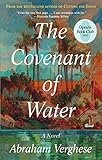
Editors Reads Verdict
Verghese's long-awaited second novel is a sweeping, luminous achievement — part family epic, part medical drama, part love letter to South India. Dense with humanity and written with a physician's precise attention to the body, it earns every one of its 736 pages.
What We Loved
- Multigenerational sweep that never loses individual emotional detail
- Verghese's medical knowledge enriches the storytelling profoundly
- South India rendered with extraordinary specificity and beauty
- Characters across generations feel fully alive and distinct
Minor Drawbacks
- At 736 pages, demands significant reader commitment
- The first 100 pages require patience before the full scope becomes clear
- Some subplots receive less development than they deserve
Key Takeaways
- → Family curses are often medical conditions awaiting diagnosis
- → Medicine practiced with compassion is itself a form of love
- → Colonialism reshapes families across generations in ways they cannot fully perceive
- → Water is both the source of life and its most democratic threat
- → The body holds history as surely as any document
| Author | Abraham Verghese |
|---|---|
| Publisher | Grove Press |
| Pages | 736 |
| Published | May 2, 2023 |
| Language | English |
| Genre | Literary Fiction, Historical Fiction |
| Difficulty | Intermediate |
| Best For | Readers who love multigenerational epics; anyone drawn to India's history and culture. |
How The Covenant of Water Compares
The Covenant of Water at a glance against 3 similar books readers weigh alongside it.
| Book | Author | Rating | Best for |
|---|---|---|---|
| The Covenant of Water (this book) | Abraham Verghese | ★ 4.6 | Readers who love multigenerational epics |
| A Thousand Splendid Suns | Khaled Hosseini | ★ 4.7 | Readers who want literary fiction that puts women's experiences at the center |
| Homegoing | Yaa Gyasi | ★ 4.6 | Anyone interested in African and African-American history |
| Pachinko | Min Jin Lee | ★ 4.6 | Historical fiction readers interested in Korean and Japanese history, fans of |
A Family Marked by Water
The Parambil family of Kerala, South India has carried a peculiar burden across generations: every few years, a family member drowns. Not through negligence or accident but through a mysterious compulsion toward water that the family calls “the Condition.” When twelve-year-old Mariamma is married into the Parambil household in 1900, she inherits this legacy along with her new name — Big Ammachi — and spends the next decades building a family and a home while the water claims those she loves.
A Doctor’s Novel
Abraham Verghese is a physician of international reputation, and his medical knowledge saturates “The Covenant of Water” in the best possible way. The novel’s central mystery — the Condition — is eventually revealed to be a rare hereditary disease, and Verghese dramatizes the history of neurology and tropical medicine with authority and passion. But the medicine never overwhelms the humanity. Verghese is equally attentive to the texture of grief, the architecture of a long marriage, and the way children misread the parents who shaped them.
Seventy Years of South India
The novel spans from the colonial period through Indian independence and into the 1970s, and Verghese renders this transformation with specific, unsentimental detail. The Church of South India, the Scottish doctors who arrived as missionaries and stayed as beloved figures in the community, the slowly changing position of women — all of this is woven into a family story that never becomes a history lesson. Kerala is rendered with such love and precision that readers will feel they have visited.
Big Ammachi’s Long Life
The novel’s beating heart is Big Ammachi, who anchors three generations of the saga. We first meet her in 1900 as a frightened twelve-year-old, married off to a quiet forty-year-old widower she has never met, weeping for her mother on the boat journey to Parambil. Across seven hundred pages and seven decades, Verghese transforms her, with extraordinary patience, into the steadfast matriarch around whom the entire family revolves — a woman of deep faith, fierce love, and quiet authority who endures the deaths the water claims and holds the household together through every upheaval. Her children deepen the portrait: the radiant, developmentally disabled Baby Mol, and the bookish, water-fearing Philipose, whose own story carries the novel into its later generations. Few recent novels have given a single character so generous and complete a life, and it is Big Ammachi, more than the central mystery, that readers carry away.
The Mystery of the Condition
The plot’s engine is “the Condition” — the affliction by which, in every generation, at least one Parambil dies by drowning, accompanied by an aversion to water and other puzzling symptoms. Verghese, a physician of international standing, treats this not as a supernatural family curse but as a medical mystery slowly yielding to the advance of science, and the eventual diagnosis is one of the novel’s great satisfactions. As the family’s granddaughter, the third Mariamma, grows up to become a doctor herself, the book becomes partly a detective story conducted through neurology and anatomy. This is Verghese’s signature: medicine rendered not as cold technical detail but as a form of attention, even love, and the body itself as a repository of history and inheritance. The parallel strand of the Scottish surgeon Digby Kilgour — disfigured by fire, drawn into the world of a leprosy hospital — widens the medical canvas and eventually braids back into the Parambil story.
A Vast Canvas
Across its span from colonial rule through independence to the 1970s, The Covenant of Water takes in an astonishing range: the Saint Thomas Christian community and its ancient rituals, the caste system, the missionary doctors who arrived and stayed, leprosy and the stigma around it, forbidden love across social lines, the violent Naxalite movement, and the slowly shifting place of women. Verghese, who wrote the book partly inspired by an illustrated family history his mother created for his niece, renders Kerala — its backwaters, monsoons, churches, and kitchens — with such sensory devotion that the landscape becomes a character in its own right. The water of the title is everywhere: source of life, means of travel, sacrament of baptism, and democratic threat that binds the generations together.
The Honest Caveats
A novel this large makes real demands. At 736 pages it is a serious commitment, the first hundred or so pages require patience before the full architecture comes into view, and some subplots and minor characters get less room than they deserve. A few critics, the New York Times’s Andrew Solomon among them, felt the book occasionally smooths the complexities of Indian society and maintains a tone of hope so unwavering that it risks softening its tragedies. These are fair observations. But even Solomon conceded the novel’s most disarming quality: Verghese so plainly loves his characters that he makes the reader love them too, and the book’s refusal to abandon hope amid so much sorrow is, for most readers, a feature rather than a flaw.
Verdict
The Covenant of Water is the long-awaited successor to Verghese’s beloved Cutting for Stone, and it confirms him as one of the great contemporary practitioners of the family epic. An Oprah’s Book Club selection that spent some thirty-seven weeks on the New York Times bestseller list, it rewards its considerable length with sentences of genuine beauty, a matriarch for the ages, and the rare satisfaction of a sprawling mystery whose final revelation feels both surprising and inevitable. For readers who love immersive, big-hearted sagas in the tradition of Pachinko and A Fine Balance, it is essential.
Our rating: 4.6/5 — A sweeping, luminous family epic that proves the long novel still has powers unavailable to any shorter form.
Reading Guides
Frequently Asked Questions
What is "The Covenant of Water" about?
A multigenerational saga spanning seventy years of a South Indian Christian family whose members drown in every generation, told against the backdrop of colonial and postcolonial India.
Who should read "The Covenant of Water"?
Readers who love multigenerational epics; anyone drawn to India's history and culture.
What are the key takeaways from "The Covenant of Water"?
Family curses are often medical conditions awaiting diagnosis Medicine practiced with compassion is itself a form of love Colonialism reshapes families across generations in ways they cannot fully perceive Water is both the source of life and its most democratic threat The body holds history as surely as any document
Is "The Covenant of Water" worth reading?
Verghese's long-awaited second novel is a sweeping, luminous achievement — part family epic, part medical drama, part love letter to South India. Dense with humanity and written with a physician's precise attention to the body, it earns every one of its 736 pages.
Ready to Read The Covenant of Water?
Check the current price on Amazon.
Check Price on Amazon (paid link)Prices and availability are subject to change. See Amazon for current price.
Review last updated: