Where to Start with Abraham Verghese: A Reading Guide
Where to start with Abraham Verghese — whether to begin with Cutting for Stone or The Covenant of Water. A complete reading guide to the physician-novelist.

Abraham Verghese (born 1955) is the Ethiopian-born, Indian-origin, American physician and author who teaches medicine at Stanford University School of Medicine and has written two major literary novels — Cutting for Stone (2009) and The Covenant of Water (2023) — alongside three works of non-fiction memoir about his medical practice. Verghese is unusual among physician-writers for the literary ambition and scope of his fiction: both novels are generational sagas spanning decades and continents, using medicine as both subject and metaphor. Cutting for Stone was a major bestseller; The Covenant of Water debuted at number one on the New York Times fiction list.
Where to Start: Cutting for Stone (2009)
The essential Verghese — and one of the most ambitious debut novels in recent American literary fiction. Marion and Shiva Stone are twins born in the most dramatic possible circumstances: their mother, Sister Mary Joseph Praise, is an Indian nun who has kept her pregnancy secret from everyone including herself; their father, Thomas Stone, is the brilliant and emotionally remote British surgeon who delivered them and then disappeared from grief and guilt. They grow up at Missing — a missionary hospital in Addis Ababa — raised by two other doctors who adopt them.
The novel spans decades of Ethiopian history: the final years of Haile Selassie’s reign, the brutal Derg revolution, the exodus of the educated class, and the brothers’ eventual diaspora to New York, where Marion becomes a surgeon and the long-unresolved drama of their origins comes to its resolution. Medicine is everywhere: the operating theatre as a site of grace and violence, the relationships between doctors and patients as a model for care and dependency, surgery as a metaphor for the cuts we make in each other’s lives.
Verghese writes with the authority of a physician who knows exactly what happens in an operating room, and with the narrative ambition of a novelist working in the tradition of the great nineteenth-century family sagas. The book is long (over 500 pages) and richly detailed; readers who enter it tend to emerge transformed.
The Covenant of Water (2023)
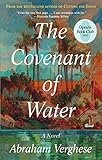
The second novel — three generations in Kerala, a hereditary drowning condition, and the intersection of colonial medicine and Indian independence. As expansive as Cutting for Stone but rooted in South India. Can be read independently.
Why Cutting for Stone Is the Ideal First Book
For a reader new to Abraham Verghese, Cutting for Stone is the ideal first book because it is his most celebrated novel and the fullest expression of his distinctive gifts, the combination of rich storytelling, deep humanity, and a profound engagement with medicine and the body. Cutting for Stone tells the sweeping story of twin brothers born of a secret union in Ethiopia, following their lives, their bond, and their vocations in medicine across decades and continents, all rendered with a physician’s knowledge and a storyteller’s power. As an entry point, it offers the fullest expression of Verghese’s gifts, the rich and absorbing storytelling, the deep humanity and emotional power, and the profound engagement with medicine, the body, and healing. It welcomes the newcomer with its compelling story, its vivid settings, and its emotional depth, drawing the reader into a sweeping and moving novel. It is his best-known novel and the one that best represents his gifts, so that the new reader encounters Verghese at his finest. For the newcomer, then, Cutting for Stone is the natural and ideal starting point.
What to Expect as a New Reader
As a new reader, you can expect Cutting for Stone to be a sweeping, absorbing, and deeply humane novel, combining rich storytelling with a profound engagement with medicine and the body. You can expect a compelling story, for the novel tells the sweeping tale of twin brothers born of a secret union in Ethiopia, following their lives, their bond, their loves, and their vocations across decades and continents. You can expect vivid settings, for the novel moves between Ethiopia and America, rendering its worlds with intimacy and richness. You can expect a profound engagement with medicine, for Verghese, a physician, brings a deep knowledge of and feeling for medicine, the body, and healing to his fiction, making them central to the novel’s power. You can expect deep humanity and emotional power, for the novel is rich in feeling, exploring family, love, betrayal, vocation, and the bonds between people. Expect, in short, a sweeping, absorbing, and deeply humane novel that combines rich storytelling with a profound engagement with medicine, a moving introduction to Verghese’s fiction.
Going Deeper After Your First Book
Once Cutting for Stone has introduced you to Verghese’s fiction, the reader who wishes to go deeper can explore his other work, including his further fiction and his acclaimed medical memoirs, which display the same humanity, storytelling power, and engagement with medicine. His other novel offers another sweeping, richly imagined story marked by his characteristic depth and humanity, while his memoirs draw on his own experience as a physician, rendering the world of medicine and the lives of patients and doctors with insight and compassion. Reading these after Cutting for Stone deepens your appreciation of Verghese’s distinctive gifts, the rich storytelling, the deep humanity, and the profound engagement with medicine and healing that mark his work. His characteristic qualities run through his writing, and the reader who has been moved by Cutting for Stone will find them in his other fiction and his memoirs. Building your reading journey through Verghese’s work is a matter of following his humane, medically engaged writing from his celebrated novel into his other fiction and memoirs. The reader who begins with Cutting for Stone and continues through his work will find a physician-writer of rare humanity and storytelling power.
Reading Abraham Verghese
Begin with Cutting for Stone — it is his breakthrough work and the right starting point. Read The Covenant of Water after for a different geography and a different century but the same generational scope and medical depth.
For the full Abraham Verghese bibliography, reviews, and biography, visit the Abraham Verghese author page on Editors Reads.
Affiliate disclosure: Links to Amazon on this page are affiliate links. We earn a small commission at no extra cost to you.
Frequently Asked Questions
Where should I start with Abraham Verghese?
Cutting for Stone (2009) is the essential starting point — Verghese's debut novel, a generational saga set in Ethiopia following twin brothers born of a nun and a British surgeon, tracing their lives through the turmoil of Ethiopian history and eventual diaspora to America. Sweeping, richly medical, and emotionally ambitious; one of the great literary novels about medicine. The Covenant of Water is his second and most recent novel, equally ambitious in scope.
What is Cutting for Stone about?
Cutting for Stone follows Marion and Shiva Stone, twin brothers born at Missing — a missionary hospital in Addis Ababa — to a British surgeon father and an Indian nun mother, both of whom die or disappear at their birth. The novel traces their lives through Haile Selassie's Ethiopia, the Derg revolution, and eventual exile, with medicine as both the brothers' vocation and the novel's central metaphor for care, intervention, and the relationship between healer and patient. Verghese is a practising physician; the medical detail is authoritative and integral.
What is The Covenant of Water about?
The Covenant of Water (2023) is Verghese's second novel — a family saga spanning three generations in South India from 1900 to 1977, following a family in Kerala who carry a hereditary condition: in every generation, at least one person dies by drowning. The novel traces the family through Indian independence, the development of modern medicine in India, and the intersection of British colonial medicine with traditional practice. As generationally expansive as Cutting for Stone, but rooted in a different geography and history.
Is Abraham Verghese's fiction autobiographical?
Verghese's fiction draws on his biography — he was born in Ethiopia to Indian parents, trained as a physician in America, and has written non-fiction memoir about his medical experiences (My Own Country, The Tennis Partner). His novels are not autobiographical in their plots but are deeply informed by his experience as an Indian-Ethiopian immigrant physician, and the medical worlds he depicts are rendered with the authority of someone who has practised medicine in Ethiopia, India, and America.