Abraham Verghese is an Indian-American physician and author whose sweeping literary fiction explores medicine, migration, and human connection across generations.
Abraham Verghese is a Stanford professor of medicine and a writer whose literary ambitions far outpace the average physician-author. He spent years establishing himself as an essayist and memoirist before turning to fiction, and the patience shows in his prose — careful, richly observed, and deeply human.
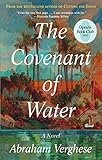
The Covenant of Water is his second novel and arguably his most ambitious work: a multigenerational saga set in South India spanning more than seventy years, following a family in Kerala touched by a mysterious condition passed through generations. The novel is enormous in scope, and Verghese uses medicine not just as backdrop but as a lens for examining faith, loss, colonialism, and the ways families carry one another across time. The prose is luminous in places, and the sense of place — the backwaters, the monsoons, the layered social world of Kerala — is rendered with extraordinary specificity.
The book’s length and its large cast of characters require patience, and some readers find the middle sections slower than the opening. But Verghese’s ambition is largely rewarded. For those willing to commit to its world, The Covenant of Water is genuinely moving literary fiction that takes medicine seriously as a moral and human endeavor.
Reading Guides