Where to Start with Bonnie Garmus: A Reading Guide
Where to start with Bonnie Garmus — how to approach Lessons in Chemistry, her debut novel about a chemist who becomes a cooking show host. A complete reading guide.

Bonnie Garmus is an American copywriter and author whose debut novel Lessons in Chemistry (2022) — written across a decade of revision — became one of the most celebrated literary debuts of the decade: a major international bestseller, adapted into an Apple TV+ series starring Brie Larson, and one of the most consistently recommended novels of the 2020s. Garmus, who was in her sixties when the book was published, described the novel as drawing on her own experience of institutional sexism in professional environments.
Where to Start: Lessons in Chemistry (2022)
The essential and only Garmus — and one of the most satisfying debut novels in recent years. Elizabeth Zott is a research chemist in early 1960s California: brilliant, literal-minded, socially unconventional, and entirely unwilling to pretend she is less intelligent than she is. In an era when women in laboratories are expected to make coffee and acknowledge their male colleagues’ priorities, Elizabeth refuses. She also refuses to be charming about it.
The novel’s first half documents what happens to women who refuse: Elizabeth’s research is appropriated, her career stalls, and her relationship with Calvin Evans — the one person who takes her seriously — ends when he dies suddenly, leaving her pregnant and, professionally speaking, finished. The cooking show Supper at Six is not Elizabeth’s ambition but an accident; she takes the job because she needs the money. What she does with it is the novel’s comic and moral centre.
Garmus’s comic control is extraordinary. Elizabeth’s literal-mindedness — she explains the Maillard reaction to housewives who have been told by everyone that they’re not clever enough to understand science — is consistently, precisely funny. The show’s producers want her to be friendly and non-threatening; Elizabeth insists on accuracy. The housewives, who have spent their lives being told they are stupid, respond to being treated as intelligent with something like evangelical fervour.
The emotional depth comes from what Elizabeth carries: the grief for Calvin, the fierceness of her love for her daughter Madeline (raised with the same expectation of intelligence and honesty), and the specific anger of someone who has watched her competence be invisible to every institution she has worked within. Garmus balances these registers — comedy, grief, anger, tenderness — with remarkable tonal control. Six-Thirty, Elizabeth and Calvin’s dog, who understands English better than anyone acknowledges, is a literary triumph in his own right.
The ending is melodramatic in the manner of the form. The rest of the novel is exceptional.
Why Lessons in Chemistry Is the Ideal First Book
For a reader new to Bonnie Garmus, Lessons in Chemistry is the ideal and essential first book because it is her singular work, a phenomenal debut that became an international bestseller, and the full expression of her distinctive gifts. Lessons in Chemistry tells the story of a brilliant female chemist in the 1960s whose career and life are shaped by the pervasive sexism of the era, and it combines genuine comedy and charm with a pointed argument about sexism and women’s equality. As an entry point, it is the natural and essential place to begin, for it is Garmus’s defining and only book, the phenomenon that made her name. It welcomes the newcomer with its winning protagonist, its comic charm, and its emotional and thematic substance, drawing the reader into a delightful and meaningful novel. It is her singular work and the fullest expression of her gifts, so that the new reader encounters Garmus’s distinctive blend of comedy and serious purpose directly. For the newcomer, then, Lessons in Chemistry is the natural and ideal starting point, the remarkable debut that became a beloved phenomenon.
What to Expect as a New Reader
As a new reader, you can expect Lessons in Chemistry to be a delightful and substantial novel, combining genuine comedy and charm with a pointed argument about sexism and women’s equality. You can expect a winning protagonist, for the novel’s heroine, a brilliant female chemist navigating the sexist world of the 1960s, is a memorable and engaging character. You can expect genuine comedy and charm, for the novel is funny, warm, and witty, with a winning tone that accounts for much of its broad appeal. You can expect, beneath the humor and charm, serious substance, for the novel makes a pointed and often angry argument about the injustice of sexism and the obstacles placed in the way of women’s ambitions in the 1960s and beyond. You can expect an emotionally satisfying and thematically meaningful story that entertains while it engages serious realities. Expect, in short, a delightful and substantial novel that combines comedy and charm with a pointed argument about sexism and women’s equality, a winning introduction to Garmus’s gifts.
Going Deeper After Your First Book
Once Lessons in Chemistry has introduced you to Garmus’s distinctive blend of comedy and serious purpose, there is, for now, nowhere further to go within her own work, for Lessons in Chemistry is her singular book, the phenomenal debut on which her reputation rests, and it stands complete and self-sufficient. The reader who has been delighted by Lessons in Chemistry and wishes for more might turn to other fiction that combines comedy and charm with serious engagement with women’s lives and the injustices of sexism, reading in the light of the pleasures that Garmus’s novel offers. Such reading can complement the experience of Lessons in Chemistry while you await any future work from its author. Within Garmus’s own output, however, Lessons in Chemistry is the whole, the single delightful and substantial novel that made her name. Building your reading journey from Lessons in Chemistry is a matter of carrying its blend of comedy and serious purpose into the wider world of fiction about women’s lives and ambitions. The reader who begins with Lessons in Chemistry will have encountered one of the most remarkable and beloved debuts of recent years, complete in itself.
Reading Bonnie Garmus
Lessons in Chemistry is Garmus’s debut and only novel to date. It stands alone and requires no prior reading.
For the full Bonnie Garmus bibliography, reviews, and biography, visit the Bonnie Garmus author page on Editors Reads.
Affiliate disclosure: Links to Amazon on this page are affiliate links. We earn a small commission at no extra cost to you.
Frequently Asked Questions
Where should I start with Bonnie Garmus?
Lessons in Chemistry (2022) is Garmus's debut and only novel — the story of Elizabeth Zott, a brilliant chemist in 1960s California whose career is derailed by institutional sexism and single motherhood until she accidentally becomes the host of a cooking show, which she treats as applied chemistry and a vehicle for women's self-determination. A major bestseller and television adaptation; one of the most satisfying debut novels of recent years.
What is Lessons in Chemistry about?
Lessons in Chemistry follows Elizabeth Zott, a serious research chemist at a California laboratory in the early 1960s who faces systematic institutional sexism, is denied credit for her work, and becomes unexpectedly pregnant after the death of the man she loved. Sidelined from research, she ends up hosting a cooking show called Supper at Six — and treats it as a chemistry lesson and a feminist manifesto, explaining the science and logic behind cooking to housewives who have never been told they are intelligent.
Is Lessons in Chemistry suitable for readers who don't enjoy feminist fiction?
Lessons in Chemistry is a comedy of manners as much as a feminist novel — Garmus's primary register is satirical, and the book is genuinely funny in a way that rarely subordinates entertainment to argument. Elizabeth Zott is an extraordinary character whose appeal is independent of her representational significance. Readers who enjoy wry, character-driven historical fiction will find the book as satisfying as those who read it primarily for its feminist themes.
What should I read after Lessons in Chemistry?
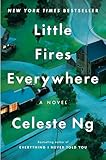
After Lessons in Chemistry, readers often go to Eleanor Oliphant is Completely Fine for another novel with an original, socially unconventional female protagonist. Celeste Ng's Little Fires Everywhere and Liane Moriarty's Big Little Lies both combine historical/contemporary social observation with strong female characters. For explicitly feminist historical fiction, Margaret Atwood's The Handmaid's Tale and Edna O'Brien's early novels are the canonical touchstones.