Best Multigenerational Fiction: Epic Family Sagas Across Time
The best multigenerational fiction — from Pachinko and Homegoing to One Hundred Years of Solitude and The House of the Spirits. Epic family sagas across generations.

The multigenerational novel is one of fiction’s most demanding and potentially most rewarding forms — it requires a writer to sustain narrative momentum across decades or centuries while keeping individual characters fully realised, and to use the personal to illuminate the historical without reducing either to the other. The best family sagas transform private stories into accounts of migration, trauma, and survival that reveal how history works from inside individual lives.
The books listed here span continents and centuries, but they share a commitment to the particular — to following specific people through specific circumstances — as the only way to make the general legible.
The Essential List
Pachinko — Min Jin Lee (2017)
The finest family saga novel of the past decade. Beginning with Sunja’s youth in Japanese-occupied Korea and continuing through four generations to 1989 Osaka, the novel follows the Baek family’s experience as ethnic Koreans in Japan — a population that has lived in Japan for generations but remains perpetually foreign in the eyes of the law and the culture. Lee’s achievement is to make each generation’s circumstances fully individual while tracing the accumulated weight of discrimination and displacement across family time.
Homegoing — Yaa Gyasi (2016)
Gyasi’s debut is structurally audacious — one chapter per character, one character per generation, two family trees starting with two half-sisters in eighteenth-century Ghana and converging in twenty-first-century America. The novel’s scope (it covers slavery, the slave trade, Reconstruction, the Harlem Renaissance, the crack epidemic) is achieved through compression rather than accumulation; each chapter is a complete story in itself, and the connections between generations are suggested rather than explained.
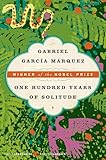
One Hundred Years of Solitude — Gabriel García Márquez (1967)
The defining multigenerational novel of world literature. The Buendía family’s seven generations in the town of Macondo — founded by the patriarch José Arcadio Buendía and destroyed by the last descendant — is told with the matter-of-fact narrative confidence of magical realism: ghosts, levitations, and miraculous events reported without comment alongside the historical (the banana company massacre, the civil wars) that García Márquez drew from Colombian history. The circularity of the family’s fate (each generation repeating the same names and the same mistakes) is the novel’s governing formal principle.
The House of the Spirits — Isabel Allende (1982)
Allende’s first novel and her most important — the Trueba family across four generations, from Clara’s clairvoyance and her marriage to the landowner Esteban Trueba, through the political and personal catastrophes that follow from his choices. The novel’s emotional climax involves the military coup (modelled on Pinochet’s 1973 coup in Chile) and its aftermath; the granddaughter Alba’s torture at the hands of a regime that Esteban helped bring to power constitutes one of the most powerful structural ironies in Latin American fiction.
The Kite Runner — Khaled Hosseini (2003)
Hosseini’s debut and the most widely read Afghan novel in English. Amir and Hassan, the sons of a wealthy Pashtun and his Hazara servant, grow up together in Kabul; a single act of cowardice and betrayal defines the rest of Amir’s life. The novel covers the Soviet invasion, the civil war, the Taliban regime, and Afghan life in California — using two families to trace the history of a country across three decades of catastrophe. The father-son relationship and its complications across generations give the novel its emotional depth.
A Thousand Splendid Suns — Khaled Hosseini (2007)
Hosseini’s second novel and in many respects his finer achievement — two Afghan women, Mariam and Laila, born a generation apart, who are brought together by a brutal marriage and form a bond that sustains both of them across decades of war and oppression. The novel covers the Soviet era, the civil war, and the Taliban regime through the experience of women, whose suffering under each successive government is the novel’s sustained subject.
Love in the Time of Cholera — Gabriel García Márquez (1985)
García Márquez’s second major novel is less architecturally ambitious than One Hundred Years of Solitude but more emotionally direct — Fermina Daza and Florentino Ariza’s love story, which begins in youth, is interrupted by Fermina’s marriage to the distinguished Doctor Urbino, and resumes, against all probability, in old age. The novel is a meditation on love across time, on the relationship between youth and age, and on the persistence of desire.
The Shadow of the Wind — Carlos Ruiz Zafón (2001)
Zafón’s gothic romance set in post-Civil War Barcelona follows young Daniel Sempere, who discovers a novel in the Cemetery of Forgotten Books and becomes obsessed with finding its author. As Daniel investigates, he uncovers a story of love, betrayal, and violence spanning the Franco era — a story with direct consequences for his own life. The most atmospherically compelling of the books listed here, and the most purely pleasurable to read.
Time as the True Subject
The distinctive power of multigenerational fiction lies in its capacity to take time itself as its true subject — to depict the passage of years, decades, and generations, and to capture the sweep of time and history in a way that fiction confined to a single life or moment cannot achieve. Where most fiction unfolds within the span of a single life or a limited stretch of time, multigenerational fiction extends its reach across the generations, following families through the long passage of years and decades, and in doing so it takes time itself as its great subject. This extended temporal scope is the defining feature of the form and the source of its distinctive power, for it allows the multigenerational novel to depict the sweep of time and history, the long passage of years and the succession of generations, in a way that fiction confined to a single life cannot. The multigenerational novel captures the movement of time across the generations, the way that years and decades pass, that one generation succeeds another, and that the long sweep of time shapes the lives of families and individuals. It depicts the passage of historical time, the way that the great changes and events of history unfold across the generations and shape the lives of those who live through them. And it captures the very experience of time’s passage, the movement of years and the succession of generations that is among the most fundamental and least graspable of human realities. This capacity to take time itself as its true subject is the distinctive power of multigenerational fiction, allowing it to depict the sweep of time and history, the long passage of years and the succession of generations, with a scope and a power that fiction confined to a single life or moment cannot achieve. To read multigenerational fiction is to encounter time as the true subject, the long passage of years and decades, the sweep of history, and the movement of generations, captured with a scope and depth that the form’s extended temporal reach uniquely provides.
History Embodied in a Family
Multigenerational fiction achieves a remarkable feat that gives the form much of its power: it embodies the large and abstract forces of history in the concrete and intimate reality of a single family, making the sweep of historical change comprehensible and humanly meaningful by showing how it shapes and is lived through by successive generations of people we have come to know. History, in its large movements and abstract forces, can be difficult to grasp and easy to keep at a distance, but the multigenerational novel brings history close, embodying its sweep and its forces in the intimate reality of a family followed across the generations. By depicting how the great changes and events of history shape the lives of successive generations of a single family, the multigenerational novel makes history concrete, comprehensible, and humanly meaningful, allowing the reader to see and feel the impact of historical forces on the lives of people they have come to know intimately. The wars, migrations, social transformations, and great events of history are no longer abstract forces but lived realities, experienced and embodied by the family the novel follows, and the reader grasps the sweep of historical change through its impact on the concrete and intimate lives of the family’s successive generations. This embodiment of history in a family is among the most powerful achievements of multigenerational fiction, for it makes the large and abstract forces of history comprehensible and humanly meaningful, grounding the sweep of historical change in the concrete reality of a single family and allowing the reader to see and feel the impact of history on the lives of people they have come to know. To read multigenerational fiction is to encounter history embodied in a family, the sweep of historical change made concrete and meaningful through its impact on successive generations, and to grasp the large forces of history through their lived reality in the intimate lives of a single family followed across the generations. This embodiment of history in a family is among the distinctive powers of the form, making the abstract sweep of history comprehensible and humanly meaningful.
What Generations Reveal
The multigenerational form, by following a family across successive generations, reveals truths about continuity and change, inheritance and transformation, that the depiction of a single generation cannot capture — illuminating the ways that families and individuals are shaped by what comes before them, and the ways that each generation departs from and transforms the inheritance it receives. The succession of generations that the multigenerational novel depicts reveals distinctive truths about the relationship between past and present, between one generation and the next, that fiction confined to a single generation cannot capture. There are the truths of continuity and inheritance, the ways that successive generations are shaped by what comes before them, that patterns, traits, traumas, and legacies pass from one generation to the next, and that each generation inherits much from those who preceded it. There are the truths of change and transformation, the ways that each generation departs from and transforms the inheritance it receives, that the world and the family change across the generations, and that each new generation remakes, in its own way, the inheritance it has received. And there are the truths revealed by the comparison and contrast of generations, the way that following a family across the generations illuminates both what persists and what changes, both the continuities of inheritance and the transformations of succession. This revelation of the truths of continuity and change, inheritance and transformation, is among the distinctive achievements of multigenerational fiction, illuminating the relationship between past and present, between one generation and the next, in ways that the depiction of a single generation cannot. To read multigenerational fiction is to encounter these truths, the continuities of inheritance and the transformations of change, the ways that generations are shaped by what comes before and the ways that each remakes its inheritance, revealed through the succession of generations that the form depicts. What generations reveal, the truths of continuity and change, inheritance and transformation, is among the distinctive contributions of multigenerational fiction, illuminating the deep relationship between past and present and the complex interplay of inheritance and transformation across the succession of generations.
Why These Books
The multigenerational novel is uniquely suited to tracing the way that historical forces — colonialism, migration, war, oppression — travel through family lines. The books listed here share the conviction that history is not experienced as events but as accumulated inheritances: of trauma, of displacement, of choices made before you were born that determine the terms of your own life. That is why family sagas matter — not as entertainment (though they are entertaining) but as the most accurate model of how the past actually works in the present.
Frequently Asked Questions
What is the best multigenerational novel to start with?
Pachinko (2017) by Min Jin Lee is the best starting point — four generations of a Korean family from Japanese-occupied Korea to 1989 Osaka, following Sunja and her descendants through discrimination, war, and the struggle for belonging. The novel is both intimate (each character is fully realised) and sweeping (the historical scope is enormous). One Hundred Years of Solitude (1967) by García Márquez is the other great starting point — the Buendía family across seven generations in the fictional town of Macondo, told with the matter-of-fact magic that defines magical realism.
What is Pachinko about?
Pachinko (2017) by Min Jin Lee follows four generations of a Korean family beginning with Sunja, born in colonial Korea in 1910, who becomes pregnant by a married man and is saved by marriage to a kind pastor named Isak, with whom she moves to Japan. The novel traces her descendants — her sons, grandchildren, and great-grandchildren — as they navigate discrimination as ethnic Koreans in Japan (who are neither fully accepted nor able to return to a Korea divided by war) and try to build lives in a country that regards them as perpetual outsiders. The title refers to the pinball-gambling arcades that become one family's livelihood.
What is Homegoing about?
Homegoing (2016) by Yaa Gyasi follows two half-sisters — Effia, who marries a British slave trader, and Esi, who is enslaved and shipped to America — and then traces one chapter per generation through their descendants, from eighteenth-century Ghana to twentieth-century America. Each chapter introduces a new character whose life is shaped by the choices and fates of the generation before. The novel covers the slave trade, American slavery, Reconstruction, the Great Migration, the Harlem Renaissance, and the present, using individual stories to make large historical forces legible.
What is The House of the Spirits about?
The House of the Spirits (1982) by Isabel Allende follows the Trueba family across four generations in an unnamed Latin American country — from the clairvoyant Clara and her husband Esteban Trueba, a wealthy landowner and conservative politician, through their daughter Blanca, to their granddaughter Alba, who is tortured by the military dictatorship that Esteban's political choices helped bring to power. The novel is simultaneously a family saga, a political history, and a feminist account of women's experience under patriarchy. Allende's first novel and her most widely read.