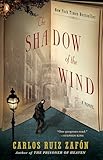
Editors Reads Verdict
The Shadow of the Wind is one of the great novels about the love of books and about Barcelona — a gothic mystery with extraordinary atmospheric power, driven by prose of lush, addictive quality and a plot whose complexity is matched by its emotional resonance.
What We Loved
- The atmospheric rendering of postwar Barcelona is unsurpassed in contemporary fiction
- The nested mystery structure is enormously satisfying — layers open onto new layers without losing coherence
- The novel's love of literature and books is infectious — it makes the reader feel the same passion
- The romantic subplot, handled with considerable restraint, generates remarkable emotional force
Minor Drawbacks
- The novel's length and baroque plotting can be slow in its middle section
- Some readers find the central romantic obsession slightly overwrought
- The villain Inspector Fumero is somewhat melodramatic
Key Takeaways
- → Books carry the lives of their readers as much as their authors — to love a book is to be changed by it
- → The postwar Franco period created a Barcelona of shadow, surveillance, and suppressed identity
- → Obsession with a mystery, sustained long enough, eventually reveals the mystery
- → The Cemetery of Forgotten Books is one of fiction's most beautiful invented institutions
- → Family secrets maintained across generations eventually require a reckoning in the next
| Author | Carlos Ruiz Zafón |
|---|---|
| Publisher | Penguin Books |
| Pages | 487 |
| Published | January 1, 2001 |
| Language | English |
| Genre | Mystery, Historical Fiction, Literary Fiction |
| Difficulty | Intermediate |
| Best For | Literary fiction readers who love books about books; mystery fans who want atmosphere and literary quality; those interested in Barcelona and the Spanish Civil War's aftermath. |
How The Shadow of the Wind Compares
The Shadow of the Wind at a glance against 3 similar books readers weigh alongside it.
| Book | Author | Rating | Best for |
|---|---|---|---|
| The Shadow of the Wind (this book) | Carlos Ruiz Zafón | ★ 4.6 | Literary fiction readers who love books about books |
| Perfume: The Story of a Murderer | Patrick Süskind | ★ 4.3 | Literary fiction readers who want something entirely singular |
| The Little Prince | Antoine de Saint-Exupéry | ★ 4.7 | Everyone — children who will understand it differently than adults, adults who |
| The Name of the Rose | Umberto Eco | ★ 4.2 | Patient literary readers |
The Cemetery of Forgotten Books
In 1945 Barcelona, Daniel Sempere’s father takes him at dawn to a secret labyrinthine library — the Cemetery of Forgotten Books — where readers preserve books that would otherwise be lost, each person choosing one to adopt and keep alive. Daniel chooses The Shadow of the Wind by Julián Carax. He reads it overnight and is transformed. When he tries to find more books by Carax, he discovers that someone has been systematically destroying every copy of every book the author wrote.
This is one of fiction’s great opening scenarios — a novel about books inside a novel that loves books, set in a city that feels like literature itself — and Carlos Ruiz Zafón sustains it across 487 pages of gothic complexity and emotional richness.
Barcelona as Character
Postwar Barcelona under Franco’s regime is rendered with extraordinary specificity: the grey surveillance, the suppressed identities, the specific smells and textures of the Barrio Gótico, the way a city that was once European and cosmopolitan learned to perform an approved version of itself while carrying its actual life underground. Zafón’s Barcelona is among fiction’s great city portraits — as specific to its era as Dickens’s London or Balzac’s Paris.
The Nested Mystery
The novel’s central narrative device — Daniel’s investigation into Julián Carax’s life and the mysterious figure who is destroying his books — is a nested mystery structure in which each revelation opens another layer of concealment. The past and present are linked by patterns of obsessive love, betrayal, and the lasting consequences of decisions made in youth.
What makes this structure succeed rather than frustrate is Zafón’s absolute mastery of pacing — he knows exactly when to release information and when to withhold it, and the reader’s desire to know more is never unsatisfied for so long as to become impatience.
The Love of Books
The novel is, at its heart, a love letter to reading: to the experience of being transformed by a book, of loving an author’s work so completely that it shapes your life. The Cemetery of Forgotten Books is Zafón’s most enduring invention — an institution dedicated to the proposition that books are alive and must be kept so by those who love them.
A Book About Books
At its heart, The Shadow of the Wind is a love letter to reading itself, and this devotion is the source of its peculiar grip on book-loving readers. The Cemetery of Forgotten Books — the secret, labyrinthine repository where neglected volumes are preserved and where each visitor adopts one book to protect — is among the most enchanting inventions in contemporary fiction, a perfect emblem of the conviction that books are living things that must be kept alive by those who love them. Zafón structures the entire novel around this idea: Daniel’s life is transformed by a single book, his fate becomes entangled with its author’s, and the act of reading becomes a force that shapes destinies across generations. For readers who have themselves been altered by a book encountered at the right moment, the novel offers the deep pleasure of recognition. It is fiction that takes seriously, and dramatizes, the secret faith of every devoted reader — that a book can change a life.
Barcelona as a Living Character
Zafón’s postwar Barcelona is one of the great fictional cities, rendered with an atmospheric specificity that lifts the setting from backdrop to protagonist. The Barcelona of the novel is a place of fog-shrouded streets, crumbling mansions, and the constant low hum of Franco-era surveillance, a city learning to perform an approved version of itself while its true life continues underground. Zafón draws on the textures of the Barrio Gótico — its shadows, its smells, its layered history — to create a world as vivid and oppressive as the gothic plot it houses. The dictatorship’s presence is felt not as overt political commentary but as atmosphere: the suppressed identities, the dangerous secrets, the sense that the past is never safely buried. This rendering of a wounded, beautiful, secretive city is among the novel’s chief glories, and it places Zafón’s Barcelona alongside Dickens’s London as one of fiction’s most fully realized urban worlds.
The Mirror Structure
The novel’s most sophisticated achievement is the way Daniel’s coming-of-age in the 1950s gradually reveals itself as a mirror of Julián Carax’s tragic life decades earlier. As Daniel investigates the mysterious destruction of Carax’s books, he uncovers a story of obsessive love, betrayal, and violence that uncannily parallels his own unfolding experience, until the boundary between investigator and subject begins to dissolve. Zafón handles this nested, doubling structure with remarkable control, releasing information at precisely calibrated intervals so that each revelation deepens rather than dissipates the mystery. The danger of such an elaborate architecture is that it collapses into confusion or contrivance, but Zafón’s mastery of pacing keeps the reader suspended in pleasurable suspense throughout. The slow recognition that Daniel may be repeating Carax’s fate gives the novel its propulsive dread and its emotional resonance, binding the gothic mystery to a genuine meditation on how the past shapes the present.
A Global Phenomenon
Published in Spanish in 2001 and in English translation in 2004, The Shadow of the Wind became one of the best-selling Spanish-language novels of all time and an international literary phenomenon, beloved across dozens of countries and languages. It launched Zafón’s loosely connected “Cemetery of Forgotten Books” quartet, which returned to the same Barcelona and overlapping characters across subsequent volumes, but the first novel remains the most cherished and the ideal entry point. Its appeal crosses the usual boundaries between literary and popular fiction: it offers the propulsive pleasures of a gothic mystery and the atmospheric richness and thematic depth of serious literary fiction, satisfying readers who want a page-turner and those who want something more. More than two decades on, it endures as one of the most addictive and atmospheric novels of its era, and as the book that book lovers most often press into one another’s hands.
Our rating: 4.6/5 — An intoxicating gothic mystery that loves books as much as its readers do, set in a Barcelona of extraordinary atmospheric power — one of the most addictive literary novels of its era.
Reading Guides
- Books Like The Shadow of the Wind: Mystery, Books, and the Ghosts of Barcelona
- Books Like The Name of the Rose: Medieval Mystery, Semiotics, and the Library as Labyrinth
- Books Like A Gentleman in Moscow: 11 Novels of Elegance, Wit, and Lives Well Lived
- Books Like The New York Trilogy: 11 Novels That Dissolve Identity and Form
- 15 Books Like The Girl with the Dragon Tattoo: Best Thrillers to Read Next
- Best Thriller Books of All Time: 20 You Won
- 22 Best Mystery Books of All Time: Essential Reads From Christie to Flynn (2026)
Frequently Asked Questions
What is "The Shadow of the Wind" about?
In postwar Barcelona, a young boy discovers a mysterious novel by a nearly forgotten author, and his obsession with the book's creator leads him deep into a dark labyrinth of secrets, loves, and betrayals.
Who should read "The Shadow of the Wind"?
Literary fiction readers who love books about books; mystery fans who want atmosphere and literary quality; those interested in Barcelona and the Spanish Civil War's aftermath.
What are the key takeaways from "The Shadow of the Wind"?
Books carry the lives of their readers as much as their authors — to love a book is to be changed by it The postwar Franco period created a Barcelona of shadow, surveillance, and suppressed identity Obsession with a mystery, sustained long enough, eventually reveals the mystery The Cemetery of Forgotten Books is one of fiction's most beautiful invented institutions Family secrets maintained across generations eventually require a reckoning in the next
Is "The Shadow of the Wind" worth reading?
The Shadow of the Wind is one of the great novels about the love of books and about Barcelona — a gothic mystery with extraordinary atmospheric power, driven by prose of lush, addictive quality and a plot whose complexity is matched by its emotional resonance.
Ready to Read The Shadow of the Wind?
Check the current price on Amazon.
Check Price on Amazon (paid link)Prices and availability are subject to change. See Amazon for current price.
Review last updated: