22 Best Mystery Books of All Time: Essential Reads From Christie to Flynn (2026)
The best mystery novels aren't just puzzles — they're windows into how societies hide their crimes. These 22 books span the golden age of detective fiction to today's psychological thriller.
The mystery novel has a unique contract with its reader. Other genres ask you to follow a story. The mystery asks you to solve one. Every detail is potentially a clue. Every character is potentially a killer. The author’s obligation — under what early critics called the “fair play” doctrine — is to give you all the information you need to reach the solution before the detective announces it. The satisfaction of a great mystery comes from that moment of recognition: the pieces were always there, and they fit.
That contract has produced some of the most enduringly readable fiction in the English language. From the golden age puzzle-boxes of the 1920s and 1930s through the literary crime of Tana French and the domestic psychological thriller of Gillian Flynn, the mystery genre has never stopped evolving — while keeping that central bargain intact.
This list covers 22 novels that define the form across its major traditions: golden age, hard-boiled, literary psychological, and historical and international mystery. For readers new to the genre, there is guidance at the bottom on where to start.
Best Mystery Books at a Glance
| Book | Author | Best for |
|---|---|---|
| And Then There Were None | Agatha Christie | Mystery readers of any level, fans of closed-room |
| Murder on the Orient Express | Agatha Christie | Mystery readers of any level, Agatha Christie |
| The Murder of Roger Ackroyd | Agatha Christie | Any mystery reader |
| Death on the Nile | Agatha Christie | Classic mystery fans and anyone captivated by |
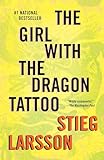
| The Girl with the Dragon Tattoo | Stieg Larsson | Crime and thriller readers who enjoy complex |
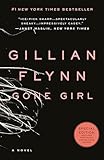
| Gone Girl | Gillian Flynn | Readers who want their thrillers to also function |
| The Silent Patient | Alex Michaelides | Psychological thriller readers |
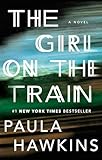
| The Girl on the Train | Paula Hawkins | Thriller readers who enjoy unreliable narrators |
| The Secret History | Donna Tartt | Readers who enjoy literary fiction with thriller |
| Where the Crawdads Sing | Delia Owens | Readers who enjoy literary fiction with a sense |
| In the Woods | Tana French | Literary fiction readers who enjoy crime, fans |
| The Likeness | Tana French | Readers who want literary crime fiction |
| The Black Echo | Michael Connelly | Crime fiction readers looking for a series |
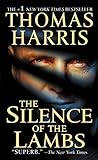
| The Silence of the Lambs | Thomas Harris | Any serious reader of fiction |
| The Name of the Rose | Umberto Eco | Patient literary readers |
| The Seven Deaths of Evelyn Hardcastle | Stuart Turton | Mystery readers |
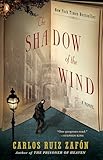
| The Shadow of the Wind | Carlos Ruiz Zafón | Literary fiction readers who love books about |
| The Da Vinci Code | Dan Brown | Readers who want propulsive, puzzle-driven |
| The Hound of the Baskervilles | Arthur Conan Doyle | Mystery |
| Rebecca | Daphne du Maurier | Readers drawn to gothic atmosphere, psychological |
| The Maltese Falcon | Dashiell Hammett | All readers of crime fiction |
| A Good Girl’s Guide to Murder | Holly Jackson | YA readers who love true crime and mystery, plus |
Golden Age: The Puzzle at Its Purest
The golden age of detective fiction — roughly 1920 to 1939 — produced a body of work that established the conventions every subsequent mystery writer has either followed or deliberately broken. Agatha Christie is its undisputed master. Her best novels are formal achievements: tightly controlled, intellectually rigorous, and constructed so that the solution, on re-reading, is perfectly visible from the first chapter. For a deeper guide to her full body of work, see our Agatha Christie reading order.
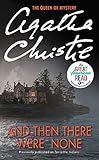
1. And Then There Were None by Agatha Christie
The best-selling mystery novel of all time, with over 100 million copies sold. Ten strangers are lured to a remote island under false pretences and begin dying one by one, each death matching a line from a nursery rhyme. Christie described this as the most technically difficult novel she ever wrote — and the problem is obvious once you understand it: in a traditional mystery, the detective solves the crime; here, there is no detective, because the killer is among the victims.
The solution she found is genuinely brilliant. If you have read nothing else in this genre, start here.
2. Murder on the Orient Express by Agatha Christie
One of the most famous mystery novels ever written, and one of the most formally perfect. Twelve passengers are stranded on the Orient Express by a snowdrift in Yugoslavia. One — a man with powerful enemies — is found stabbed in his compartment overnight. Hercule Poirot, travelling in the next car, must determine which of the eleven remaining suspects is the killer.
The solution is hiding in plain sight from the novel’s first pages, which makes re-reading almost as satisfying as the first encounter. Kenneth Branagh has filmed it twice; read the book first.
3. The Murder of Roger Ackroyd by Agatha Christie
The most controversial mystery novel ever published. Christie’s 1926 masterpiece broke — or brilliantly exploited, depending on your position — a foundational convention of the genre. When it was published, critics debated furiously whether it constituted a legitimate mystery or an outright cheat. The consensus has settled firmly on masterpiece.
What we can say without spoiling it: Hercule Poirot investigates the murder of a wealthy man in an English village, and everything you think you understand about the narrator will be challenged by the finale. Avoid all spoilers.
4. Death on the Nile by Agatha Christie
Poirot on a luxury steamer cruising the Nile. A beautiful young heiress is shot dead in the night. Every passenger on the boat had a motive. Christie builds this one with particular elegance — the social dynamics of the ship allow her to construct an unusually dense network of relationships and grievances, and the Egyptian setting gives the novel a glamour that her English country-house mysteries lack.
The Kenneth Branagh film adaptation brought it to new audiences; the novel is richer than either film version.
Literary and Psychological Mystery: The Modern Tradition
From the 1990s onward, a generation of writers reimagined what mystery fiction could do. The puzzle remained, but it was now in service of psychological portraiture, social critique, or formal experimentation. The unreliable narrator became the genre’s dominant device. The following novels are the best of that tradition.
5. The Girl with the Dragon Tattoo by Stieg Larsson
The novel that introduced Scandinavian noir to the global mainstream. Swedish journalist Mikael Blomkvist and the extraordinary hacker Lisbeth Salander investigate the decades-old disappearance of a woman from a wealthy, deeply dysfunctional Swedish family. Larsson’s Sweden — cold, bureaucratic, secretly violent, casually misogynistic — is one of the most atmospherically realised settings in genre fiction.
The plot takes 150 pages to fully ignite, but what comes after rewards the patience enormously. Salander is one of the most memorable characters in contemporary fiction.
6. Gone Girl by Gillian Flynn
Flynn’s 2012 novel defined the domestic psychological thriller for a generation. The disappearance of Amy Dunne on her fifth wedding anniversary is narrated alternately by her husband Nick and by Amy herself — through diary entries that are not what they appear to be. The central twist is only one element of what makes it exceptional.
Flynn’s deeper subject is marriage as performance: the gap between the person you present to your partner and the person you actually are. The novel’s portrait of that gap is more disturbing than any of its plot mechanics.
7. The Silent Patient by Alex Michaelides
A celebrated painter shoots her husband five times and then never speaks again. Criminal psychotherapist Theo Faber makes it his professional mission to break through her silence and discover why she did it — and the investigation takes him to places he was not expecting. The Silent Patient is among the most efficiently constructed psychological thrillers of the past decade, with a finale that repays careful attention to early detail.
The twist is legitimately surprising without feeling unfair. That balance is harder to achieve than it looks.
8. The Girl on the Train by Paula Hawkins
Rachel Watson commutes past the same back gardens every morning and has constructed elaborate fantasies about the couple she watches from the train window. When the woman disappears, Rachel inserts herself into the investigation — despite the fact that she has a blackout drinking problem and cannot be certain what she herself witnessed the night the woman vanished.
Hawkins builds her unreliable narrator with unusual rigour. The reader genuinely cannot be certain what Rachel knows, and that uncertainty drives the entire novel.
9. The Secret History by Donna Tartt
Technically a “whydunit” rather than a whodunit: we know from the first sentence that Richard Papen and his small classics group at a Vermont college are responsible for the death of one of their own. The 500 pages that follow trace how they reached that point. Tartt’s prose is literary in the fullest sense, and her portrait of intellectual arrogance, moral rationalisation, and the violence that lives inside beautiful ideas has no real equivalent elsewhere in crime fiction.
Read this if you consider yourself a literary reader who does not normally read mysteries. It will recalibrate your assumptions.
10. Where the Crawdads Sing by Delia Owens
Kya Clark, known as the Marsh Girl, has raised herself alone in the tidal flats of the North Carolina coast after her family abandoned her. When the town’s golden boy is found dead at the base of a fire lookout, the community’s suspicion turns to Kya. Owens’s novel works on two timelines — Kya’s life in the marsh through the 1950s and 1960s, and the murder investigation in the present — and the courtroom sequences are among the most suspenseful in recent popular fiction.
The nature writing is exceptional throughout.
Literary Crime: Detectives Worth Following
11. In the Woods by Tana French
French’s Dublin Murder Squad series begins here with one of the most atmospheric crime novels the genre has produced. Detective Rob Ryan — who as a child was the sole survivor of a mysterious event in the woods near Dublin, an event he cannot remember — finds himself investigating a murder at an archaeological site in those same woods. French is a literary writer who has chosen crime fiction as her form, and her psychological portraits are the deepest in the genre.
The novel’s ending is deliberately unresolved in one thread, which some readers find frustrating and others find honest. See our full Tana French reading guide for how the series develops.
12. The Likeness by Tana French
French’s second Dublin Murder Squad novel sends Detective Cassie Maddox undercover in a situation that tests her sense of self as much as her investigative skills: she must impersonate a dead woman — who was herself impersonating Cassie’s old undercover identity — to infiltrate the dead woman’s housemates.
The premise is deliberately implausible, and French leans into that quality, using the unreality of the setup to explore questions about identity, chosen family, and the violence that can live inside closed, self-sufficient communities. Many readers consider it the series’s best novel.
13. The Black Echo by Michael Connelly
The first Harry Bosch novel, and one of the best police procedurals ever written. LAPD Detective Hieronymus “Harry” Bosch investigates the death of a Vietnam veteran in the Los Angeles drainage tunnels — and discovers connections to his own past and to an FBI sting operation. Connelly’s Los Angeles is rendered in granular, unglamorous detail, and Bosch himself — damaged, principled, unable to let anything go — is one of the great series detectives in American crime fiction.
The series runs to over 20 novels. This is where it begins, and it begins at a very high level.
14. The Silence of the Lambs by Thomas Harris
FBI trainee Clarice Starling is sent to interview incarcerated psychiatrist and cannibal Hannibal Lecter in hopes that he will provide insight into a serial killer currently active in the Midwest. Harris’s novel is a procedural and a horror novel simultaneously, and the Clarice-Lecter dynamic — the predator who helps, out of some private aesthetic interest — is one of the great relationships in thriller fiction.
Demme’s film is a masterpiece; the novel is its equal. For similar reads, see our guide to books like The Silence of the Lambs.
Historical and International Mystery: Beyond the English Village
15. The Name of the Rose by Umberto Eco
A Franciscan monk and his novice investigate a series of deaths in an Italian abbey in 1327, deploying proto-Holmesian logic against a backdrop of theological dispute, forbidden knowledge, and the medieval Church’s internal politics. Eco was a semiotician and medievalist before he was a novelist, and his erudition is everywhere in this book — the reader is expected to keep up with discussions of Aristotle, Aquinas, and the politics of apostolic poverty.
The reward for keeping up is one of the great fictional libraries and one of the most satisfying mystery resolutions in literature.
16. The Seven Deaths of Evelyn Hardcastle by Stuart Turton
Aiden Bishop wakes up in a body that is not his own — one of eight guests at Blackheath, a decaying English manor — and must solve the murder of Evelyn Hardcastle before midnight. He relives the same day eight times, inhabiting a different body each time, gathering information that reframes what seemed settled in previous loops.
This is the most formally ambitious mystery novel published in the past decade. The plotting is extraordinary, the fair-play commitment absolute. If you love the puzzle-box tradition of Christie, this is its most elaborate modern successor.
17. The Shadow of the Wind by Carlos Ruiz Zafón
Set in post-Civil War Barcelona, Zafón’s novel follows young Daniel Sempere as he discovers a mysterious novel by the forgotten author Julián Carax — and then discovers that someone is systematically destroying every copy of Carax’s work. The investigation into Carax’s life and death draws Daniel into a story of love, betrayal, and political violence in Franco’s Spain.
Part literary mystery, part gothic romance, part meditation on what books mean to the people who love them, this is one of the most beautifully written novels on this list.
18. The Da Vinci Code by Dan Brown
Whatever its literary critics say — and they have not been gentle — The Da Vinci Code is the most commercially successful mystery novel ever written, with over 80 million copies sold. Robert Langdon’s race through Paris, London, and Scotland to decode a conspiracy hidden in religious art generates forward momentum that is close to mechanical in its efficiency.
Brown’s chapters average four pages. His plots never breathe. These are features, not bugs. For readers who want a mystery that functions as pure propulsion, this remains the standard.
The Hard-Boiled Tradition and Classic Detective Fiction
19. The Hound of the Baskervilles by Arthur Conan Doyle
The greatest Sherlock Holmes novel, and one of the founding documents of detective fiction. Sir Henry Baskerville has inherited a Devon estate reputedly cursed by a supernatural hound that has killed members of his family for generations. Holmes sends Watson ahead to investigate while he works in London — or appears to. Conan Doyle builds genuine suspense on the moors, and the revelation of the hound’s true nature is perfectly engineered. Holmes himself is at his most distant and strange here, which makes him more interesting than in the more conventional stories. For readers who have only encountered Holmes through film adaptations, this is where to start.
20. Rebecca by Daphne du Maurier
A young woman marries the wealthy widower Maxim de Winter and moves into his grand Cornish estate, Manderley — only to find herself haunted by the memory of his first wife, the glamorous and accomplished Rebecca, who drowned in mysterious circumstances. Du Maurier’s 1938 novel is one of the most atmospheric mysteries ever written: the unnamed narrator’s anxiety, the housekeeper Mrs. Danvers’s obsessive devotion to the dead woman, and Manderley itself create a pressure that builds steadily toward the novel’s devastating conclusion. Rebecca sits at the intersection of gothic romance, psychological thriller, and mystery — which is why it has never gone out of print.
21. The Maltese Falcon by Dashiell Hammett
Sam Spade, a private detective in San Francisco, is hired by a woman who calls herself Miss Wonderly to follow a man she claims is her sister’s companion. By the next morning, Spade’s partner is dead and the case has expanded into a conspiracy involving a priceless statuette, multiple murders, and a cast of memorably venal characters. Hammett invented the hard-boiled detective novel — the tradition of the world-weary investigator navigating a corrupt city — and The Maltese Falcon is its definitive text. Humphrey Bogart’s film is faithful and brilliant; the novel is better.
22. A Good Girl’s Guide to Murder by Holly Jackson
Five years after Andie Bell’s murder was officially closed — with her boyfriend Sal Singh declared guilty before his own death — seventeen-year-old Pippa Fitz-Amobi reopens the case as her senior capstone project and discovers that the accepted version of events cannot be true. Jackson’s YA mystery is the most addictive debut on this list: the true-crime podcast structure (Pip documents everything in case files and transcripts) gives it an immediacy that pulls you through its 400+ pages faster than almost any book here. A gateway novel for younger readers entering the genre, and compulsively readable for adults.
Where to Start
First-time mystery reader: Begin with And Then There Were None. It is the most accessible entry point into the genre, requires no prior knowledge of series characters, and demonstrates what the mystery can do at its theoretical best. Under 300 pages.
Thriller fan crossing over: Begin with Gone Girl. The psychological thriller overlap is extensive, the pace is contemporary, and the unreliable narrator device is executed here with unusual sophistication.
Literary reader: Begin with In the Woods. Tana French is a literary novelist who happens to write crime fiction, and this novel will not ask you to lower your standards.
The Sub-Genres Worth Knowing
Cozy mystery: Low violence, community settings, amateur detectives. Agatha Christie is the originator. The subgenre has remained commercially enormous through the present day, with strong contemporary practitioners in Richard Osman and Alexander McCall Smith.
Psychological thriller: Focus on the protagonist’s — and antagonist’s — mental states as much as the external plot. Gone Girl, The Silent Patient, The Girl on the Train. The unreliable narrator is the dominant device.
Literary crime: Police procedurals and detective novels with the prose ambition and psychological depth of literary fiction. Tana French, Michael Connelly, Donna Tartt (adjacent). The investigation is a vehicle for character.
Historical mystery: The puzzle placed in a specific historical period, with the setting as a fourth character. The Name of the Rose, The Seven Deaths of Evelyn Hardcastle, The Shadow of the Wind.
The distinctions matter less than they appear to on the page. The best mystery novels tend to work across several of these categories simultaneously. The common thread is the contract with the reader: the answer is always there, waiting to be found.
Affiliate disclosure: Links on this site are affiliate links. We earn a small commission at no extra cost to you. This does not influence our editorial recommendations.
Frequently Asked Questions
What is the best mystery novel of all time?
And Then There Were None by Agatha Christie is the bestselling mystery novel in history. The Murder of Roger Ackroyd is considered the most technically brilliant, and The Big Sleep by Raymond Chandler is the most influential in shaping the modern genre.
What is the best mystery series to start with?
The best mystery series to start with are Agatha Christie's Poirot (begin with The Murder of Roger Ackroyd), Tana French's Dublin Murder Squad (begin with In the Woods), or Michael Connelly's Bosch series (begin with The Black Echo). All three deliver on different definitions of what a mystery series can be.
What is the difference between a mystery and a thriller?
A mystery focuses on solving a crime that has already occurred, usually a murder. A thriller focuses on preventing a crime or surviving a threat that is ongoing. Many modern books blend both — Gillian Flynn and Tana French write books that function as both mysteries and psychological thrillers.
What are the best mystery books for people who loved Gone Girl?
If you loved Gone Girl, try The Silent Patient by Alex Michaelides, The Woman in the Window by A.J. Finn, or Behind Closed Doors by B.A. Paris. All feature unreliable narrators, domestic settings, and twists that reframe everything that came before.