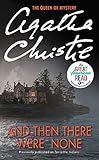
Editors Reads Verdict
Christie's acknowledged masterpiece is one of the greatest mystery novels ever written — the structure is a geometrically perfect trap, the solution is genuinely fair, and no subsequent iteration has improved on the original.
What We Loved
- The mystery structure is a tour de force that has never been equaled
- The solution is genuinely fair — all the clues are present and visible
- The psychological pressure of a closed setting with a killer among them is perfectly sustained
- The ten characters are distinct despite the brevity of their portrayal
Minor Drawbacks
- The racial language in the original title and some passages is offensive and dated
- Character depth is sacrificed for the structural puzzle
- The novella-length means little room for the kind of atmosphere Christie builds in longer works
Key Takeaways
- → The perfect mystery leaves all clues visible while concealing their significance
- → Guilt — genuine guilt for genuine crimes — is as useful a motivator as innocence
- → An isolated setting with no possibility of outside help creates pure narrative tension
- → The nursery rhyme structure gives procedural predictability that paradoxically increases dread
- → Christie understood that readers want to be defeated fairly, not arbitrarily
| Author | Agatha Christie |
|---|---|
| Publisher | HarperCollins |
| Pages | 272 |
| Published | November 6, 1939 |
| Language | English |
| Genre | Mystery, Crime Fiction, Thriller |
| Difficulty | Beginner |
| Best For | Mystery readers of any level, fans of closed-room puzzles, and anyone who hasn't yet read the bestselling mystery novel of all time. |
How And Then There Were None Compares
And Then There Were None at a glance against 3 similar books readers weigh alongside it.
| Book | Author | Rating | Best for |
|---|---|---|---|
| And Then There Were None (this book) | Agatha Christie | ★ 4.6 | Mystery readers of any level, fans of closed-room puzzles, and anyone who |
| Gone Girl | Gillian Flynn | ★ 4.2 | Readers who want their thrillers to also function as literary fiction and |
| Murder on the Orient Express | Agatha Christie | ★ 4.5 | Mystery readers of any level, Agatha Christie fans, and anyone interested in |
| The Secret History | Donna Tartt | ★ 4.5 | Readers who enjoy literary fiction with thriller elements, morally complex |
The Mystery Novel Perfected
And Then There Were None is the best-selling mystery novel ever written and, by most assessments, the most perfectly constructed. Agatha Christie published it in 1939, having spent years working on a premise she considered “the most difficult” she had ever attempted: a mystery in which the murderer appears to be among the victims.
Ten people with no apparent connection to one another — a retired judge, a general, a doctor, a governess, a wealthy playboy, a former detective, a young woman, and others — are invited to a mansion on Indian Island. The host doesn’t appear. But a recording does: accusing each guest of a crime for which they escaped legal consequence. And then they begin dying, one by one, following the sequence of the nursery rhyme “Ten Little Soldiers.”
The Structural Achievement
The closed-room locked-island mystery had been done before Christie tackled it. What she achieved with And Then There Were None that no predecessor managed was a plot in which the killer is genuinely undetectable until the solution — one that nonetheless, on rereading, is clued fairly and consistently throughout. Every piece of information required to solve the mystery before the end is present in the text. Almost no reader solves it.
The trick Christie deploys is elegant in its simplicity and absolutely original in its execution. The solution, when it comes, is both surprising and retrospectively obvious — the definition of a fair puzzle.
Guilt as Subject
One dimension of the novel that distinguishes it from mere puzzle-making is Christie’s interest in guilt. Her ten guests are not innocent victims. They all did something — a child drowned through negligence, a morphine overdose concealed, a false accusation with fatal consequences. The island becomes a judgment space, and the killer’s self-appointed role as executioner is disturbing precisely because the moral logic has some basis in fact.
Christie doesn’t endorse the killer’s methodology. But she builds enough moral complexity around the victims to prevent the reader from simply rooting for their survival.
An Enduring Standard
Every locked-room mystery written since 1939 has been written in Christie’s shadow. The best manage not to be embarrassed by the comparison. Most simply acknowledge the influence and do their best. The original remains unsurpassed.
Our rating: 4.6/5 — The finest mystery novel ever written, with a structural achievement that remains genuinely dazzling eight decades after publication and a solution that is both surprising and absolutely fair.
Reading Guides
- Books Like And Then There Were None: Island Mysteries, Closed Circles, and Ingenious Plots
- Books Like Tana French: 12 Literary Crime Novels for Dublin Murder Squad Fans
- Agatha Christie Books in Order: Hercule Poirot, Miss Marple, and More (2026)
- Best Thriller Books of All Time: 20 You Won
- 22 Best Mystery Books of All Time: Essential Reads From Christie to Flynn (2026)
Publication History
And Then There Were None was published in November 1939 by Collins Crime Club under the title Ten Little Niggers (using the title of a Victorian counting nursery rhyme). The US publication by Dodd, Mead appeared the same year under the title And Then There Were None, a change retained for all subsequent American and eventually all international editions. Christie considered the change a matter of commercial sensitivity rather than moral revision, and the novel has been published under the American title everywhere since the 1980s.
The novel was published two months after the beginning of the Second World War. Christie completed it in 1939 as a deliberate structural challenge: she described it as the most difficult of all her books to write, because every one of the ten characters must be killed in a way that appears impossible and yet, in retrospect, is explained entirely. The solution — a suicide that frames itself as murder — was specifically designed to be unguessable while remaining within the rules of fair play.
Sales and Adaptations
And Then There Were None is the best-selling mystery novel of all time and, by some measures, one of the best-selling books of any genre: it has sold over 100 million copies worldwide, comparable to The Lord of the Rings and The Little Prince. The novel has been adapted for stage (Christie’s own theatrical version changed the ending), film (René Clair’s 1945 Hollywood film; Soviet adaptation Desyat Negrityat, 1987), and television multiple times. The BBC’s 2015 three-part miniseries, starring Aidan Turner, Charles Dance, Miranda Richardson, and Toby Stephens, was the most faithful to the novel’s ending and tone.
Christie’s Assessment
Christie wrote in her autobiography that And Then There Were None was the novel she was most proud of technically, noting that making it work required her to solve a logical puzzle that had defeated her for months: how to kill ten people on an island with no murderer to be found. The solution, once found, is elegant in the way of mathematical proofs — it could not be simpler, once you see it, and you cannot unsee it.
Christie considered the novel her most technically demanding: making the solution simultaneously impossible to guess and, in retrospect, entirely fair required months of structural problem-solving. Her own theatrical adaptation changed the ending to provide a romantic resolution; all subsequent stage and film versions have chosen between Christie’s two endings, with most preferring the novel’s.
The island of Burgh Island in Devon, where Christie completed the novel, still operates as a hotel; its Art Deco architecture and tidal isolation remain precisely as Christie described the Jolly Roger Hotel.
Frequently Asked Questions
What is "And Then There Were None" about?
Ten strangers with guilty secrets are lured to an island mansion, and one by one they are murdered according to a nursery rhyme — with no apparent killer among them.
Who should read "And Then There Were None"?
Mystery readers of any level, fans of closed-room puzzles, and anyone who hasn't yet read the bestselling mystery novel of all time.
What are the key takeaways from "And Then There Were None"?
The perfect mystery leaves all clues visible while concealing their significance Guilt — genuine guilt for genuine crimes — is as useful a motivator as innocence An isolated setting with no possibility of outside help creates pure narrative tension The nursery rhyme structure gives procedural predictability that paradoxically increases dread Christie understood that readers want to be defeated fairly, not arbitrarily
Is "And Then There Were None" worth reading?
Christie's acknowledged masterpiece is one of the greatest mystery novels ever written — the structure is a geometrically perfect trap, the solution is genuinely fair, and no subsequent iteration has improved on the original.
Ready to Read And Then There Were None?
Check the current price on Amazon.
Check Price on Amazon (paid link)Prices and availability are subject to change. See Amazon for current price.
Review last updated: