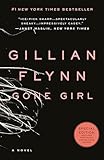
Editors Reads Verdict
Gillian Flynn's third novel is one of the most technically accomplished popular thrillers of the century — a structurally brilliant, satirically savage examination of marriage, media, and the performance of the self, built on two of the most memorable antiheroes in contemporary fiction.
What We Loved
- The dual unreliable narrator structure is one of the most sophisticated in thriller fiction
- Amy Dunne is one of contemporary fiction's most compelling and terrifying creations
- Flynn's prose is genuinely literary — sharp, specific, and often darkly funny
- The media satire is acute and has aged exceptionally well
- The twist redefines the entire first half and rewards immediate re-reading
Minor Drawbacks
- The ending divides readers — some find it brilliant, others find it frustrating
- Nick is a less vivid creation than Amy, which can make his sections drag
- The resolution requires some suspension of disbelief about legal proceedings
Key Takeaways
- → Marriage involves constant performance of a version of yourself chosen for your partner
- → Media attention creates its own reality, independent of truth
- → The 'cool girl' performance is a form of erasure masquerading as liberation
- → The most dangerous people are those who can sustain two completely different self-narratives
- → Economic anxiety and resentment are as corrosive to marriage as infidelity
| Author | Gillian Flynn |
|---|---|
| Publisher | Crown Publishing |
| Pages | 422 |
| Published | June 5, 2012 |
| Language | English |
| Genre | Psychological Thriller, Literary Fiction, Mystery |
| Difficulty | Beginner |
| Best For | Readers who want their thrillers to also function as literary fiction and social commentary — particularly those interested in marriage, media, and female rage. |
How Gone Girl Compares
Gone Girl at a glance against 3 similar books readers weigh alongside it.
| Book | Author | Rating | Best for |
|---|---|---|---|
| Gone Girl (this book) | Gillian Flynn | ★ 4.2 | Readers who want their thrillers to also function as literary fiction and |
| The Girl on the Train | Paula Hawkins | ★ 3.9 | Thriller readers who enjoy unreliable narrators, domestic suspense, and |
| The Secret History | Donna Tartt | ★ 4.5 | Readers who enjoy literary fiction with thriller elements, morally complex |
| Verity | Colleen Hoover | ★ 4.1 | Fans of psychological thrillers and dark romance who enjoy morally complex |
The Novel That Redefined Its Genre
Gillian Flynn had published two well-regarded crime novels before Gone Girl, but nothing prepared the publishing world for the impact of her third. Released in June 2012, it spent eight weeks at number one on the New York Times bestseller list, sold over 20 million copies, generated an Academy Award-nominated film, and fundamentally changed both what publishers sought in psychological thrillers and what readers expected from them.
The premise is deceptively simple: Nick Dunne comes home on his fifth wedding anniversary to find his wife Amy missing and signs of struggle. As the investigation develops, Nick’s behavior becomes increasingly suspicious, the media’s appetite for the story becomes increasingly distorted, and the reader’s certainty about what actually happened fluctuates so completely that some early readers finished the novel unsure of what was true.
Amy Dunne and the Cool Girl Speech
The midpoint revelation that shifts the reader’s entire understanding of the novel is one of contemporary thriller fiction’s great set pieces. What comes with it — Amy’s analysis of the “cool girl” performance that women undertake for male approval — transcended the novel’s readership and became one of the decade’s most quoted pieces of writing about gender. It is a genuinely sharp cultural observation embedded in what is also a thriller plot point, and the combination of functions is what made it hit so widely.
Amy Dunne is not a hero, and Flynn does not ask us to celebrate her. She is a terrifying person with terrifying agency, and the horror of the ending lies partly in the fact that she is also, in certain specific ways, right.
Flynn’s Prose
Flynn’s writing is sharper and more literary than the domestic thriller genre typically produces. Her Nick sections are written from the inside of a specific kind of male self-deception — the man who believes his own justifications completely — and her Amy sections are written from the inside of a performance so total it becomes its own kind of madness. Both are exceptional technical achievements.
The Media Satire
The cable news coverage of Amy’s disappearance — the talking heads, the competing narratives, the performance of grieving husband for the cameras — is one of the novel’s most durable pleasures. It anticipated the social media trial-by-narrative that became familiar in the decade following publication.
The Diary as a Weapon
The novel’s structural engine is its alternating dual narration — Nick’s present-tense account of the investigation set against Amy’s diary entries — and the way Flynn weaponizes that structure is the source of the book’s most famous shock. For the first half, the reader inhabits two seemingly irreconcilable accounts of the same marriage, sympathizing with the increasingly frantic, suspected husband while warming to the charming, anxious wife of the diary, until the midpoint detonation reveals that one of those narratives has been a deliberate fabrication. The trick works because Flynn plays fair: every diary entry is, in retrospect, a performance constructed for a specific audience, and rereading exposes the seams hiding in plain sight. This is the unreliable-narrator device executed with unusual rigor, not as a cheap gotcha but as the formal embodiment of the novel’s theme — that intimate partners construct curated versions of themselves for each other, and that a marriage can be a hall of mirrors in which no account is innocent.
A Marriage as Battlefield
Beneath the thriller machinery, Gone Girl is a savage anatomy of marriage itself, and this is what gives it weight beyond its plot. Flynn uses the extreme case of Nick and Amy to expose ordinary truths about how couples perform for one another, resent one another, and slowly become strangers under the pressure of disappointment, recession, and unmet expectation. The Dunnes are a portrait of a particular moment — two laid-off New York media writers retreating to a dying Missouri town, their glamorous courtship curdling into mutual contempt — and Flynn is merciless about the small lies and accumulated grievances that precede the spectacular ones. The novel’s bleak vision is that the “performance” of a happy marriage and the reality of a poisonous one are continuous rather than opposed, and that the work of staying married can shade, by degrees, into a kind of mutual warfare. It is this acid honesty about coupledom, as much as the twists, that unsettles readers.
The Cool Girl and the Gender Argument
The novel’s most quoted passage — Amy’s monologue on the “Cool Girl,” the effortless, hot, undemanding fantasy woman that men want and that women contort themselves to perform — escaped the book entirely and entered the broader culture as a piece of feminist analysis. Its power is that it functions on two levels at once: as a genuinely sharp observation about the impossible roles women perform for male approval, and as a window into the rage and calculation of a specific, monstrous character. Flynn courts real discomfort here, because Amy is both a vehicle for a true critique and a manipulative villain who weaponizes the language of victimhood, and the novel refuses to resolve that tension. This is the source of the book’s enduring debate: is Amy a feminist antihero, a misogynist caricature, or a deliberate provocation that implicates both readings? Flynn’s refusal to supply a comfortable answer is precisely the point, and it gave the thriller a cultural afterlife few of its peers can claim.
The Phenomenon and Its Legacy
Released in 2012, Gone Girl became one of the defining popular novels of its decade, selling more than twenty million copies, dominating bestseller lists, and spawning David Fincher’s acclaimed 2014 film from Flynn’s own screenplay. Its impact on publishing was seismic: it effectively launched the “domestic noir” boom, triggering a flood of thrillers with unreliable female narrators, marital secrets, and twist-driven structures, many of them marketed with the now-ubiquitous “Girl” in the title. More than a commercial phenomenon, it raised the literary ceiling for the genre, demonstrating that a psychological thriller could carry genuine prose quality, cultural argument, and moral complexity without sacrificing propulsion. Flynn’s two unforgettable antiheroes and her clinical dissection of media spectacle, marriage, and gender performance set a standard against which the wave of imitators it inspired has continued to measure itself, and it remains the genre’s defining modern text.
Our rating: 4.2/5 — A technically brilliant, culturally astute thriller built on two unforgettable antiheroes and one of the most satisfying structural reversals in the genre.
Reading Guides
- Gone Girl vs The Girl on the Train
- Books Like Gone Girl: 12 Psychological Thrillers You Won
- Books Like And Then There Were None: Island Mysteries, Closed Circles, and Ingenious Plots
- Books Like In Cold Blood: True Crime, Narrative Journalism, and the Criminal Mind
- Books Like Sharp Objects: Gothic Small Towns, Dark Families, and Female Wounds
- Books Like The Girl on the Train: Unreliable Narrators, Suburban Secrets, and Twists
- Books Like Big Little Lies: 11 Darkly Comic Domestic Thrillers
- Books Like Verity: 11 Dark Thrillers with Twists That Reframe Everything
Frequently Asked Questions
What is "Gone Girl" about?
On their fifth wedding anniversary, Nick Dunne's wife Amy disappears, and the investigation reveals two people who may be nothing like who they claimed to be.
Who should read "Gone Girl"?
Readers who want their thrillers to also function as literary fiction and social commentary — particularly those interested in marriage, media, and female rage.
What are the key takeaways from "Gone Girl"?
Marriage involves constant performance of a version of yourself chosen for your partner Media attention creates its own reality, independent of truth The 'cool girl' performance is a form of erasure masquerading as liberation The most dangerous people are those who can sustain two completely different self-narratives Economic anxiety and resentment are as corrosive to marriage as infidelity
Is "Gone Girl" worth reading?
Gillian Flynn's third novel is one of the most technically accomplished popular thrillers of the century — a structurally brilliant, satirically savage examination of marriage, media, and the performance of the self, built on two of the most memorable antiheroes in contemporary fiction.
Ready to Read Gone Girl?
Check the current price on Amazon.
Check Price on Amazon (paid link)Prices and availability are subject to change. See Amazon for current price.
Review last updated: