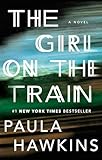
Gone Girl vs The Girl on the Train: Which First?
Gone Girl and The Girl on the Train defined the unreliable-narrator thriller for a generation. Here is how they differ and which to read first.
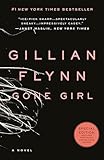
Two novels changed the landscape of commercial fiction in the 2010s. Gone Girl by Gillian Flynn (2012) and The Girl on the Train by Paula Hawkins (2015) both became global bestsellers, both were adapted into major films, and both are credited with launching the domestic thriller with an unreliable female narrator — a subgenre that has not stopped producing imitators since.
They are not the same book. They share a structural vocabulary and a cultural moment, but Flynn and Hawkins are working with different tools toward different ends.
Quick Comparison
| Gone Girl | The Girl on the Train | |
|---|---|---|
| Author | Gillian Flynn | Paula Hawkins |
| Published | 2012 | 2015 |
| Narrators | Amy and Nick Dunne (alternating) | Rachel, Megan, and Anna (alternating) |
| Central unreliability | Deliberate deception | Alcoholic blackouts and memory gaps |
| Setting | Small-town Missouri | London commuter suburbs |
| Tone | Cold, satirical, formally daring | Emotionally raw, immediately accessible |
| Pacing | Slow burn with explosive second half | Steadily escalating throughout |
| Literary ambition | High | Moderate |
| Film adaptation | Exceptional (Fincher, 2014) | Serviceable (2016) |
What Gone Girl Is About
Gone Girl opens on the morning of Nick and Amy Dunne’s fifth wedding anniversary with Amy’s disappearance. Nick is the obvious suspect. The novel alternates between Nick’s present-tense account of the investigation and Amy’s past-tense diary entries, which paint a picture of a marriage deteriorating from the inside.
The first half is a skilled but relatively conventional domestic thriller. The second half is something else entirely — one of the most effectively constructed narrative pivots in contemporary fiction, in which Flynn reveals she has been playing a different game from the one the reader assumed. The formal device she deploys — using the diary structure as a weapon — is as technically accomplished as anything in literary fiction, not just genre.
What sets Flynn apart from her imitators is that she is not interested in sympathy. Amy Dunne is not a victim waiting to be uncovered; she is a fully autonomous character with her own logic, her own intelligence, and her own agenda. Flynn’s willingness to write female characters as cold, calculating, and entirely without warmth — to give Amy the moral freedom usually reserved for male villains — was genuinely transgressive in 2012 and remains the book’s most distinctive quality.
Flynn’s prose is also exceptional: taut, precise, and frequently darkly funny. Her observations about marriage, class, and the performance of femininity carry satirical force that most thrillers don’t attempt.
The first hundred pages require patience. Nick is deliberately unsympathetic in a way that can read as frustrating before you understand why Flynn made that choice. Readers who push through are rewarded substantially.
What The Girl on the Train Is About
The Girl on the Train follows Rachel Watson, a divorced alcoholic who commutes past her former home every day and has constructed an elaborate fantasy about a couple she observes from the train window. When that woman — Megan Hipwell — goes missing, Rachel becomes entangled in the investigation, even as her alcoholic blackouts make her own testimony unreliable.
The novel uses three alternating narrators — Rachel, Megan, and Anna, the woman now living in Rachel’s former home — to build a picture of a disappearance from multiple compromised perspectives. Hawkins’s central insight is that Rachel’s unreliability is not strategic (as Flynn’s Amy’s is) but biological and emotional: she doesn’t remember because she was drunk, and her grief over her failed marriage and infertility clouds everything she perceives.
This makes Rachel fundamentally sympathetic in a way Amy Dunne is not. Readers inhabit her confusion rather than being kept at a remove from it, and Hawkins manages the balance between making Rachel frustrating (she keeps making bad decisions) and compelling (her pain is real and legible) with considerable skill.
The novel is more emotionally direct than Gone Girl — less interested in subverting genre expectations than in executing them well. The pacing is tighter and more consistent: Hawkins builds steadily throughout, and the reveals are distributed more evenly. The prose is functional rather than exceptional — Hawkins is doing the work with plot and character rather than sentence-level writing. This is not a criticism: the novel delivers what it promises.
The Unreliable Narrator: Two Different Uses
The comparison between these novels turns on how each writer uses unreliability — they are doing different things with the same technique.
Flynn’s unreliability is architectural. Amy’s diary is a constructed document, and Flynn’s reveal depends on the reader having trusted it completely. The unreliability is not a fog but a trap, designed by a character in full control of every word on the page. This makes Gone Girl a colder, more formally sophisticated novel — but also a less emotionally involving one, because the reader is ultimately positioned as the mark in Amy’s con.
Hawkins’s unreliability is sympathetic. Rachel doesn’t know what happened because she was drunk. Her gaps are gaps of loss — of memory, of marriage, of the child she could not have — and the reader’s job is to help her piece together what she can’t access. This creates collaborative rather than adversarial tension, which is why The Girl on the Train feels more immediately readable even though it is doing something less formally ambitious.
Neither approach is superior. They produce different reading experiences, and which you prefer will depend on whether you want a thriller that implicates you or one that enlists you.
Who Should Read Which
Read Gone Girl first if:
- You want formally ambitious literary thriller with genuine satirical intelligence
- You can tolerate an unsympathetic narrator for a third of the novel
- You want a reading experience that will genuinely surprise you
- You enjoyed Sharp Objects or Dark Places (Flynn’s other novels)
Read The Girl on the Train first if:
- You want immediate emotional investment in your narrator
- You prefer consistent pacing over a slow-burn payoff
- You’re new to the domestic thriller genre
- The London commuter-suburb setting appeals to you
Verdict
Gone Girl is the better novel by conventional literary measures: more formally daring, more intellectually ambitious, and operating at a higher level of prose. Flynn’s Amy Dunne is one of the most fully realised, genuinely frightening characters in contemporary fiction. The book earns its reputation.
The Girl on the Train is the more immediately satisfying thriller: more emotionally accessible, more consistently paced, and easier to recommend to readers who don’t want to fight the text for the first hundred pages. Hawkins knows exactly what she’s doing, and she does it very well.
Start with Gone Girl if you want to be challenged. Start with The Girl on the Train if you want to be hooked. Either way, you’ll be reaching for the other one within a week.
What to Read Next
After both, The Silent Patient is the natural next step — it shares the institutional setting, the unreliable narrator, and the delayed reveal structure. Verity by Colleen Hoover adds a romance element to the same thriller structure. For literary thriller at the highest level of ambition, Tana French’s In the Woods is the gold standard: longer, slower, and more psychologically complex than either Flynn or Hawkins.
Frequently Asked Questions
Is Gone Girl better than The Girl on the Train?
Gone Girl is the more ambitious and more troubling book — Gillian Flynn is doing something formally daring with the unreliable narrator that Paula Hawkins is not attempting at the same level. Flynn's Amy Dunne is one of the most fully realised villains in contemporary fiction, and the novel's second half recontextualises everything that came before in ways that are genuinely startling. The Girl on the Train is the more emotionally accessible book, and many readers find Rachel Watson's unreliability — rooted in alcoholism and grief — more sympathetic and easier to inhabit. Gone Girl is the stronger novel. The Girl on the Train is the more immediately enjoyable read.
Can I read The Girl on the Train without reading Gone Girl first?
Yes — they are entirely unrelated novels by different authors. Neither references the other, and there is no reading order requirement. The comparison matters because they belong to the same wave of domestic thriller that dominated the mid-2010s and share structural DNA — suburban marriages, unreliable female narrators, missing or murdered women — but each stands completely alone. Read whichever appeals to you first.
What is the difference between a domestic thriller and a psychological thriller?
Domestic thrillers are set within the architecture of private life — marriages, homes, neighbourhoods, relationships — and the threat comes from within those structures rather than from external criminals. Psychological thrillers foreground the unreliability of perception, often through narrators whose mental states are in question. Both Gone Girl and The Girl on the Train qualify as both: the suspense is domestic in setting and psychological in method. The terms are often used interchangeably in contemporary publishing.
Are the film adaptations worth watching?
The Gone Girl adaptation (David Fincher, 2014, with Rosamund Pike) is one of the finest film adaptations of a thriller novel in recent years — Fincher's visual precision suits Flynn's forensic prose, and Rosamund Pike's performance as Amy Dunne earned her an Oscar nomination. The Girl on the Train adaptation (2016, Emily Blunt) is competent but less successful — the transposition from London to New York flattens some of the novel's texture. Read before watching both; the twists are more effective on the page.
What should I read after Gone Girl and The Girl on the Train?
After both, The Silent Patient by Alex Michaelides is the most obvious next step — it shares the unreliable narrator structure, and the final reveal is among the best executed in the genre. Verity by Colleen Hoover operates similarly but adds a romance element. For literary thriller at a higher level of prose, Tana French's In the Woods is the gold standard — longer, slower, and more psychologically complex than either Flynn or Hawkins.