Where to Start with Paula Hawkins: A Reading Guide
Where to start with Paula Hawkins — whether to begin with The Girl on the Train, Into the Water, or A Slow Fire Burning. A complete reading guide.
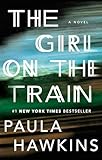
Paula Hawkins (born 1972) is the British journalist and author whose debut thriller The Girl on the Train (2015) became one of the bestselling novels of the decade — with over twenty million copies sold — and launched the wave of domestic psychological thrillers featuring unreliable female narrators that dominated commercial fiction in the mid-2010s. Before The Girl on the Train, Hawkins had published four romance novels under a pseudonym; its success fundamentally changed her career and the thriller market. The novel was adapted into a 2016 film with Emily Blunt. Hawkins’s work is characterised by her interest in unreliable female testimony — women whose accounts are disbelieved precisely because they are women, and whose drinking, depression, or difficult pasts are used to discredit them.
Where to Start: The Girl on the Train (2015)
The essential Hawkins — and the thriller that defined the domestic psychological thriller genre for a decade. Rachel Watson commutes daily on the train from Ashbury to London, passing through a row of houses she has given names and stories to. She is particularly drawn to a couple she calls Jess and Jason — who seem, from the window, to have the perfect life that Rachel’s divorce took from her. When Jess (who is actually Megan Hipwell) disappears, Rachel becomes obsessed with the investigation.
Hawkins uses three alternating narrators — Rachel, Megan, and Anna (who is now married to Rachel’s ex-husband, who lives in the same row of houses Rachel watches from the train) — to construct a mystery in which each narrator knows partial information, each has reason to withhold or distort what she knows, and the reader must piece together what actually happened from three accounts that cannot all be reliable simultaneously.
Rachel’s unreliability is the novel’s central engine: she is an alcoholic whose blackouts create genuine gaps in her memory of key events, and who is aware that her account of her own behaviour during her marriage is unreliable. The question of whether and how much to trust her is the novel’s primary mechanism. Hawkins uses this not just as thriller plotting but as a comment on how women with mental health problems and addiction histories have their testimony discounted.
Into the Water (2017)
The second novel — more deliberately complex in structure, with a larger rotating cast of narrators and a cold-case layer beneath the present-day investigation. Beckford’s history of women dying in the same river provides the atmospheric backdrop; the investigation of Nel Abbott’s death requires navigating multiple partially reliable accounts. Somewhat less focused than The Girl on the Train; rewarding for readers who want a more fragmented, ambiguous narrative.
A Slow Fire Burning (2021)
Hawkins’s most controlled novel since the debut — three women, one murdered young man, a London canal. The structure is tighter; the London setting is precisely observed; the three perspectives are more carefully differentiated than the large cast of Into the Water. Her best novel since The Girl on the Train; a strong third book.
Why The Girl on the Train Is the Ideal First Book
For a reader new to Paula Hawkins, The Girl on the Train is the ideal first book because it is her breakout phenomenon and the fullest expression of her distinctive gifts, the taut psychological suspense, the unreliable narration, and the gripping domestic mystery. The Girl on the Train follows a troubled, alcoholic woman who, watching a seemingly perfect couple from her daily train, becomes entangled in a disappearance and a web of secrets and lies. As an entry point it is ideal, for it is the novel that made her name and a defining example of her tense, twisty psychological thrillers. It welcomes the newcomer with its compelling and flawed narrator, its mounting suspense, and its propulsive plot, drawing the reader into the world of the domestic psychological thriller. It is her most famous work and the one that best represents her gifts, so the new reader encounters Hawkins at her most characteristic. For the newcomer, then, The Girl on the Train is the natural and ideal starting point.
What to Expect as a New Reader
As a new reader, you can expect The Girl on the Train to be a taut, twisty, and compulsively readable psychological thriller. You can expect an unreliable narrator, for the central character is a troubled, alcoholic woman whose memory and judgment cannot be trusted, which drives much of the suspense. You can expect a gripping mystery, for she becomes entangled in a disappearance and a tangle of secrets among the people she watches from her train. You can expect mounting tension, for Hawkins builds suspense steadily through shifting perspectives and unreliable accounts. You can expect a focus on flawed, damaged characters and the dark secrets of ordinary domestic life. You can expect propulsive, page-turning momentum and a satisfying twist. You should be prepared for dark and disturbing material. Expect, in short, a taut, twisty, and compulsively readable psychological thriller, a gripping introduction to Hawkins’s gifts.
Going Deeper After Your First Book
Once The Girl on the Train has introduced you to Hawkins’s gifts, the reader who wishes to go deeper can explore her other psychological thrillers, which continue her taut suspense, her interest in flawed and unreliable characters, and her dark domestic mysteries. Her subsequent novels each build atmospheric, twisty suspense around secrets, memory, grief, and the hidden tensions of relationships and communities. Reading these after The Girl on the Train deepens your appreciation of Hawkins’s distinctive gifts, the psychological suspense, the unreliable narration, and the gripping mystery. Her characteristic strengths run through her work, and the reader gripped by The Girl on the Train will find them across her thrillers. Building your reading journey through Hawkins is a matter of following her psychological thrillers from The Girl on the Train into her later novels. The reader who begins here and continues will find a reliable supplier of taut, twisty domestic suspense.
Reading Paula Hawkins
Begin with The Girl on the Train — it is the foundational novel and the most carefully constructed of her books. Read Into the Water for a more ambitious but less focused second step; read A Slow Fire Burning for her return to tighter form. All three are standalones; read in any order, though the debut establishes her interests most clearly.
Frequently Asked Questions
Where should I start with Paula Hawkins?
The Girl on the Train (2015) is the only starting point — Hawkins's debut thriller about Rachel Watson, a recently divorced woman who commutes daily past a row of houses and develops an obsessive fantasy about a couple she can see from the train. When the woman she has been watching disappears, Rachel becomes involved in the investigation in ways that put her own unreliable account of events at the centre of the mystery. The novel became one of the bestselling thrillers of the decade, with over twenty million copies sold; it is the book that launched the wave of domestic psychological thrillers featuring unreliable female narrators.
What is Into the Water about?
Into the Water (2017) is Hawkins's second novel — following the death of Nel Abbott in Beckford, a village in northern England where several women and girls have died in the same river over the decades. Nel's teenage daughter, her estranged sister Jules, and other residents with complicated connections to the deaths take turns narrating the investigation. Less focused and more deliberately fractured in its structure than The Girl on the Train; some readers find the large cast of perspectives disorienting, others find it more ambitious.
What is A Slow Fire Burning about?
A Slow Fire Burning (2021) is Hawkins's third novel — set on a London canal, following the murder of a young man in a houseboat and the investigation that draws together three women who are each connected to him in different ways. The most tightly structured of her three books since the debut; the London canal setting is used with atmospheric precision, and the three-woman narrative rotation is more controlled than the large cast of Into the Water.
Is The Girl on the Train similar to Gone Girl?
The Girl on the Train is frequently compared to Gillian Flynn's Gone Girl — both are psychological thrillers with unreliable female narrators, domestic settings, and a central mystery involving a woman's disappearance. The comparison is fair in broad terms: both books used the unreliable female narrator to critique how women's accounts are disbelieved in criminal investigations, and both became cultural phenomena. The Girl on the Train is somewhat more conventionally structured than Gone Girl and less interested in genre subversion; Flynn's novel is darker and more formally experimental. Both are excellent starting points for the genre.


