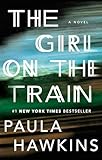
Editors Reads Verdict
Paula Hawkins's debut thriller launched the domestic suspense wave of the mid-2010s, delivering a compulsive unreliable-narrator mystery that uses alcoholic blackout as both plot mechanic and psychological study of how women are disbelieved.
What We Loved
- Rachel's unreliable narration is rooted in alcoholism with genuine psychological accuracy
- The three-women structure provides multiple perspectives on the same events
- The pacing is relentless — the chapters are engineered to make stopping impossible
- The novel interrogates how women's testimony is discredited in ways that feel current
Minor Drawbacks
- The resolution is less surprising than the marketing suggested
- Some characters are thinly drawn outside their narrative function
- The inevitable Gone Girl comparisons set expectations the book doesn't quite meet
- Rachel's self-destructiveness can be wearying across a full novel
Key Takeaways
- → Alcoholism impairs not just memory but credibility — and predators know this
- → Women are routinely disbelieved in ways that create real safety vulnerabilities
- → The lives we imagine for others from outside are often fantasies that serve our own needs
- → Obsession and love are different axes, and confusion between them is dangerous
- → What looks like a perfect life from a train window is always a partial view
| Author | Paula Hawkins |
|---|---|
| Publisher | Riverhead Books |
| Pages | 323 |
| Published | January 13, 2015 |
| Language | English |
| Genre | Psychological Thriller, Mystery, Domestic Thriller |
| Difficulty | Beginner |
| Best For | Thriller readers who enjoy unreliable narrators, domestic suspense, and multi-perspective mysteries with psychological depth. |
How The Girl on the Train Compares
The Girl on the Train at a glance against 3 similar books readers weigh alongside it.
| Book | Author | Rating | Best for |
|---|---|---|---|
| The Girl on the Train (this book) | Paula Hawkins | ★ 3.9 | Thriller readers who enjoy unreliable narrators, domestic suspense, and |
| Gone Girl | Gillian Flynn | ★ 4.2 | Readers who want their thrillers to also function as literary fiction and |
| The Housemaid | Freida McFadden | ★ 4.0 | Thriller fans who enjoy domestic suspense, unreliable narrators, and |
| Verity | Colleen Hoover | ★ 4.1 | Fans of psychological thrillers and dark romance who enjoy morally complex |
The Morning Commute as Obsession
Paula Hawkins’s debut arrived in January 2015 and spent 13 weeks at the top of the New York Times bestseller list, establishing a domestic thriller wave that transformed the genre’s demographics and publishing economics. The Girl on the Train introduced a very specific kind of unreliable narrator — not merely someone who withholds information from the reader, but someone who cannot reliably access her own memories — and structured a mystery around the implications of that unreliability.
Rachel Watson rides the train past her old neighborhood twice a day, every day. She watches the couple she has named Jess and Jason from the window — a beautiful woman and her handsome partner living the life Rachel believes she should have had. When “Jess” disappears and Rachel realizes she may have witnessed something relevant the night before, she inserts herself into the investigation with memories she cannot fully trust.
Alcoholism as Narrative Device
What distinguishes The Girl on the Train from earlier unreliable narrator thrillers is that Rachel’s unreliability has a specific clinical cause. Alcoholic blackout — the inability to form memories during episodes of heavy drinking — is not the same as amnesia or simple dishonesty. Hawkins uses it with relative accuracy: Rachel doesn’t know what she doesn’t know, and her attempts to reconstruct the missing night through other witnesses and her own fragmentary impressions constitute both the mystery’s investigative structure and a portrait of someone trying to function while impaired.
The Three Women
The novel’s three-perspective structure — Rachel, Megan (the missing woman), and Anna (Rachel’s ex-husband’s new wife) — allows Hawkins to approach the same events from angles that contradict and illuminate each other. Each woman is positioned differently relative to the central male characters, and each has a different relationship to being believed.
This structure is the novel’s most sophisticated element. The question of which women are believed, by whom, and why tracks the larger social problem of how female testimony is discredited in exactly the contexts where it most needs to be credited.
Comparison to Gone Girl
Every review of The Girl on the Train mentions Gillian Flynn’s Gone Girl, which preceded it by three years and established the complex-unreliable-female-narrator thriller as a commercial force. The comparison is instructive: Flynn’s prose is sharper and her ambition more literary; Hawkins’s novel is more emotionally accessible and perhaps more interested in the systemic treatment of women than in the pleasures of pure narrative manipulation.
Our rating: 3.9/5 — A compulsive, expertly paced thriller that launched a genre wave through genuine storytelling craft and a central device that is more psychologically interesting than its imitators recognized.
The Unreliable Narrator at the Centre
The engine of The Girl on the Train is its narrator’s unreliability. Rachel, an alcoholic whose memory blacks out at crucial moments, watches a seemingly perfect couple from her daily commuter train and constructs a fantasy about their lives — until a disappearance pulls her into events she may have witnessed but cannot trust herself to remember. Hawkins builds the suspense not from external threats but from the gaps in Rachel’s own mind, so that the reader, dependent on a narrator who cannot vouch for herself, is kept as uncertain as she is. It is a structure that turns the reader’s own desire to know into part of the tension.
Why It Became a Phenomenon
The novel arrived in the wake of Gone Girl and rode the wave of the domestic psychological thriller, but it found its own enormous audience by centring a heroine who is messy, unsympathetic, and unreliable in ways that felt real. Hawkins multiplies the unreliability across more than one narrator, and the shifting perspectives keep the truth in doubt until late. The voyeuristic premise — the stories we invent about strangers glimpsed from a train — tapped something recognisable, and the propulsive short chapters made it the kind of book readers finished in a sitting.
What to Expect
It is a twisty, atmospheric, fast-moving thriller built for momentum rather than literary subtlety, and readers should come for the propulsion and the satisfying turns rather than for prose that lingers. The subject matter runs dark — addiction, abuse, and violence are handled directly — and the pleasure is the steady dismantling of the gap between what the narrators believe and what actually happened. As a tense, addictive entry in the domestic-suspense genre it helped define, it remains a reliable and gripping read.
Why the Voyeurism Lands
Beneath the twists, what gives The Girl on the Train its hold is the recognisable impulse at its centre: the stories we invent about strangers glimpsed in passing, the perfect lives we project onto people we will never meet. Rachel’s fantasy about the couple she watches from the train is a heightened version of something most commuters have done, and when that fantasy collides with a real disappearance, the novel turns an ordinary habit into a trap. Hawkins keeps the truth in doubt by distributing unreliability across several narrators, none of whom can be fully trusted, so the reader’s own hunger to know becomes part of the suspense. It is built for momentum and delivers it, a dark, twisty thriller that earns its place in the genre it helped popularise.
Reading Guides
- Gone Girl vs The Girl on the Train
- Books Like The Girl on the Train: Unreliable Narrators, Suburban Secrets, and Twists
- Books Like Big Little Lies: 11 Darkly Comic Domestic Thrillers
- Books Like Verity: 11 Dark Thrillers with Twists That Reframe Everything
- Books Like Gone Girl: 12 Psychological Thrillers You Won
- 22 Best Mystery Books of All Time: Essential Reads From Christie to Flynn (2026)
- Gone Girl vs The Silent Patient: Which Psychological Thriller Should You Read First?
Frequently Asked Questions
What is "The Girl on the Train" about?
An alcoholic woman who commutes daily past her ex-husband's house becomes entangled in the disappearance of a woman she had been secretly watching from the train.
Who should read "The Girl on the Train"?
Thriller readers who enjoy unreliable narrators, domestic suspense, and multi-perspective mysteries with psychological depth.
What are the key takeaways from "The Girl on the Train"?
Alcoholism impairs not just memory but credibility — and predators know this Women are routinely disbelieved in ways that create real safety vulnerabilities The lives we imagine for others from outside are often fantasies that serve our own needs Obsession and love are different axes, and confusion between them is dangerous What looks like a perfect life from a train window is always a partial view
Is "The Girl on the Train" worth reading?
Paula Hawkins's debut thriller launched the domestic suspense wave of the mid-2010s, delivering a compulsive unreliable-narrator mystery that uses alcoholic blackout as both plot mechanic and psychological study of how women are disbelieved.
Ready to Read The Girl on the Train?
Check the current price on Amazon.
Check Price on Amazon (paid link)Prices and availability are subject to change. See Amazon for current price.
Review last updated: