Best Books with Plot Twists: Novels That Will Shock You
The best books with plot twists — from Gone Girl to The Secret History, The Murder of Roger Ackroyd, Shutter Island, and Atonement. Novels whose endings redefine everything.
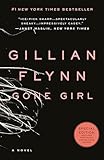
The plot twist — the moment when everything the reader understood about a story is revealed to be wrong, or incomplete, or deliberately concealed — is one of fiction’s oldest pleasures. It reaches its highest expression in novels that use the twist not merely as a technical trick but as a structural revelation of their deepest themes: a novel whose narrator is its murderer raises questions about fiction and trust that no straightforward mystery can; a novel whose entire final section reveals the preceding text to be an invented document raises questions about storytelling and guilt that no conventional literary novel can. What follows are the novels that have used the plot twist most powerfully.
Gone Girl — Gillian Flynn (2012)
The most influential thriller of the decade — and the best contemporary demonstration of how a plot twist can be both completely surprising and, in retrospect, absolutely inevitable. Nick and Amy Dunne’s marriage has reached a breaking point when Amy disappears on their fifth anniversary. Nick is the obvious suspect; Amy’s diary reveals a troubled marriage; the reader’s sympathies are carefully manipulated.
And then Part Two begins. What Amy’s second-person narration reveals about what has actually happened — and why — is the most perfectly engineered plot reversal in recent fiction. Flynn earned every reader’s shock because she hid everything in plain sight: the clues were there, the voice was there, and readers assumed they understood what they were reading. The essential contemporary thriller.
The Secret History — Donna Tartt (1992)
Tartt’s debut — and the novel that invented the ‘dark academia’ genre. Rather than a whodunit, it is a howdunit and whydunit: the prologue reveals that Richard Papen’s group of classics students at a Vermont college killed their friend Bunny, and the entire novel traces the path to that death and its aftermath. The twist, such as it is, comes earlier than most — in understanding the moral universe in which these brilliant, aesthetically intoxicated people came to consider murder not just possible but necessary.
The atmosphere — Greek tragedy, autumn in Vermont, the closed world of an academic elite — is extraordinary; Tartt’s prose is superb; and the moral portrait she draws of people who aestheticize everything, including violence, is one of the great achievements of the decade.
The Murder of Roger Ackroyd — Agatha Christie (1926)
Christie’s most audacious novel — and the plot twist that has never been surpassed in mystery fiction. Dr James Sheppard narrates the investigation of the murder of his friend Roger Ackroyd, assisting Hercule Poirot throughout. The revelation of the murderer’s identity — achieved through a technique that had never been attempted in mystery fiction and that exploited a convention of the genre to hide what was in front of the reader throughout — caused an immediate sensation. Christie was accused of cheating; she had not: she had simply done something that no one had thought to do, and done it perfectly.
Shutter Island — Dennis Lehane (2003)
Lehane’s most stylistically ambitious novel — set in 1954, where US Marshal Teddy Daniels arrives at Ashecliffe Hospital for the Criminally Insane on a storm-swept island in Boston Harbor to investigate the disappearance of a patient. The hospital, the staff, and the investigation all feel wrong, and the novel ratchets up the paranoia and dread until its final revelation — which recasts every preceding event.
The twist is among the most complete in recent fiction: almost nothing about the novel survives it unchanged. A sophisticated Gothic thriller.
The Silent Patient — Alex Michaelides (2019)
The debut thriller that outsold almost everything else of its year — following Alicia Berenson, a famous painter who shot her husband five times and then never spoke again. Theo Faber, a criminal psychotherapist, becomes obsessed with treating her and uncovering her motive. The novel’s structure — two timelines, two narrators — conceals its twist until the final pages.
The twist is genuinely surprising and skillfully set up; it depends on an assumption about what the novel is about that Michaelides plants and sustains throughout. Not as literarily ambitious as the other books on this list, but one of the most effective pure-thriller twists in recent memory.
Atonement — Ian McEwan (2001)
The most philosophically serious plot twist on this list — not a thriller’s surprise but a literary novel’s subversion of its own status as fiction. The novel follows Briony Tallis across her life, from the summer of 1935 when her false accusation destroys the lives of her sister and the man her sister loves, through the war and its aftermath. The final section reveals who has been writing the preceding narrative and why.
The effect is devastating: it raises questions about fiction, guilt, and the storyteller’s responsibility that no amount of conventional literary technique could. McEwan’s most important novel and the most powerful demonstration of what the plot twist can do in literary rather than thriller fiction.
Sharp Objects — Gillian Flynn (2006)
Flynn’s debut — earlier and darker than Gone Girl. Camille Preaker, a journalist recovering from a history of self-harm, returns to her small Missouri hometown to investigate the murders of two young girls. The community, her mother Adora, and her half-sister Amma are all deeply strange; the truth of what is happening in Wind Gap, Missouri, is hidden until the novel’s final pages.
Less structurally sophisticated than Gone Girl but more psychologically disturbing; Flynn’s darkness is at its most intense.
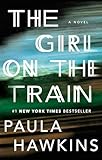
The Girl on the Train — Paula Hawkins (2015)
Hawkins’s debut thriller — a multiple-unreliable-narrator story following three women in the London commuter belt. Rachel, an alcoholic who has lost her marriage and her job, watches the world from the train window and becomes obsessed with a couple she can see from it. When one of the women disappears, Rachel is tangled up in the investigation.
The twist is satisfying and the structure (three women’s voices, each with something to conceal) is well-executed; the novel is at its best in Rachel’s voice, the most distinctive of the three.
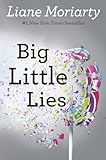
Big Little Lies — Liane Moriarty (2014)
Moriarty’s most celebrated novel — set in a beachside community of school parents in New South Wales, Australia, where a murder occurs at the school’s trivia night. The novel is structured around the police and community interviews that follow, interspersed with the preceding months’ events; the identity of the victim and the killer are both withheld until the final act.
The pleasure is less in the twist than in the perfectly observed social comedy that precedes it — the school gate politics, the competitive parenting, the marriages under pressure. One of the most entertaining domestic thrillers of its decade.
Behind Closed Doors — B.A. Paris (2016)
Paris’s debut — a domestic thriller about a marriage that looks perfect from the outside and is something else entirely within. Grace and Jack Angel seem to have an ideal life; the novel alternates between the past (how they came to be together) and the present (what their life is actually like). The revelation of what is happening inside the marriage, and Jack’s role in it, is the novel’s centre.
Darker and more disturbing than Big Little Lies; the most direct descendant of the Gothic ‘woman in peril’ tradition.
Reading Books with Plot Twists
The best plot-twist novels are not merely technically clever — they use their reversals to deepen their moral and emotional arguments, to make the reader feel the weight of what the truth reveals about the characters and the story’s world. Begin with Gone Girl for the most culturally significant and the most satisfying contemporary thriller; with The Murder of Roger Ackroyd for the greatest classic; with Atonement for the most philosophically serious and the most lasting.
Frequently Asked Questions
What is the biggest plot twist in fiction?
Agatha Christie's The Murder of Roger Ackroyd (1926) is widely considered the greatest plot twist in mystery fiction — Christie makes the narrator the murderer, a move so unexpected and so daring that it provoked immediate controversy and remains debated today. Gone Girl by Gillian Flynn is the most celebrated contemporary plot twist — Amy's revelation of her own plan in Part Two of the novel fundamentally restructures everything the reader has understood. Atonement by Ian McEwan has one of the most devastating twist structures in literary fiction: the final section reveals that the novel itself is the unreliable document, not just the characters within it.
What makes a plot twist successful?
A successful plot twist rewrites the reader's understanding of everything that came before — it should feel both surprising and, in retrospect, inevitable. The best twists plant their clues in plain sight and depend on the reader's assumptions (rather than withholding information) to conceal what is coming. Christie's great achievement was to hide the murderer in the narrator's voice; Flynn's was to hide Amy's plan in plain sight within her diary. Weak twists feel arbitrary or depend on information the reader could not have had. The best twists are not just surprising but meaningful — they deepen the novel's themes rather than simply shocking.
Which plot twist books are most suitable for literary readers?
Atonement by Ian McEwan and The Secret History by Donna Tartt both have sophisticated literary credentials alongside their plot-twist structures. Atonement's twist is in many ways the most philosophically rich of any on this list — it raises questions about fiction, memory, and the responsibility of the storyteller. The Secret History uses an inverted mystery structure (the death is revealed in the prologue; the plot is about how it happened) that is more interested in character and moral atmosphere than in narrative surprise. Gone Girl is literary in its ambitions even as it operates as a commercial thriller. For readers who want a classic, The Murder of Roger Ackroyd is the essential starting point.
Should I read Gone Girl or The Girl on the Train first?
Gone Girl (2012) is the superior novel — more ambitious, more psychologically rich, and with a more substantial twist. The Girl on the Train (2015) was clearly influenced by Gone Girl's dual-unreliable-narrator structure and became an enormous bestseller on the strength of that influence, but it is a lighter novel with less fully realized characters. Read Gone Girl first if you haven't; it is the standard against which the others are measured.