Editors Reads Verdict
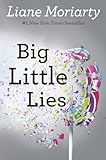
Liane Moriarty's breakthrough novel is a sharp-tongued comedy of suburban manners that deepens, without warning, into a genuinely serious examination of domestic violence, friendship, and the small lies that keep communities functioning — and the large ones that protect their most dangerous members.
What We Loved
- Moriarty's satirical observation of school-parent culture is wickedly accurate
- The three-women ensemble is balanced and individually vivid
- The tonal shift from comedy to serious domestic violence examination is handled with skill
- The mystery structure — trivia night framing told backward — is formally satisfying
- The Reese Witherspoon/Nicole Kidman HBO adaptation extended its cultural life significantly
Minor Drawbacks
- The early comedy sections may give readers the wrong expectations for what follows
- Some plot elements rely on coincidence
- The mystery resolution is visible to attentive readers before it arrives
Key Takeaways
- → Domestic violence is often hidden behind the most conventional and respectable facades
- → Female friendship can be both competitive and genuinely protective
- → Community judgment of mothers is relentless and rarely accurate
- → Small social lies accumulate until they obscure something that should have been visible
- → Children are always watching adult relationships and learning from them
| Author | Liane Moriarty |
|---|---|
| Publisher | G.P. Putnam's Sons |
| Pages | 460 |
| Published | July 29, 2014 |
| Language | English |
| Genre | Domestic Fiction, Mystery, Literary Fiction |
| Difficulty | Beginner |
| Best For | Readers who enjoy domestic fiction with comic elements and genuine depth, particularly stories about female friendship and community dynamics. |
How Big Little Lies Compares
Big Little Lies at a glance against 3 similar books readers weigh alongside it.
| Book | Author | Rating | Best for |
|---|---|---|---|
| Big Little Lies (this book) | Liane Moriarty | ★ 4.3 | Readers who enjoy domestic fiction with comic elements and genuine depth, |
| Gone Girl | Gillian Flynn | ★ 4.2 | Readers who want their thrillers to also function as literary fiction and |
| Little Fires Everywhere | Celeste Ng | ★ 4.4 | Readers who enjoy literary fiction that examines race, class, and community |
| Where the Crawdads Sing | Delia Owens | ★ 4.4 | Readers who enjoy literary fiction with a sense of place, nature writing, |
Behind the School Gates
Liane Moriarty’s sixth novel opens at a kindergarten trivia night in the wealthy coastal suburb of Pirriwee, Australia, from which someone will not emerge alive. The framing — interview transcripts from a police investigation, interspersed with the preceding months’ events — creates a structural irony that runs through the whole book: we know a death is coming, but we spend most of the novel in Moriarty’s satirical comedy of competitive school parenting, convinced the whole thing might tip into farce rather than tragedy.
The three central characters are Madeline, the brash and warm-hearted organizer; Celeste, the beautiful former lawyer with the perfect husband and the perfect life; and Jane, the young single mother who moves to Pirriwee and whose son becomes embroiled in a bullying accusation on the first day of school. Their friendship, formed partly in opposition to the other mothers and partly through genuine affinity, is the novel’s emotional anchor.
The Satirical Register and Its Limits
Moriarty is one of the most accomplished satirists of educated middle-class suburban life writing in English. The school-parent dynamics — the Facebook drama, the bake sale politics, the competitive virtue, the barely concealed social brutality — are observed with precision that will be uncomfortably familiar to anyone who has spent time in these environments. This comedy is genuinely funny.
But Moriarty is doing something more than comedy. Celeste’s marriage, which appears from outside to be the pinnacle of successful domesticity, is revealed gradually and then fully to be something else entirely. The shift in register when this becomes undeniable is one of the novel’s most accomplished technical moments.
Domestic Violence in a Comfortable World
Big Little Lies makes the argument — through specific character and specific circumstance rather than through polemic — that domestic violence does not respect class boundaries, that it often looks from outside like something completely different, and that the women who experience it in wealthy, educated environments face particular barriers to disclosure because the violence is so incompatible with their visible lives.
Celeste’s psychological process — her justifications, her love for her husband, her inability to see her situation clearly until she can — is rendered with clinical accuracy and considerable compassion.
The HBO Series
The 2017 HBO adaptation, directed by Jean-Marc Vallée and starring Nicole Kidman, Reese Witherspoon, and Shailene Woodley, extended the novel’s reach considerably and is often cited alongside the book as an exemplary adaptation. The performances deepened the characters in ways that encouraged readers to return to Moriarty’s source.
Our rating: 4.3/5 — A perfectly calibrated domestic novel that uses its satirical surface to deliver something genuinely serious about violence, friendship, and the lies that communities prefer to tell themselves.
Reading Guides
- Books Like Sharp Objects: Gothic Small Towns, Dark Families, and Female Wounds
- Books Like The Girl on the Train: Unreliable Narrators, Suburban Secrets, and Twists
- Books Like Where the Crawdads Sing: 11 Novels of Nature, Secrets, and Survival
- Books Like Big Little Lies: 11 Darkly Comic Domestic Thrillers
- 15 Books Like The Housemaid to Read Next
- 15 Books Like Little Fires Everywhere
The Trivia-Night Structure
The decision to frame the entire novel around a death at the Pirriwee Public kindergarten trivia night is not merely a hook — it is the organizing principle that gives Moriarty’s comedy its undertow of dread. From the opening pages the reader knows that the school’s fundraising event, with its absurd Audrey-Hepburn-and-Elvis dress code, will end with a body. What the reader does not know, almost until the end, is who has died and who is responsible. Moriarty exploits this gap with considerable craft, interleaving the slow-building domestic comedy of the preceding months with fragmentary police-interview transcripts in which the assembled parents of Pirriwee gossip, speculate, and contradict one another. These transcripts are themselves a kind of satire — a chorus of unreliable witnesses, each reshaping events to fit their own grievances and allegiances.
The effect is to make the reader complicit in the same activity the novel is critiquing: the relentless surveillance and judgment that defines the school-gate community. We watch, we speculate, we form theories about who is capable of what. And when the truth arrives, it rebukes the easy assumptions the structure has encouraged us to make.
Three Women and the Weight They Carry
Madeline, Celeste, and Jane are not interchangeable. Madeline’s brashness conceals real wounds — her ex-husband’s new wife is a maddeningly serene presence at the same school, and her teenage daughter is drifting toward him. Celeste’s beauty and apparent perfection are the mask over the novel’s darkest material. Jane, the youngest and poorest of the three, carries a trauma whose origin the novel withholds and whose connection to the broader plot becomes one of its quietest devastations. Moriarty allows each woman a full interior life, and the friendship among them — formed quickly, tested seriously — is the warmth that keeps the novel’s harder material bearable.
Why It Endures
Big Little Lies endures because it refuses to let its readers off the hook. The comedy is genuine, but it is never an escape from the seriousness; it is the disguise the seriousness wears. The HBO adaptation, with its prestige cast and its decision to relocate the story to Monterey, California, brought the material to a vast new audience, but the novel’s particular Australian texture — the coastal suburb, the social register, the specific cadence of its mothers’ cruelty and kindness — is its own reward. It is a book that earns the cultural footprint it has, and it remains the clearest demonstration of what Moriarty does that few of her imitators manage: the seamless fusion of the genuinely funny and the genuinely grave.
Frequently Asked Questions
What is "Big Little Lies" about?
Three mothers in an Australian coastal community navigate school politics, marriage, friendship, and the fallout from a murder at the kindergarten trivia night.
Who should read "Big Little Lies"?
Readers who enjoy domestic fiction with comic elements and genuine depth, particularly stories about female friendship and community dynamics.
What are the key takeaways from "Big Little Lies"?
Domestic violence is often hidden behind the most conventional and respectable facades Female friendship can be both competitive and genuinely protective Community judgment of mothers is relentless and rarely accurate Small social lies accumulate until they obscure something that should have been visible Children are always watching adult relationships and learning from them
Is "Big Little Lies" worth reading?
Liane Moriarty's breakthrough novel is a sharp-tongued comedy of suburban manners that deepens, without warning, into a genuinely serious examination of domestic violence, friendship, and the small lies that keep communities functioning — and the large ones that protect their most dangerous members.
Ready to Read Big Little Lies?
Check the current price on Amazon.
Check Price on Amazon (paid link)Prices and availability are subject to change. See Amazon for current price.
Review last updated: